













Cape students win top awards in essay challenge

Two Cape Henlopen High School girls let the Cape Henlopen school know the importance of a book taken off a summer reading list.
"I entered the contest because I felt strongly about the issue, and am equally passionate about the importance of teenage voices,” said Hannah Lowe, first-place winner of the contest, who is active in Odyssey of the Mind, Girl Scouts, Cape's theatre program, Possum Point juniors and the school newspaper. “I felt that the students whose educations were being challenged were not having our opinions solicited."
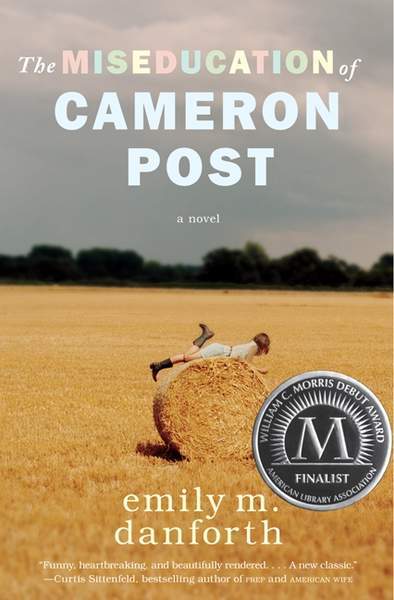
The Cape High sophomore won first place, while freshman Katie Redefer won second place for their essays on “The Miseducation of Cameron Post.”
The contest emerged following outrage over the removal of “The Miseducation of Cameron Post” from the Cape Henlopen High School's freshman reading list. Hannah, Katie and third-place winner Rachel Wagner, a senior from Appoquinimink High School, all praised the book and disputed Cape Henlopen school board's 6-1 vote to remove the book from the reading list after nearly a dozen parents complained about profanity, drugs and sex depicted throughout the story. The book follows a young, orphaned girl growing up in Montana as she discovers her sexual identity.
All the winning essays said “The Miseducation of Cameron Post” is important because it portrays of a lesbian girl – a perspective that both gay and straight teens could benefit from reading.
“A book such as this one being talked about in a friendly environment could surely help a homosexual student, as they might think 'maybe being gay isn’t such a bad thing, all of the other students who read the book aren’t disgusted by Cameron being gay, so they might feel the same about me,'” wrote Katie in her essay.
In her essay, Rachel laid out an argument that examples of profanity were taken out of context.
“You were disgusted by page 82 but page 187 was probably never on your mind – when Cameron is decoupaging Mom-and-Dad figures with the obituaries of her parents,” she wrote. “If you were to strip out every foul word, every sexual reference, every moment that makes you cringe – perhaps you would eliminate 10 pages of text. What of the other 460 pages of plot?”
Wagner said she enjoys writing and she is looking into colleges in the north Baltimore area.
“I think writing is something I would like to pursue,” she said.
The essay contest was sponsored by the National Coalition Against Censorship, but was made possible by Cape Henlopen parent Rob Spicer who donated $500 for the cash prizes.
Spicer opposed the board's decision to remove the book and voiced his opinion at two board meetings. “I thought the girls did a tremendous job writing the essays,” he said.
The winners were announced during Banned Books Week Sept. 21-27.
“We were overwhelmed and inspired by the submissions we received,” said NCAC Executive Director Joan Bertin. “The essays showed that teenagers can be mature and thoughtful in their approach to books that some adults consider controversial and inappropriate. They also suggest that these students have a greater appreciation and respect for the value of literature and intellectual freedom than some members of the school board, who voted to remove the book as a summer reading option without having read it. ”
School board member Spencer Brittingham said he did read the book – as did several other members – and he stands by his decision to remove it from the reading list.
“I for one read the novel, and I stand by the board's decision,” he said.
Brittingham said besides profanity throughout the book, there was no clear procedure of how the book or other books on the list were chosen.
Board member Sandi Minard said the district is working on policy establishing criteria for creating future student reading lists. Minard applauded the students' writing awards.
“I'm glad our students took the opportunity to express their opinions,” she said.
Groups which also supported the contest include American Booksellers Foundation for Free Expression; American Civil Liberties Union of Delaware; Association of American Publishers; Comic Book Legal Defense Fund; Delaware Library Association; PEN American Center; and Society of Children’s Book Writers and Illustrators, in collaboration with Browseabout Books.
Dara Plath, a spokeswoman for the National Coalition Against Censorship said six students submitted essays for the contest. Author Pat Scales, who has written about and taught classes on banned books, judged the contest.
“It is clear that the students who submitted essays understand what the school board doesn’t – books should not be judged by taking words and thoughts out of context,” she said.
Both Katie and Hannah said they plan to save their money for upcoming trips to Europe.
Rachel said she will donate her money to Middletown's Festival of Words to be held Feb. 28.
The winning essays are as follows:
Hannah Lowe, first place
It is the natural instinct for adults to look out for children; to shield young people from what grown-ups view as evil in the world. However, this parental guidance can grow into over protection – and in no case more so than the Cape Henlopen Board of Education removing 'The Miseducation of Cameron Post' from the freshman summer reading list.
Cameron Post, by Emily M. Danforth, tells the story of a young lesbian navigating the stormy seas of adolescence. It highlights homophobia and intolerance in Montana, while artfully abstaining from glorifying the protagonists or vilifying the antagonists. While the board can be forgiven for balking at some of the content – swearing, teenage sexuality, underage drinking and smoking – the removal of the book from the list was a poor decision.
The official reason for the censorship of Cameron Post is “obscenity”. During the deciding meetings on the controversy, damning excerpts were read: passages from the book featuring a host of colorful swears and inappropriate content. The novel was made out to be the perfect manual for corrupting teens. However, the passages used to illustrate Cameron Post’s “obscenity” were taken out of context, twisted into a dishonest portrayal of a book that offers profound observations on life and morality, a complex story of sin and virtue in the teenage world.
In addition: there was, without a shadow of doubt, a religious and personal agenda furthered by those involved in the controversy. Beliefs were expressed that have no place in public schools; education is not the playing field for personal, political, or religious ideologies. Teenagers do not appreciate our educations being turned into battlegrounds for opposing opinions, especially when we are never consulted or our voices heard.
Finally, while adults may be uncomfortable with literature that accurately portrays the formative years of modern youth, teenagers find characters with which we identify. In such literature as Cameron Post, we read ourselves speaking back to us through the pages, telling us how they sorted through the problems we share. In novels such as Cameron Post, dealing with sexual identity, questioning teens see portrayals of people like them – a very encouraging thing for a young, queer teen.
Parents reading the book might also be led to an understanding of their LGBTQ+ child, as well. Unfortunately, this content can be offensive to certain groups in our community. These close-minded people leap into action to censor our literature, without realizing that we benefit from reading it, and that they cannot censor the world around us. All that censorship will provide is a lack of relatable literature.
In conclusion, the removal of The Miseducation of Cameron Post was a mistake. It was a decision that sets us back as community and teaches young people intolerance instead of acceptance. Censorship allows prejudice to flourish instead of diminish. After all, narrowing the world of media for teens will only narrow the world we grow up to create.
Katie Redefer, second place
Earlier this summer you made the decision to remove the book "The Miseducation of Cameron Post" for including inappropriate language from the ninth-grade reading list, and then removed the whole list due to a controversy over the situation. Despite the fact that no board members had actually read the book, the board figured that seeing the f-word several times when flipping through was enough to know that local librarians (who had read the book) had bad judgment and that this book was very clearly inappropriate for teenagers to read.
Because 14-year-olds have never heard of swearing before, and they don’t want to ruin their innocence, right? If the board had read the book, they probably would’ve realized how positively influential it could be to a teenager. But the point I really want to emphasize to the board is the suicide rates in teens, specifically gay teens.
Two million teens in the U.S. attempt suicide every year, and one-third of them are gay. It’s hard to find this shocking, considering how much guilt there is surrounding being gay in today’s society. Kids get bullied at school for being gay, and then go to church where they’re told that they’re going to hell for something they have no say over. The worst part is that some teens buy into the negativity about being gay themselves, and that is when suicide happens.
One character in the book named Mark, who attended God’s Promise (the anti-gay camp Cameron attended), experienced this. Mark was the picture perfect result of God’s Promise. He was a faithful Christian, who had seemingly “cured” himself from the sin of homosexuality. But in one of the group therapy sessions, Mark had a break down because his dad had told him in a letter that after winter break he’d decided that Mark hadn’t made enough progress and that he would be forced to attend camp in the summer, and most likely the following year. That same night Mark purposely mutilated his genitals and poured bleach over them, nearly killing himself.
Whether he had suicidal intentions or not wasn’t specified in the book, but he surely had some tendencies for self-harming, which is moving down the same road. A book such as this one being talked about in a friendly environment could surely help a homosexual student, as they might think “maybe being gay isn’t such a bad thing, all of the other students who read the book aren’t disgusted by Cameron being gay, so they might feel the same about me.”
One moment of realization that being gay isn’t a mortal sin could lead a suicidal student to getting the help they need, and one day accepting who they are as a person. If saving a student’s life isn’t a good enough reason for the school board to keep "The Miseducation of Cameron Post" on the reading list, then I don’t know what would be.
Rachel Wagner, third place
A novel is not a collaboration of diction and syntax that can be taken out of context and separated from the entirety of the piece. A novel is a living, breathing thing; it has an identity as original and complex as a human being.
"The Miseducation of Cameron Post" is no exception.
You highlighted page 78 – the first time a certain word that rhymes with “duck” and “truck” is used.
This loses the significance of the previous pages – have you forgotten the confused 12-year-old girl who was just living life when the reality of the world crashed upon her? Have you forgotten the pain of being dragged out of a sleepover to address the fact that her family had died?
You were disgusted by page 82 but page 187 was probably never on your mind – when Cameron is decoupaging Mom-and-Dad figures with the obituaries of her parents.
Oh no – look another crass word on page 187 – ruining the minds of our children. It’s not as if they hear the same language floating around in the hallways, on the Internet, from their own mouths every single day.
If you were to strip out every “foul” word, every sexual reference, every moment that makes you cringe – perhaps you would eliminate 10 pages of text. What of the other 460 pages of plot?
Literature is used to communicate – to help understand – to give to a reader what they might not have otherwise: the knowledge that someone else senses what they sense and feels what they feel.
The power of this book has a magnitude which cannot be diffused by the plucking of words here are there.
This book is about loss, and new-found freedom, losing that freedom, growing older, and discovering love – discovering how to love. It is about rising above challenges, and keeping true to oneself; it is about being faced with horrors, which should never be wished upon children. It is controversial, yes, but what of the other great works of American literature we study in the classroom, covering the same concepts? What of "Romeo and Juliet"? Have we forgotten that those words were crass in Shakespeare’s time? Or the sudden sexual encounter between teenagers covered in this piece that all high schoolers read? Or, what of "Brave New World," what of "Mice and Men"? Controversy and language are within our literature because that is why we read. We read to understand. We read to learn. We read to relate.
And our lives are not pretty packages tied with the bows of perfection. We are ugly. We are crass. We are human.
"The Miseducation of Cameron Post" is an inspirational novel that speaks to people of all walks of life. If learning is your intention, as a school board, you should think about the power of literature, the power of understanding, and more importantly – the power that banning one book may have upon your entire curriculum. If you are to ban one – you might as well ban all.

Melissa Steele is a staff writer covering the state Legislature, government and police. Her newspaper career spans more than 30 years and includes working for the Delaware State News, Burlington County Times, The News Journal, Dover Post and Milford Beacon before coming to the Cape Gazette in 2012. Her work has received numerous awards, most notably a Pulitzer Prize-adjudicated investigative piece, and a runner-up for the MDDC James S. Keat Freedom of Information Award.