













DNREC to fire up inlet’s sand bypass system in mid-March
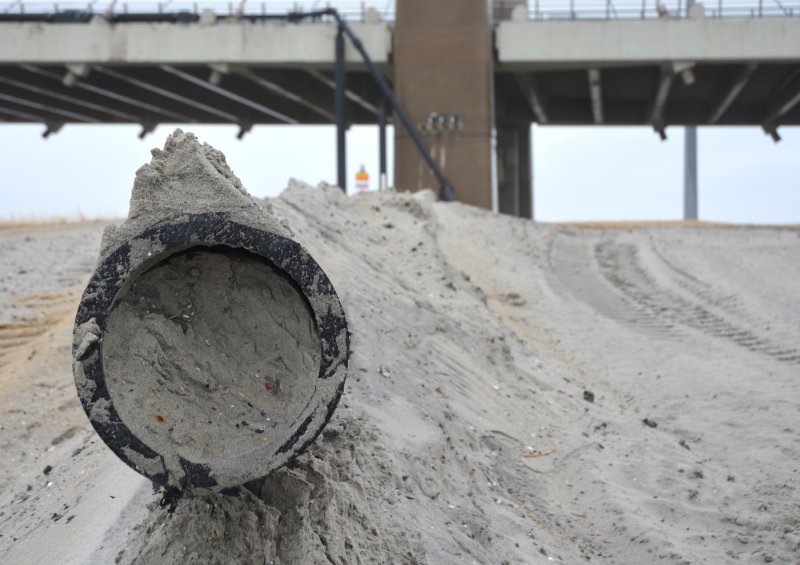
If everything goes as planned, the sand bypass system at the Indian River Inlet will be moving sand from the south side of the inlet to the north within the next couple of weeks.
Operation of the new bypass system is tentatively scheduled to start the week of Monday, March 16, said a March 4 press release from the Delaware Department of Natural Resources and Environmental Control.
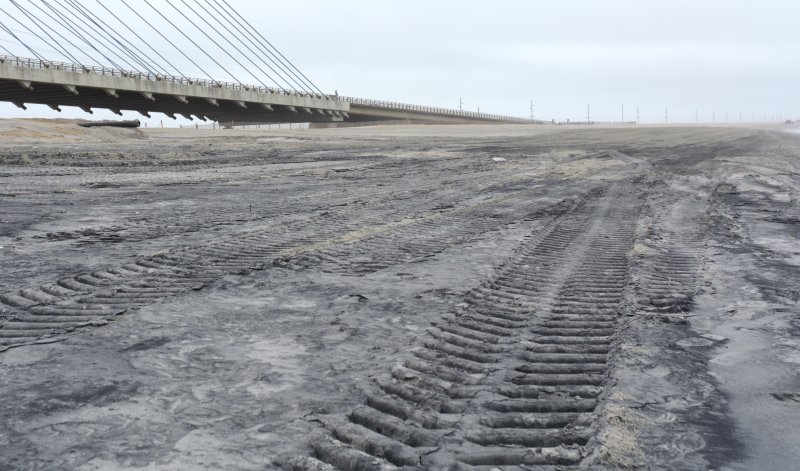
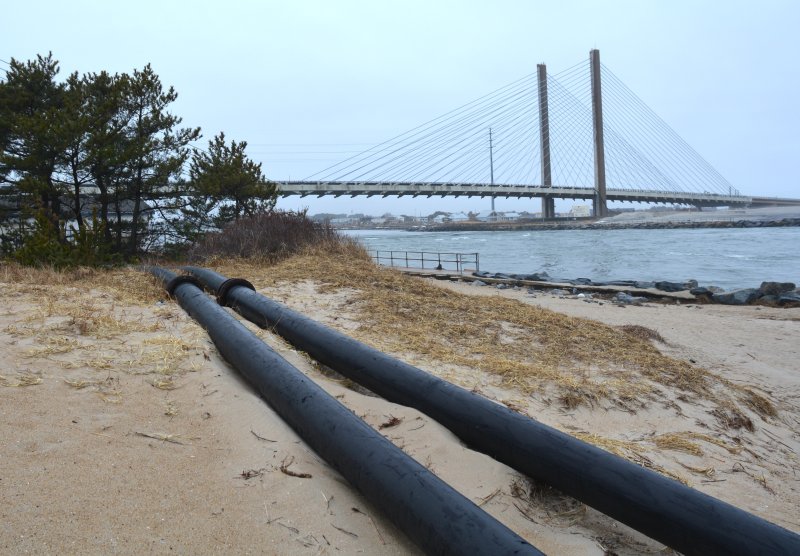
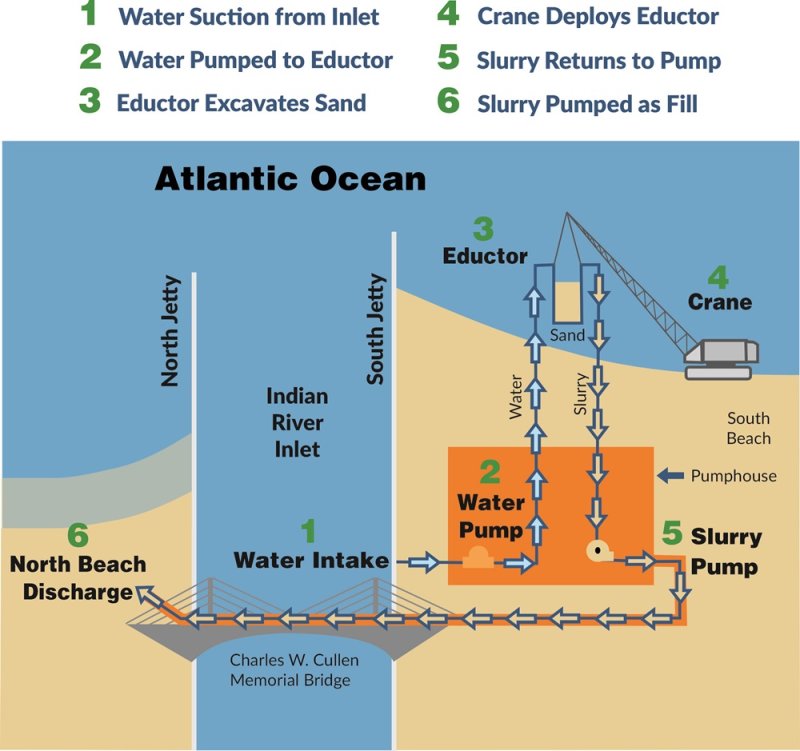
The inlet’s sand bypass system, designed to mimic the natural movement of sand along the Atlantic Coast, hasn’t worked since before COVID. The apparatus sucks sand from an area immediately adjacent to the inlet’s south jetty and deposits it just north of the inlet’s north jetty. The sand travels through a foot-wide black pipe that navigates the inlet by going up a bridge pier on the south side, crossing the span over the inlet and coming back down using another bridge pier on the north side.
The bypass system was recently upgraded with new pumps and a new electric motor, and it underwent a successful trial run this past summer. The expectation is the system will move roughly 100,000 cubic yards of sand a year.
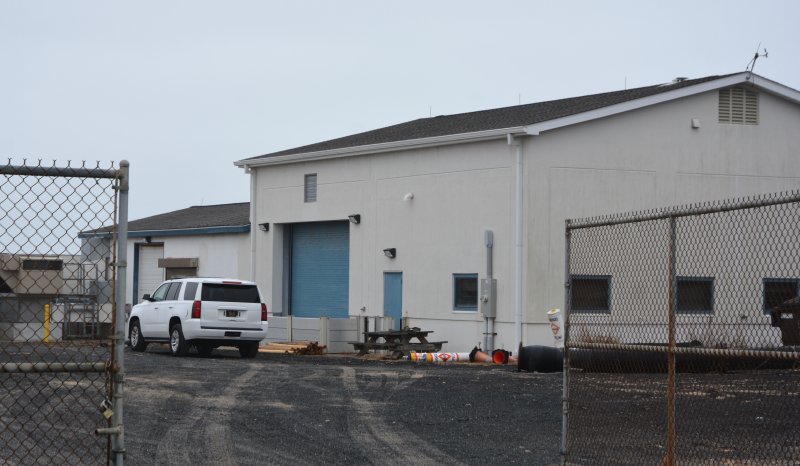
In conjunction with resuming sand pumping, DNREC announced it signed a contract March 3 with First State Crane Service to operate the new system. Previously, when the bypass system was operational, the state maintained a Manitowoc 555 crane with a 150-foot-tall boom, but it was sold this past summer. The crane had been in operation on the Delaware coast since 2004.
First State Crane began moving equipment to the inlet work site March 3. Prep work and pipe placement are expected to begin Monday, March 9, and will require intermittent closures of the beach crossovers adjacent to the inlet’s southside jetty. During pumping operations, DNREC will further restrict access to the inlet’s southside area, with signage and detour markers posted. Similar access restrictions to the northside beach and dune will be in effect for pipe placement and during installation of piping in the inlet.
Fencing and signage will be posted around the work area marking “Do Not Enter” areas for park visitors and recreationists. Disregarding the restrictions as the bypass system ramps up may result in prosecution.
Looking forward, the contract with First State Crane Service calls for the company to operate the bypass system until Friday, May 15, and then to restart the system after Labor Day, when the company will pump sand continuously through May 15, 2027.
The sand pumped by the bypass system will be placed on top of an emergency fortification project that took place over the course of roughly one year – late 2024 to late 2025 – and saw nearly 1 million cubic yards of sand spread over roughly 5,000 feet of the beach on the north side of the inlet. That two-phase replenishment project was a partnership between DNREC and the Army Corps of Engineers, cost between $25 million and $28 million, and was done in response to two dune breaches and a couple of close calls that took place in 2024. The breaches shut down the northbound lanes of Route 1 for hours.
In addition to the sand, 650 feet of sheet piles and more than 12,200 tons of riprap were installed by the state along northbound Route 1.
For more information about the sand bypass system, go to de.gov/sandbypass.

Chris Flood has been working for the Cape Gazette since early 2014. He currently covers Rehoboth Beach and Henlopen Acres, but has also covered Dewey Beach and the state government. He covers environmental stories, business stories and random stories on subjects he finds interesting, and he also writes a column called Choppin’ Wood that runs every other week. He’s a graduate of the University of Maine and the Landing School of Boat Building & Design.