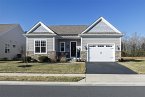













Firsthand input sought on affordable housing

As a decades-long housing boom continues in Sussex County, a local group is asking residents to share firsthand accounts of the challenges created by rising housing costs and long commutes.
The Sussex Economic Development Action Committee is asking workers, employers and families to relate their stories in hopes of using the information to lobby for public policy changes and other solutions.
“It’s to get a pulse,” said SEDAC Chair Scott Thomas during a Feb. 6 interview. “This is a situation that is directly affecting our residents and neighbors. It is also directly affecting people who don’t realize they are affected, but they are.”
According to a news release issued Feb. 5, the initiative focuses on workforce housing, which affects people who work full time in the community but earn too much to qualify for traditional affordable housing and too little to compete in today’s housing market. Teachers, healthcare professionals, first responders and service workers are among those increasingly impacted, the release says.
The effort comes as Sussex County Council moves to implement many of the 20 recommendations finalized in September by the land-use reform working group, which council created to find ways to rein in development.
Thomas said he was encouraged by county council’s plans to redirect housing growth, but he noted that a lot of work will be needed to change the course of a county that has experienced sprawl for decades.
Many of the homes built in recent years are upscale single-family houses for a growing number of retirees moving to Sussex County for low property taxes and resort community living. More than a quarter of housing built in recent years has gobbled up farmland and forests in rural areas, driving up housing prices and burdening roads, schools, emergency services, healthcare providers and the environment.
One of the working group’s suggestions was to change county rules to foster more diverse housing options, especially affordable housing.
Council recently decided to move ahead with efforts that can be achieved more quickly, including changes to the Sussex County Rental Program. The program has drawn little interest over the years, and council wants to find ways to make it economically feasible for developers to use it to help fill the dire need for affordable housing.
“This effort is about listening first,” Thomas said in the news release. “We are hearing from employers and community leaders that workforce housing is becoming a serious barrier to retaining essential workers. By collecting stories, we can better understand the scope of the issue and help inform the conversations and decisions already underway across Sussex County.”
Lack of affordable housing causes widespread harm in a community, he said in the Feb. 6 interview.
“People have to live farther and farther away, and that leads to more problems like traffic and tardiness when trying to get to work,” he said.
SEDAC will use the personal stories it gathers to illustrate problems and help influence the search for solutions, Thomas said.
“This isn't about pro-development or anti-development,” he said, noting affordable housing affects everyday issues like being able to get in to see a doctor and the ability of first responders to reach people in need of help.
Stories may be shared anonymously. SEDAC is asking residents, workers, employers and families to share their experiences and learn more about how workforce housing challenges are affecting Sussex County.
To read stories or share an experience, go to sussexworkforcehousing.com.
There is no deadline for submissions, said Thomas, who expects that within weeks or months, the experiences will become part of public efforts to create change.
“We want to be able to share the stories,” he said. “It is important to help frame why this is important.”

Kevin Conlon came to the Cape Gazette with nearly 40 years of newspaper experience since graduating from St. Bonaventure University in New York with a bachelor's degree in mass communication. He reports on Sussex County government and other assignments as needed.
His career spans working as a reporter and editor at daily newspapers in upstate New York, including The Daily Gazette in Schenectady. He comes to the Cape Gazette from the Cortland Standard, where he was an editor for more than 25 years, and in recent years also contributed as a columnist and opinion page writer. He and his staff won regional and state writing awards.
Conlon was relocating to Lewes when he came across an advertisement for a reporter job at the Cape Gazette, and the decision to pursue it paid off. His new position gives him an opportunity to stay in a career that he loves, covering local news for an independently owned newspaper.
Conlon is the father of seven children and grandfather to two young boys. In his spare time, he trains for and competes in triathlons and other races. Now settling into the Cape Region, he is searching out hilly trails and roads with wide shoulders. He is a fan of St. Bonaventure sports, especially rugby and basketball, as well as following the Mets, Steelers and Celtics.