












If grass is good for dunes, imagine the benefit of trees
The Delaware Department of Natural Resources and Environmental Control is hosting its annual beach grass planting Saturday, March 21. According to the state’s website on the subject, volunteers have planted millions of stems of Cape American beachgrass along ocean and bay beaches since 1990.
“Sand dunes provide protection against damaging coastal storms by absorbing wave energy. Sand dunes offer protection by acting as major sand storage areas which replenish sand to eroded beaches during storm events. Without sand dunes, storm waves rush inland and flood properties. Planting beach grass is a simple and effective way to help protect dunes and beaches,” reads the state’s description for why it hosts the annual event.
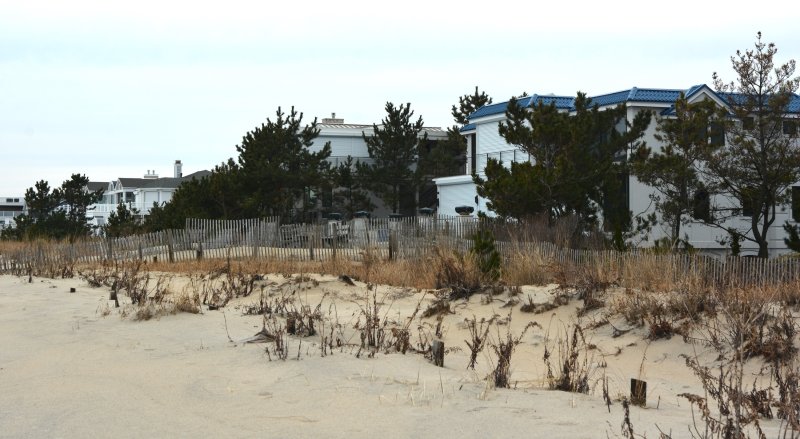
I bring this up because the Gazette ran a letter to the editor recently chastising the homeowners association of the Indian Beach community, located just south of Dewey Beach, for coming up with a plan to remove a large number of pine trees. I generally agree with the letter writer. I find it hard to believe someone would want to remove the trees. If the root system of beach grass is good for the structure of a dune, imagine what the root system of a tree is doing.
However, apparently, the trees can be removed without any permission or permits from the state because the trees are not on a state-owned or maintained beach, and the trees are landward of the coastal building line DNREC has established for the Atlantic Ocean and Delaware Bay.
If the beach community decides to move forward with removing the trees, Jennifer Pongratz, an environmental scientist with DNREC's Coastal Construction Regulatory Program, provided a recommended strategy.
“When advising anyone who legally seeks to remove trees from the dune, whether alive or dead, we recommend cutting them off at grade, leaving their roots undisturbed and planting native dune vegetation in the area where the tree was removed,” said Pongratz, in an email Feb. 19.
There’s a state-led advisory committee looking into adjusting the coastal building line, because it hasn’t been updated since 1979. It’s probably too late for the coastal trees at Indian Beach, but the state should consider the addition of permitting regulations for these types of scenarios. I don’t think the property owners should be prevented from removing the trees, but I do think it’s good to have it documented for when the dune washes away after long-established plant life was removed and they’re looking for taxpayer money to fund a new house.
Old sign is blocking new stop sign
Growing up, whether it was coming from Smyrna or Maine, taking a right at the intersection of Isaacs and Cedar Creek roads just north of Milton meant one thing – we were almost at my mom-mom and pop-pop’s house on Gravel Hill Road. Now, Cedar Creek Road is a convenient way for me to get to from Milton to Milford.
I’m not the only one who thinks that way, which is why, similar to other high-traffic intersections on Sussex County’s once-rural roads, the state recently turned the intersection of those two roads into a three-way stop sign. Presumably, it was done in the name of safety – making that left from Isaacs onto Cedar Creek can be dangerous at the wrong time of day.
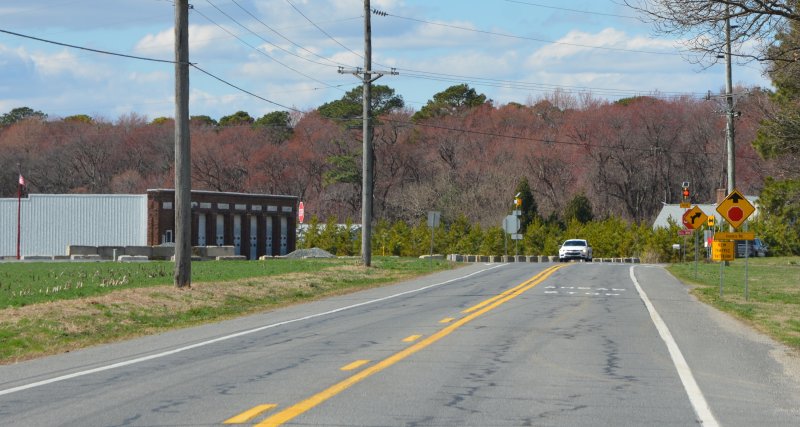
Heading toward Milford, in addition to the new stop sign, a second sign warning motorists of the new stop sign was installed on Cedar Creek Road a few hundred feet before the intersection. Between those two signs is a third sign with a big black curved arrow on it – the universal sign warning of a curve ahead. The third sign was from before the intersection’s traffic pattern changed, and it now partially blocks the new stop sign.
The curve-ahead sign is still likely needed in the area because the curve continues for a bit, but it should just be on the Milford side of the new stop sign. In theory, motorists are now stopping at the intersection and not hammering around a long curve without breaking speed.
Joke of the Week
I celebrated my birthday recently. I feel alright for being 45. While improvements could be made, my doctor tells me my vitals are generally where they should be for a man my age. My doctor also told me 45 is the new 50 when it comes to colonoscopies. She wasn’t joking, so I’ve got that on the horizon. As always, send jokes to cflood@capegazette.com.
Man 1: What’s the best part about getting a colonoscopy?
Man 2: Well, all the poop jokes aren’t the No. 1 thing, but they’re definitely No. 2.

Chris Flood has been working for the Cape Gazette since early 2014. He currently covers Rehoboth Beach and Henlopen Acres, but has also covered Dewey Beach and the state government. He covers environmental stories, business stories and random stories on subjects he finds interesting, and he also writes a column called Choppin’ Wood that runs every other week. He’s a graduate of the University of Maine and the Landing School of Boat Building & Design.