












Jim O’Donnell’s motto: ‘How lucky are you?’
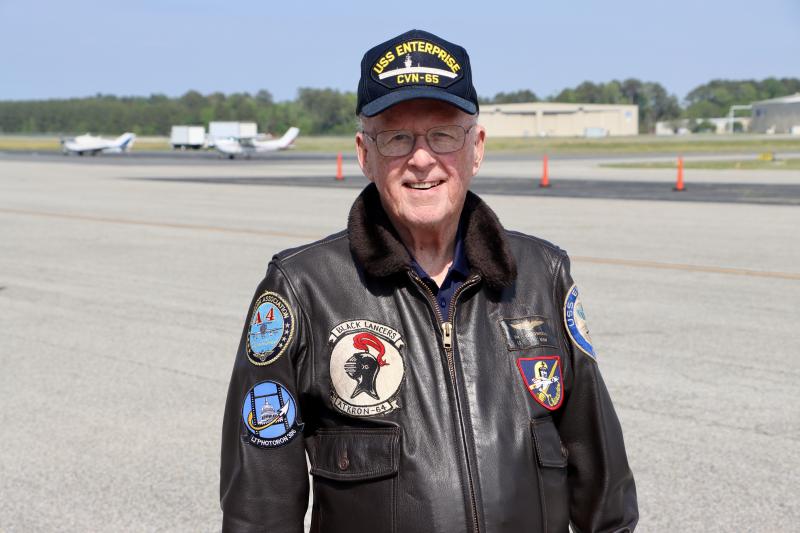
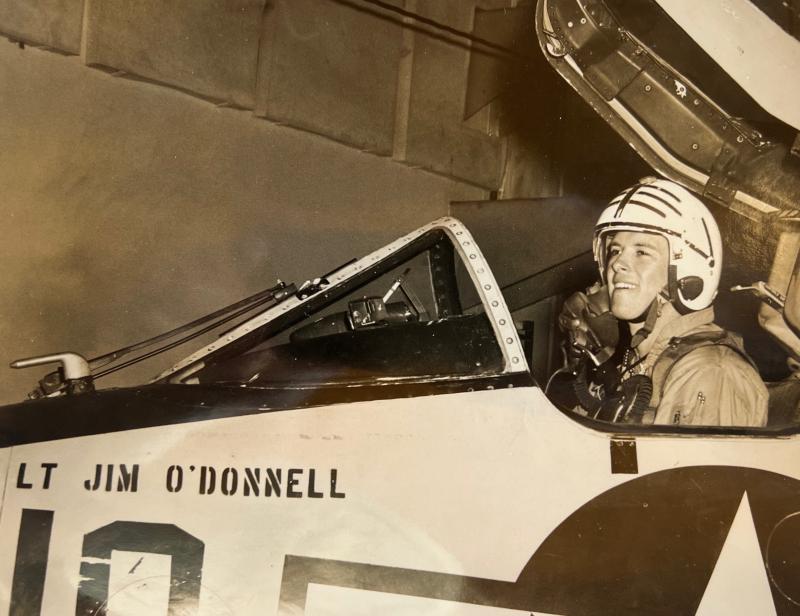
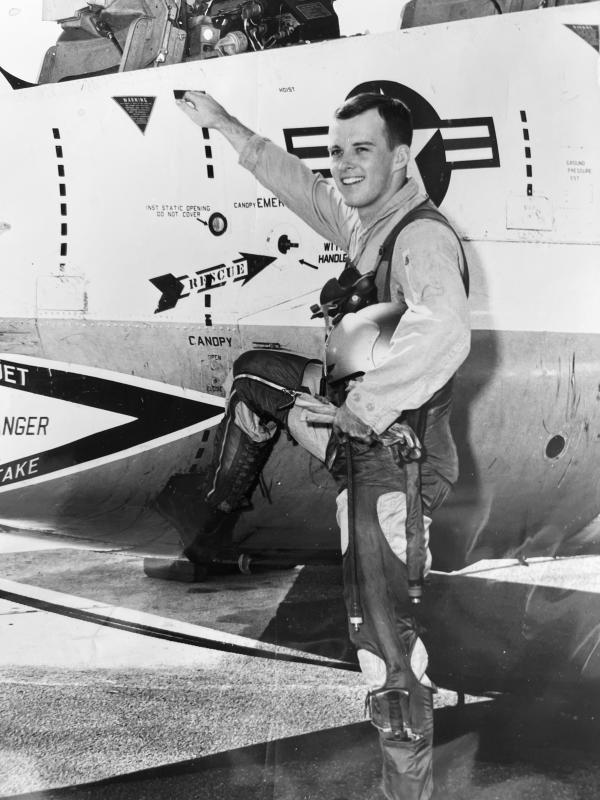
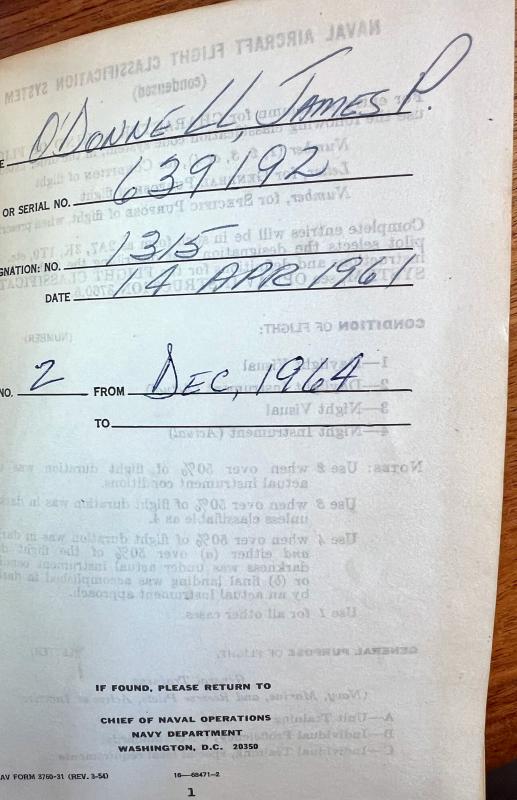
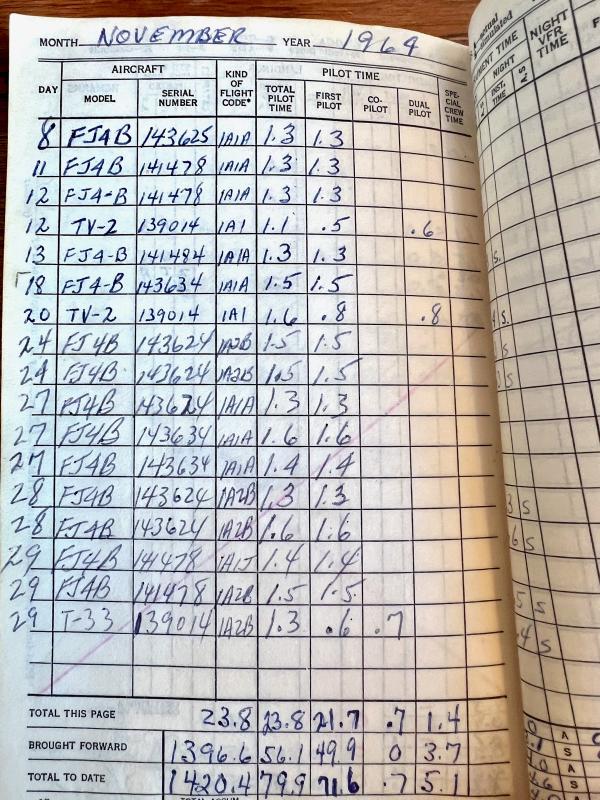
Growing up in Indiana, far from the sea, Jim O’Donnell never thought he would become a naval aviator, catapulting off aircraft carriers. But, there he was, sitting in the cockpit of some of the Navy’s hottest jet fighters of the 1960s.
It was the beginning of the motto that O’Donnell, 88, still lives by today: “How lucky are you?”
“When somebody asks me if they should get into aviation, I ask them, ‘How lucky are you?’ There are a million-and-one disgruntled wives and girlfriends, and a million-and-one medical reasons. The medical tests you have to pass at 20 are the same ones you have to pass at 88,” O’Donnell said.
O’Donnell has been very lucky.
“I’ve never had a mishap; never ‘bent the tin,’ as they say,” he said.
He said he does not even have any aches and pains.
O’Donnell still flies, helping out as an instructor with Ocean Aviation Flight Academy at Delaware Coastal Airport.
“There’s no reason to stop flying, as long as I still pass my medicals,” he said. “I’m going on 70 years now.”
Plus, he said his wife, Isabelle, remains supportive.
The economy is the only thing that holds him back.
“I’m getting priced out of aviation on a retirement budget. It costs $400 an hour to rent a plane,” he said.
O’Donnell graduated from a small liberal arts school, then attended Georgetown University Law School.
“In the later part of college, I thought it would be neat to be a military pilot,” he said.
But he was a philosophy major, a different flight path from most Top Guns.
“The Navy, Marines and Air Force all said, ‘Sorry, have a nice life.’ But I just kept banging on the door,” O’Donnell said.
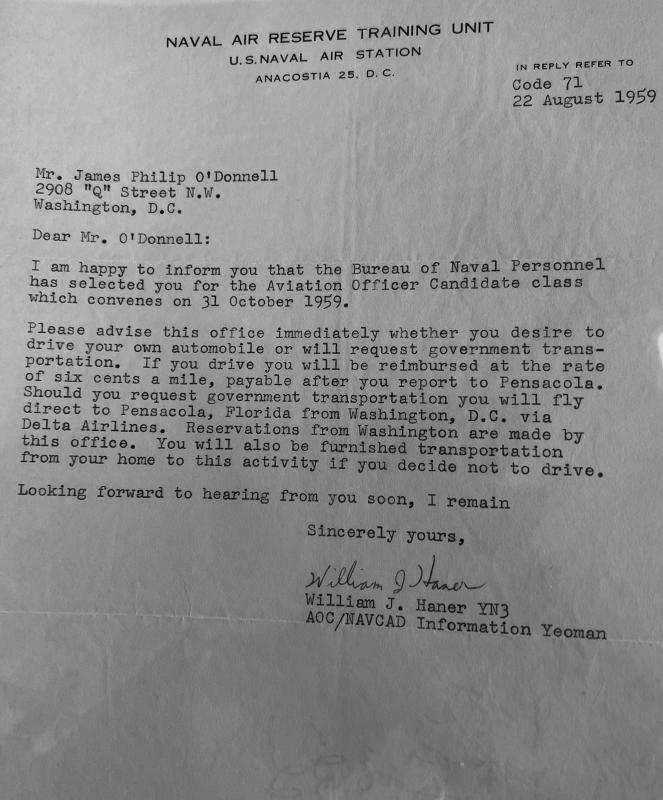
In his second year of law school, he finally got the call. He was accepted into Navy flight school in Pensacola, Fla.
“I slammed the book shut, leaped in the air, and I was on my way,” O’Donnell said.
“When I showed up to be a naval aviator, flying jet aircraft off of aircraft carriers day and night, I had never been in an airplane and had never seen an ocean,” he said.
How lucky are you?
Out of flight school in 1961, O’Donnell was assigned to an A-4 Skyhawk squadron that was stationed on the newly commissioned U.S.S. Enterprise, the nuclear-powered aircraft carrier known as the “Big E.”
He never saw combat, because the ship was part of the Sixth Fleet, primarily stationed in the Mediterranean Sea. But, he was ready if the “Big E” was ever called into action.
“I was trained in conventional and nuclear weapons delivery. That was called the ‘tip of the spear,’ carrying nuclear weapons,” he said.
Even though he never faced an enemy plane, that doesn’t mean there wasn’t tension.
“Don’t get me started on night flying off the carrier. It’s beyond scary,” he said. Eighty-two of O’Donnell’s 300 carrier landings were in the dark.
After five years of sailing around the French Riviera, O’Donnell said he wanted to do something else.
“I didn’t want to go on endless cruises, although I loved my job and time aboard the ship,” he said.
So in 1965, he started a 30-year career with Trans World Airlines, TWA. But, world events intervened and brought him back to a Navy cockpit.
“In 1968, the U.S.S. Pueblo incident happened, the North Koreans seized the [American] ship. The Navy called up a lot of reserves, and I got called back to active duty for 10 months,” he said.
In that time, he was able to fly some of the Navy’s newest and highest-performance jets – the F-8 Crusader and the F-4 Phantom.
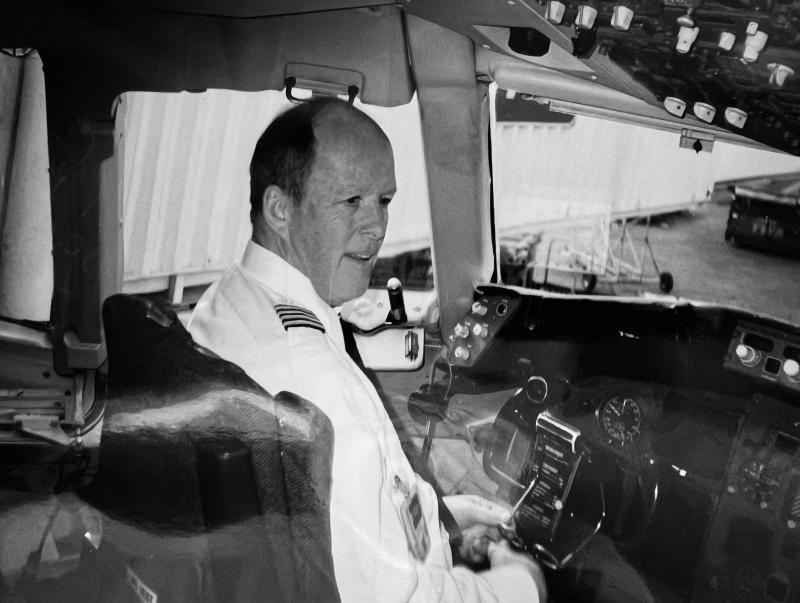
After tensions died down, O’Donnell returned to TWA, where he worked his way up to captain on a Boeing 747.
“It was a privilege and honor to fly the queen of the skies,” he said.
How lucky are you?
On July 17, 1996, O’Donnell was scheduled to captain his first 747 flight from New York’s JFK Airport to Paris. The flight was TWA 800.
That was the flight that exploded over Long Island, killing all 230 people on board. The official cause was the ignition of fuel vapors in the center fuel tank.
But, the schedule was changed due to a training delay and he ended up on another assignment.
“I was in St. Louis that night. I briefed the crew and I think they were all in shock. I was in shock. But, we had to press on. So, we flew to Honolulu,” O’Donnell said.
O’Donnell continued to fly in the Navy Reserves during his time at the airline. He piloted the same fast jets out of Willow Grove, Pa., and Andrews Air Force Base, near Washington, D.C.
He came to Sussex County from Connecticut after he and his wife got tired of making the tedious drive down I-95 to visit their grandchildren, who lived in the nation’s capital.
“I wondered what was to the east. I hung a left and as soon as I got over the bridge, I felt like I could breathe again,” he said.
The O’Donnells have called Sussex County home for 18 years.
When he’s not flying, he’s driving a golf ball. O’Donnell also took up chess at age 85.
He gives back to the community, volunteering at Clothing Our Kids, the American Legion and, off and on, as a pilot in the Civil Air Patrol.
“I always believed in giving back,” he said. “As you get older, you realize how much you have to be grateful for.”
From his acceptance to flight school to more than 30,000 hours in the cockpit, O’Donnell said there is one thing he would change.
“I wish I had gotten a degree in aeronautical engineering, and I would have liked to apply to be an astronaut,” he said. “I don’t know if I would have made it, but when Neil Armstrong was asked if it was hard landing on the moon, he said it was not as hard as a night carrier approach and landing.”
But, O’Donnell said it all goes back to his motto, “How lucky are you?”
“I ended up doing what I was meant to do,” he said. “I feel that I made my mark where I wanted to make my mark, and if you can say that at my age, you’re fortunate indeed.”

Bill Shull has been covering Lewes for the Cape Gazette since 2023. He comes to the world of print journalism after 40 years in TV news. Bill has worked in his hometown of Philadelphia, as well as Atlanta and Washington, D.C. He came to Lewes in 2014 to help launch WRDE-TV. Bill served as WRDE’s news director for more than eight years, working in Lewes and Milton. He is a 1986 graduate of Penn State University. Bill is an avid aviation and wildlife photographer, and a big Penn State football, Eagles, Phillies and PGA Tour golf fan. Bill, his wife Jill and their rescue cat, Lucky, live in Rehoboth Beach.