













Demo Day at the 2026 PGA Show looked like the largest golf show in the world finally made a full recovery from the steep drop in attendance and exhibitor counts experienced in the immediate aftermath of the COVID pandemic.
I interviewed Walker Slaton, manager of Golf Product - Western World, at the Mizuno spot at Orange County National Golf Center. The company’s new product lines caused a day-long stir that was nice to see.
Slaton began the chat with the JPX One driver.
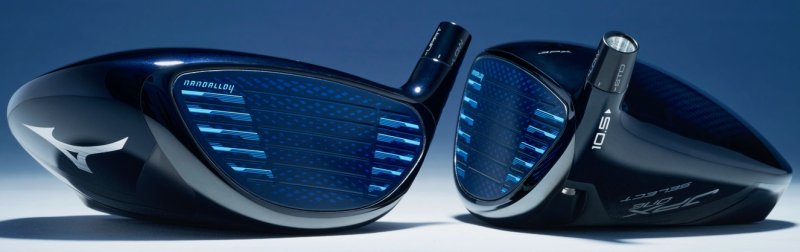
“It’s brand new for us this year,” he said. “It’s basically the same material used in shafts before, but we’re the first to put it in the head of the driver. We put it on the face.”
He continued, “It’s a sheet of nanoalloy on top of a titanium face. Nanoalloy is a really cool material developed by one of our Japanese partners. It is a very firm material in its static state, but once impacted, it becomes extremely flexible. The ball has less energy loss and travels faster after impact.”
In other words, the new face creates a faster rebound without violating equipment rules.
“Not only that, but we were also able to thin out the titanium in the back of the driver face so we’re able to achieve a high COR area. It’s faster and more forgiving across the entire face.”
Expanding the relative “sweet spot” outward from the center of the clubface is the goal of every club manufacturer.
The new driver comes in two basic configurations, JPX One and JPX One Select. Slaton said, “The One Select is a little more pear-shaped, whereas the JPX One is going to be a little bit bigger footprint, at least to the naked eye. They’re all 460 cc [in volume]. The Select is aimed for better players, little bit lower spinning. JPX One is going to be a little more confidence-inspiring.”
The new alloy does not appear in the fairway woods or hybrids. “The nanoalloy works better with more surface area, so the deformation can be spread across the entire space. We’re not able to see the performance benefits to justify the cost it would take to add it to them. So, we left it off them. They’re still titanium face with a carbon fiber cap,” he said.
We also discussed Mizuno’s new wedge lines.
“All our wedges are forged,” Slaton said. You’re going to get the same feel and we’re still charging less compared to others.”
Slaton agreed that compared to other company’s wedges, the Mizuno options appeared to have thinner soles. “They are. A lot of that is our triple sole we instituted in all our forged irons now. It goes back to the MP 32s and 33s, way back when. Something we always keep in mind because turf interaction is so important. It’s worked its way into the JPX Fairway Woods and Hybrids where they have the speed bevel [on the bottom front], just to make sure the turf interaction is better than the previous generation. Not digging too much, just digging the right amount.”
He continued, “Our triple cut sole is always going through different iterations and trying to figure out what’s going to interact with all of the turfs across the nation. It comes down to grass type, the soil, it has to be the same. Our testing tries to make sure it fits the majority of consumers, and no matter what turf you’re playing on, it gives you the most relief possible without digging.”
“The triple cut sole we have is the same [across all models],” Slaton said. “It’s the best version we’ve found. It gives you the best turf interaction into and out of the turf, a consistent ball flight. It does have that thin look you alluded to, but even though it looks thin it’s still going to work like a thicker sole, where I know a lot of people want to see a thicker sole for more confidence, potentially.”
Mizuno is perhaps best known for its irons, so we made sure to chat about them as well.
“JPX is our best-selling family,” he said. “The JPX Hot Metals have been incredible for us. Kind of funny, we were always known as a players’ model iron for a long time. The Hot Metal is not even a forged product, which is what we’re best known for. A complete departure from what we’ve known, but it just shows how the industry has changed [and] also how our technology is changing as well.”
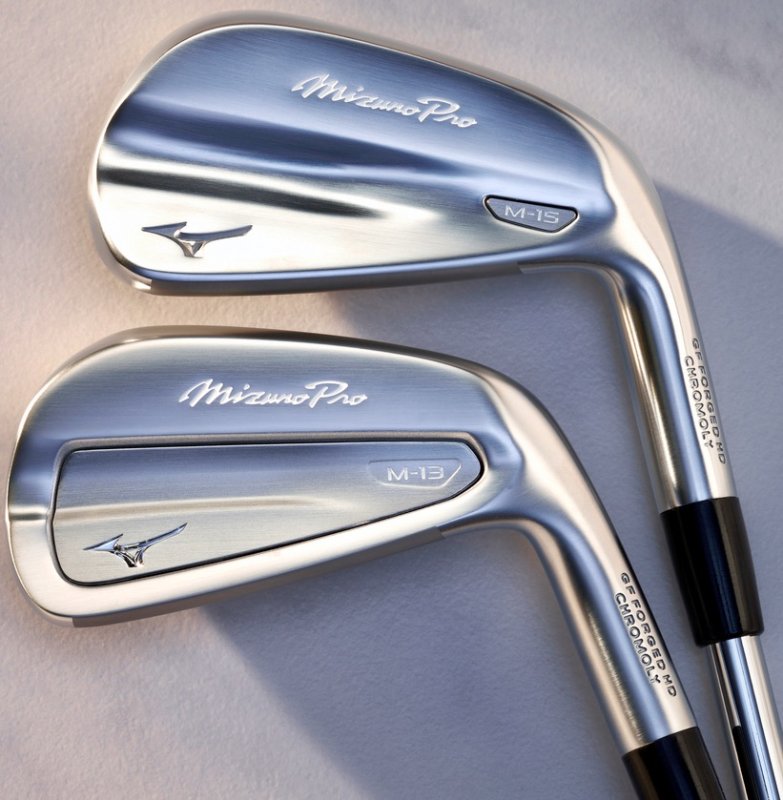
“Last year, we released the JPX Forged models,” Slaton said. “That was the first of our kind to have the Ellipse Tour face forged into the face, developed in cooperation with our forging factory in Japan. The machine we bought allowed us to press with very high pressure on the final forging to make it as thin as possible, which thus makes it as fast as possible. What we did with the JPX Forged and that technology, this year we brought it over to the Mizuno Pro family – the new Mizuno Pro M13 and M15 irons.”
-

Fritz Schranck has been writing about the Cape Region's golf community since 1999. Snippets, stories and anecdotes from his columns are included in his new book, "Hole By Hole: Golf Stories from Delaware's Cape Region and Beyond," which is available at the Cape Gazette offices, Browseabout Books in Rehoboth Beach, Biblion Books in Lewes, and local golf courses. His columns and book reviews are available at HoleByHole.com.
Contact Fritz by emailing fschranck@holebyhole.com.