













Rebate proposed for Delaware taxpayers
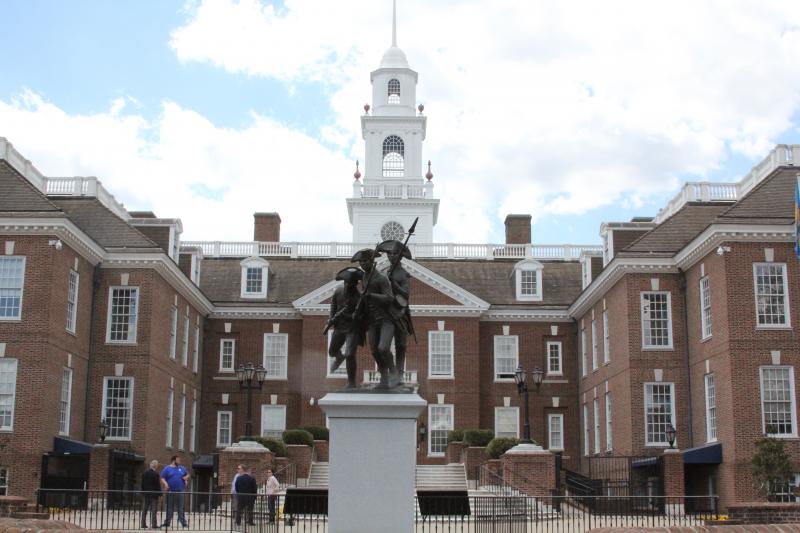
Democratic and Republican lawmakers along with Gov. John Carney announced a plan March 24 that would provide direct economic relief to state taxpayers this spring. The relief plan, agreed to in principle by the leaders of each of the four party caucuses, would send $300 in direct payments to every Delawarean who filed a 2020 tax return, which is the most recent tax year where returns are available. Legislation being drafted to enable the relief payments is expected to be introduced during the session break and considered when the General Assembly returns in April, officials said.
As part of the economic recovery, the state has experienced a significant revenue surplus, which the General Assembly has used to provide record funding for the state’s capital budget, known as the Bond Bill. These investments in infrastructure mean that roads and bridges are being repaired, schools and libraries are being built, and broadband internet is being spread to all corners of the state.
With a projected fiscal year 2023 budget surplus approaching $1 billion, lawmakers decided that providing direct relief to residents is the best way address the economic hardships that rising prices are creating.
“My hope is these direct payments will provide some measure of relief for Delaware families who are dealing with higher costs at the grocery store and the gas pump,” Carney said. “Every taxpayer I’ve ever talked to expects us to manage their money in a way that’s responsible and sustainable over the long term. These direct payments to Delaware families are part of a broader, responsible budget proposal that will invest in education, our economy and Delaware communities, and increase our reserves to prepare our state for the future.”
The bipartisan proposal comes on the heels of a similar Republican one that had considered giving taxpayers a $100 refund.
“The state has hundreds of millions of dollars more than what is needed to pay for our annual funding bills, including prudently setting aside money in reserve,” said state House Minority Leader Rep. Danny Short, R-Seaford. “Hopefully, this rebate will not be treated as a final solution, but rather as a good start toward balancing the state’s needs with those of our citizens.”
With gas prices climbing well north of $4 per gallon, lawmakers considered a gas tax holiday. However, tax revenue from the gas tax is pledged to bonds in the Transportation Trust Fund, making a holiday difficult because the state would be in immediate default of its bond agreements.
Officials said the proposed relief rebate would provide a direct payment to residents and allow them to use those funds to offset additional expenses such as higher gas prices.
“Delawareans are struggling, and this rebate will help provide some much-needed relief as we deal with rising inflation and high fuel prices,” said Senate Minority Leader Gerald Hocker, R-Ocean View. “I am pleased that the four caucuses were able to come together and work on this proposal to help the citizens of our state.”
Providing a $300 rebate for each of the more than 600,000 Delawareans who filed a 2020 tax return would cost approximately $186.6 million. The Delaware Economic and Financial Advisory Council met recently to review updated revenue projections for the current fiscal year 2022. DEFAC is projecting an additional $206 million in revenue for this fiscal year above previous estimates, which would be used to fully fund the rebate program.