












Sussex eyes forest protection law
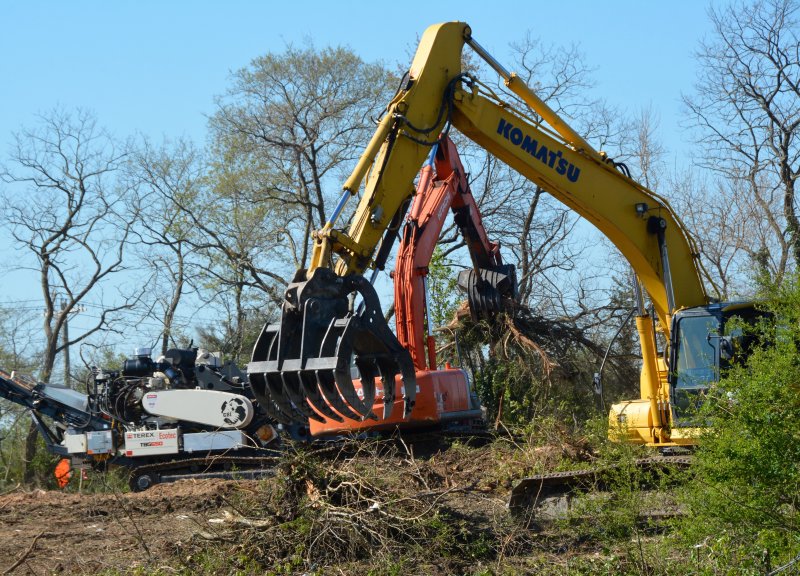
After Sussex County lost 43,000 acres of forest in less than 25 years, Sussex County Council has begun the process to create rules limiting tree removal for new housing developments.
But as the proposal was being outlined at an April 14 meeting, Councilwoman Jane Gruenebaum said the planned changes may not go far enough.
For decades, forests have been largely cleared to make way for construction of single-family houses in rural areas of the county with few restrictions.
Sussex County has lost 43,000 acres of forest between the 1990s and early 2020, according to the Delaware Forest Service.
“So often we’ve seen they come in and they just clear-cut, totally denude the land, and then start all over again,” Councilman John Rieley said at the April 14 council meeting. “This will hopefully mitigate that.”
Gruenebaum said many people don’t appreciate the importance of forests.
“Too often we think of them as just pretty things,” she said. “In terms of economic value, in terms of human health value, in terms of flooding mitigation value, forest preservation is not about Bambi. It’s not about looking pretty, not just about looking pretty.”
As he outlined the forest preservation proposal with Assistant County Attorney Vince Robertson and State Forester Kyle Hoyd, County Administrator Todd Lawson said it will be introduced at the Tuesday, April 21 council meeting.
That would begin a review by the county planning & zoning commission followed by county council, both holding public hearings before possible revisions and a vote by council.
The only forest preservation rule now on the books is buffer requirements for subdivisions. Critics say it has been ineffective in preserving forests.
The proposed rules include one section on forest preservation and another on tree planting.
The tree planting rules set a minimum number of trees that must be planted in a development. Forest preservation can count toward compliance.
The plan was among 20 recommendations by the land-use reform working group created by county council in early 2025 to find ways to redirect and improve housing development that had spread into rural areas.
The rules would be added to existing sections of county code, Lawson said. They would apply to housing developments, including mixed uses that contain residential and commercial space, Robertson said. Exceptions are minor subdivisions with fewer than five homes, Sussex County Rental Program projects and auxiliary dwelling units, he said.
A developer would have to hire a certified forester to conduct a forest stand delineation for any site that has forest. It would assess tree species, their age, condition and location, acreage, the boundaries of the 100-year flood plain and the size of the area that qualifies as a valuable forest that should be preserved.
“Quite a level of detail that doesn’t exist today,” Lawson said. “And certainly quite a level of detail that will help in our review.”
The rules would limit tree removal to 50% of areas determined to be valuable forests in rural areas and 30% in growth areas. Lawson said this will help push development into areas where the county wants growth and where infrastructure exists to support it.
The proposal would also reduce how many houses could be built in rural areas, Rieley noted.
Rieley said the existence of trees on a potential development site will not preclude development.
There is no prohibition to clear-cutting forests, but the developer would have to replant trees based on a formula established in the law.
“That’s a real problem,” Gruenebaum said. “You can’t put a sapling back to replace old-growth forests. That’s just ridiculous.”
Hoyd offered to help the county review projects in the short term.
“Our services are here to be able to help through this entire process until folks get comfortable with it,” he said. “We can see where it goes and what needs to be kind of massaged.”
As the county works through the approval process, it expects to deal with many competing interests.
“It’s still seeking to find that balance between property rights and also people’s compelling interest in the environment and preserving our forest land and so forth,” Rieley said.
“I am certain there is a camp out there that thinks this goes too far and there’s a camp that thinks this doesn’t go far enough,” Lawson said. “It’s up to you to decide where we land.”

Kevin Conlon came to the Cape Gazette with nearly 40 years of newspaper experience since graduating from St. Bonaventure University in New York with a bachelor's degree in mass communication. He reports on Sussex County government and other assignments as needed.
His career spans working as a reporter and editor at daily newspapers in upstate New York, including The Daily Gazette in Schenectady. He comes to the Cape Gazette from the Cortland Standard, where he was an editor for more than 25 years, and in recent years also contributed as a columnist and opinion page writer. He and his staff won regional and state writing awards.
Conlon was relocating to Lewes when he came across an advertisement for a reporter job at the Cape Gazette, and the decision to pursue it paid off. His new position gives him an opportunity to stay in a career that he loves, covering local news for an independently owned newspaper.
Conlon is the father of seven children and grandfather to two young boys. In his spare time, he trains for and competes in triathlons and other races. Now settling into the Cape Region, he is searching out hilly trails and roads with wide shoulders. He is a fan of St. Bonaventure sports, especially rugby and basketball, as well as following the Mets, Steelers and Celtics.