













State agencies partner to offer intruder response seminars

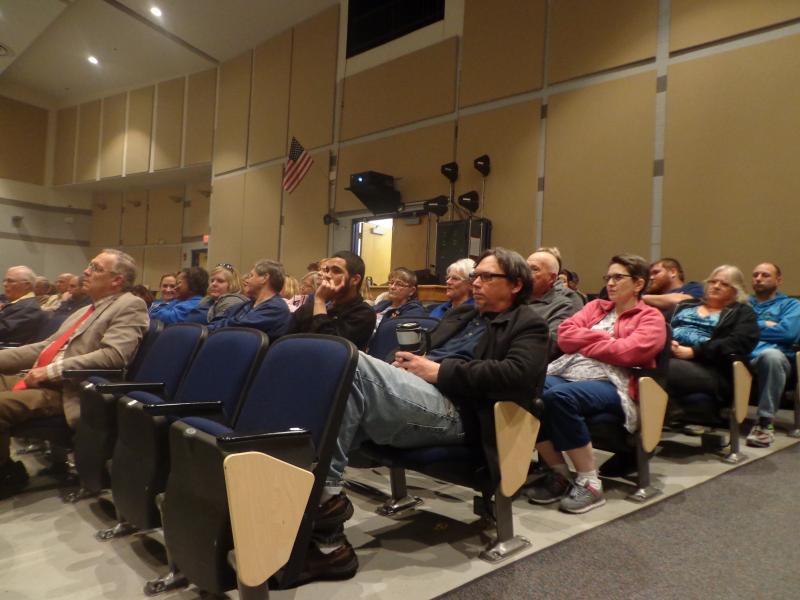

More than 100 educators, healthcare workers and area residents gathered in Sussex Central High School’s auditorium March 28 to learn how to protect themselves and aid others during a large-scale violent event.
“The best strategy against mass violence is prevention,” Delaware State Police Det. Timothy Kerstetter told the audience at the first public, violent-intruder preparedness and response seminar jointly offered by Delaware State Police and Delaware Department of Education. Kerstetter serves as state police terrorism liaison officer and was the first Delaware officer assigned to the FBI’s Joint Terrorism Task Force.
With prevention as the goal, the seminar teaches citizens how to observe and report suspicious behavior, take note of their surroundings, and respond during active shooter or other violent attacks to improve their chance of survival.
“In the aftermath of the high school massacre in Parkland, Fla., we were once again reminded of the frequency of mass, violent active-shooter events that occur quite often at peaceful, lawful venues where we don’t expect any crime, let alone violent crime,” Kerstetter said. “When folks think of national security, homeland security, we think of the metropolis - urban jurisdictions, international airports, international borders, subway systems. All of these venues and threats don’t pertain to us, not in Sussex County, Delaware. That’s why people come to Delaware - to avoid that, right?”
FBI statistics dispute that.
“In light of the April 20, 1999, massacre in a small town in Colorado, the FBI began studying mass violence, which is uniquely different than traditional street crimes,” Kerstetter said, referencing Columbine High School, the deadliest school shooting in America at the time.
Since 2000, 249 active-shooter events have occurred, mostly in suburban churches, schools, shopping malls and movie theaters. America’s five largest cities, including the murder capital for the past two years, Chicago, don’t have active-shooter events.
“It’s towns you never heard of before. It’s Parkland, Fla.; Smith Mountain Lake, Va.; Newtown, Conn.; Littleton and Aurora, Colo.; West Nickel Mines, Pa.,” Kerstetter said. “It’s places no different than our local schools, movie theaters and Amish community. It’s not a big-city epidemic; every 17 days in the United States of America we are having mass killings in areas identical to where we live and work.”
And the trend is spiking. The FBI recorded 29 active-shooter events in 2017, the highest number to date. About a quarter of the time, active-shooter events happen at schools.
“With active-shooter events, nobody thought it would turn into an epidemic, and then, nearly 20 years later, surge at an almost incredible level. For the past few years, we see the highest level of mass-shooter events go up every year. We have a record high, and then a year later another record, then another record, then another record,” he said.
Kerstetter says more and more, police are working with community partners to detect and deter violence.
“We look to the experts in the local neighborhoods and businesses who know what is normal behavior and what is irregular behavior. We work together with these additional eyes and ears of law enforcement to resolve threats.”
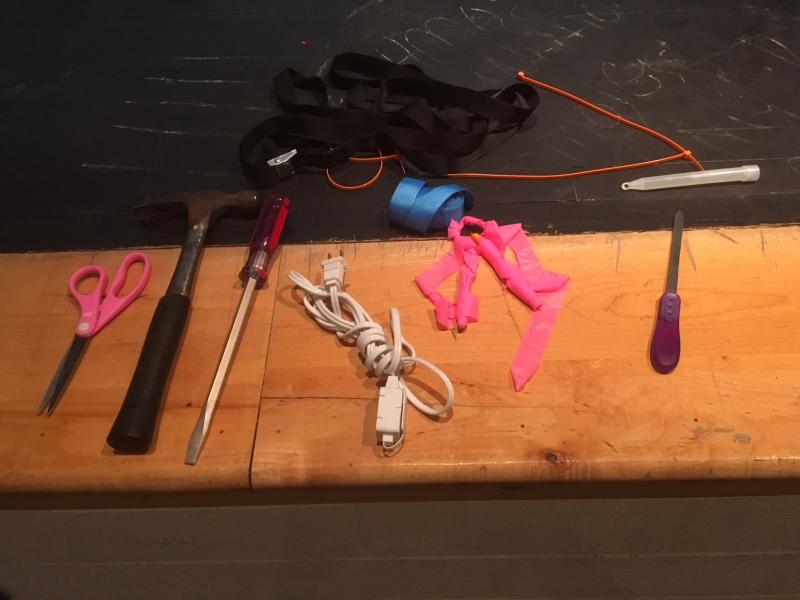
Residents can call the Delaware anti-terrorism tip line at 800-FORCE-12 or Delaware Crime Stoppers at 800-TIP-3333. In addition to being aware of suspicious behavior and reporting it, Delawareans should be ready to run, hide or fight using weapons improvised from area surroundings, he said.
Katie Sherman of Lewes attended the training with co-workers from Fresenius Kidney Care.
“We went to learn what to do in an emergency situation so we could be as prepared as possible to keep our patients safe,” she said. “And, I loved the idea of setting up a code word with my family so that in an emergency, my family knows to listen and follow directions on what to do.”
“I thought the training was something that is needed,” her co-worker Frances Johnson agreed. “As he was saying, these type of incidents are happening not just in big cities; it’s small towns like the ones we live in. That’s scary but very true. And it’s not just happening in schools. You’re hearing a lot about workplace violence, so we needed this training so we would know what steps to take to protect ourselves and our patients.”
The next workshop is scheduled for Tuesday, April 17, at Indian River High School. Call the Delaware Information & Analysis Center at 302-739-5996 or visit www.dediac.org for info.