













Sarah Hayes supports foster youth with rescued horses
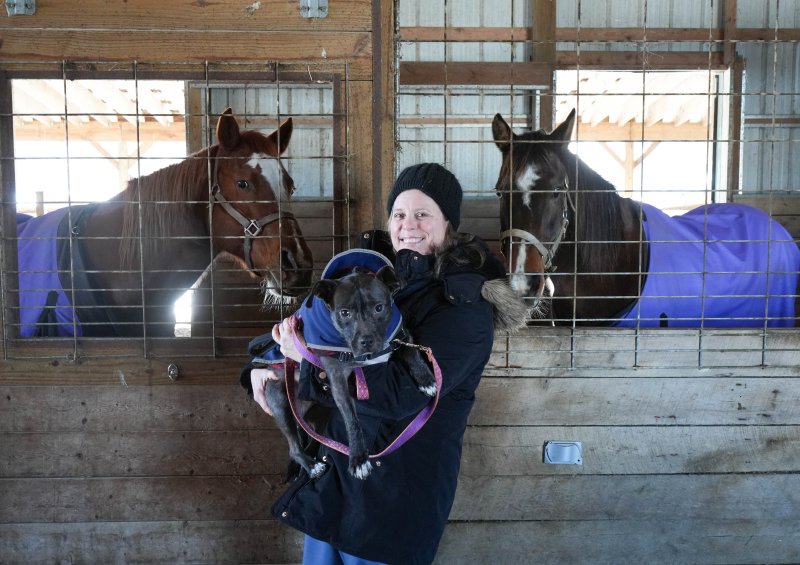
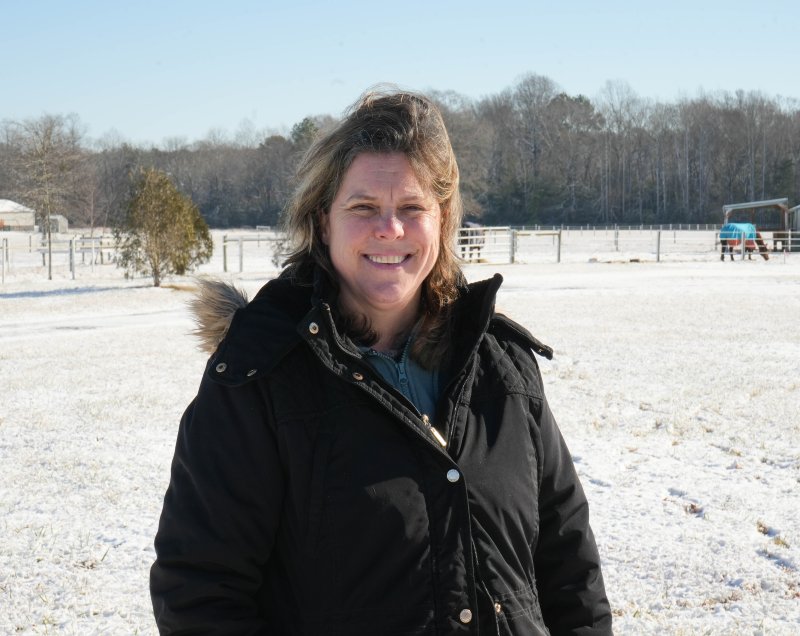
Sarah Hayes fostered a number of misunderstood kids over the years.
They were kids whom most people would consider too much to handle — not because they were bad kids, the Milford resident said, but because they grew up facing extreme life challenges and didn’t know how to express their emotions other than to act out.
“Can you imagine spending your life in a residential treatment facility, a lockdown ward, where your birthdays, your Christmases, your Easters [are all the same]?” Hayes said.
She was a therapeutic foster parent, meaning she was responsible for providing a higher, specialized level of care than a traditional foster parent. The kids often came from treatment centers and had significant emotional, behavioral and medical needs.
But Jesse was different.
“I saw something very special in his eyes,” Hayes said.
Jesse was 8 when she and her husband at the time started fostering him. He made his bed, walked the dogs, loved animals, opened the door for people and always, even on his worst days, stayed positive.
When he started having seizures about three years in, Hayes notified the social workers and his doctors, and they got the best neurologist they could find. But on the day of his first appointment, just a month before Hayes was set to officially adopt him, social services took him away, and Hayes hasn’t seen him since.
“[The system] is so broken,” she said. “They hold kids for their medical, like they’re worth tens of thousands of dollars monthly, where there’s great families like myself that would love a foster child.”
She took the pain of losing Jesse and channeled it into creating a nonprofit, Jesse’s Place Foundation, to give hope and create an outlet for other kids like him.
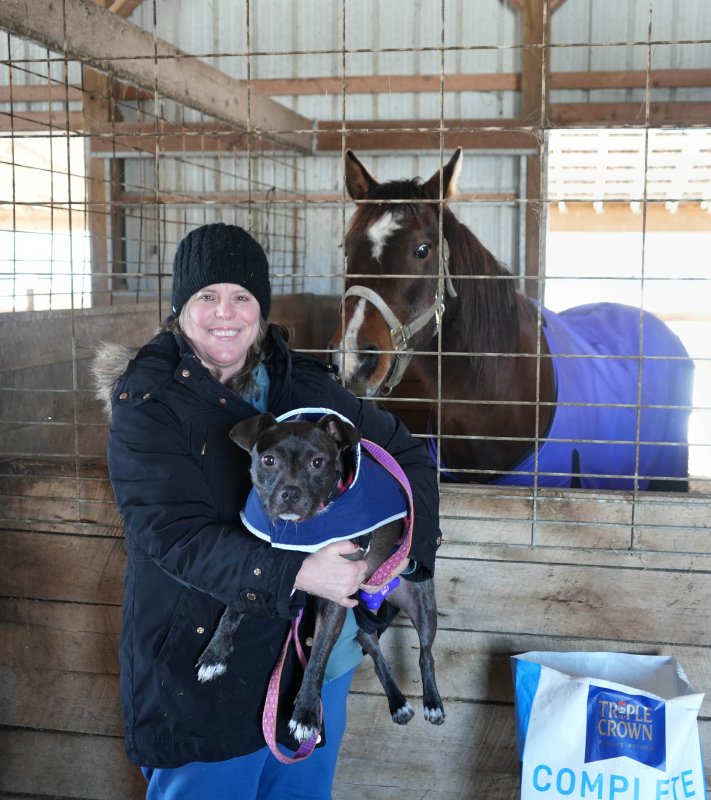
The foundation, based on Hayes’ farm in Milford, is dedicated to improving the lives of foster children and other individuals with trauma through therapeutic experiences in nature with rescue horses and dogs. It is completely run by volunteers.
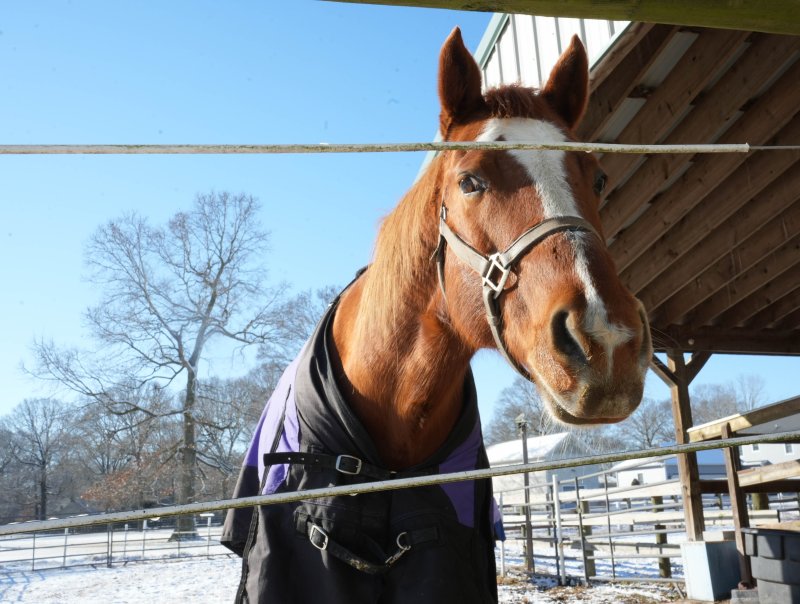
There are five rescue horses at the farm, all with histories of abuse or neglect. One came from a slaughterhouse.
“What better place to heal from trauma than a farm with rescued horses that understand you and who’ve been through that stuff?” Hayes said.
The animals receive veterinarian care and farrier care, and sometimes even therapeutic bodywork and energy healing treatments, so they can live out their days in peace and comfort.
Since starting the foundation in 2023, Hayes has helped more than 150 clients. Each client does an intake with a psychologist and gets a customized treatment plan.
Some come in completely shut down, not wanting to talk to anyone. They might want to talk to the horses instead, or brush them, or walk around the farm, or just sit in the fresh air.
Others come in so angry they want to scream or break something.
Hayes recalled one instance where a client was so scared of horses that she didn’t even want to go into the field. So, the two sat outside the fence in lawn chairs, talking. As time went on, the girl started feeding the horses carrots, and the next thing Hayes knew, she was going in and petting and brushing the horses.
Hayes meets every person where they are and goes at their own pace – and so do the animals.
“The horses are all extremely intuitive, and they can pick up on that and use it for good,” Hayes said. “They will be very gentle with the individual, or, if need be, set loving limits with the person.”
Indeed, research shows horses are highly attuned to human emotions, using cues like facial expressions, vocalizations and even smells – pheromones – to detect and respond to how someone’s feeling.
Several studies, including a 2025 analysis by Boise State University researchers, show that equine-assisted therapy, and animal-assisted therapy in general, can be transformative for people, especially children recovering from trauma. Interacting with animals enables them to develop healthy therapeutic relationships, which can otherwise be challenging.
Hayes has been around horses almost her whole life, and she is both a riding instructor and a certified veterinary technician for large and small animals.
In 2003, she co-founded a similar nonprofit in Virginia, where she used to live, with her mom, offering therapeutic services with rescue horses for people with trauma and PTSD, and those recovering from addictions.
She helped run the organization for more than 10 years but stopped when she decided to become a foster parent.
Through Jesse’s Place, she’s returned to her roots, combining her love for animals with her passion for helping foster kids.
Her clients, she said, are like flowers.
“They might [come in] wilted and frail, but they open and grow,” Hayes said.
Every time a client leaves the program, they get a certificate and a photo with their favorite horse.
“Ever since I was a little girl, it’s been my life’s mission to help children and animals, and people who are lost and broken and need help,” Hayes said. “I believe Jesse and I came into each other's life for a real reason, to help one another, and I want to give that same hope and love back to some other kid that needs it.”
For more information about Jesse’s Place and the services it offers, or to get involved, go to horseshelpingchildren.org.

Ellen McIntyre is a reporter covering education and all things Dewey Beach. She graduated with a bachelor’s degree in journalism from Penn State - Schreyer Honors College in May 2024, then completed an internship writing for the Pittsburgh Post-Gazette. In 2023, she covered the Women’s World Cup in New Zealand as a freelancer for the Associated Press and saw her work published by outlets including The Washington Post and Fox Sports. Her variety of reporting experience covers crime and courts, investigations, politics and the arts. As a Hockessin, Delaware native, Ellen is happy to be back in her home state, though she enjoys traveling and learning about new cultures. She also loves live music, reading, hiking and spending time in nature.