












McCarron: State road deficiencies contribute to defeat of Atlantic Fields

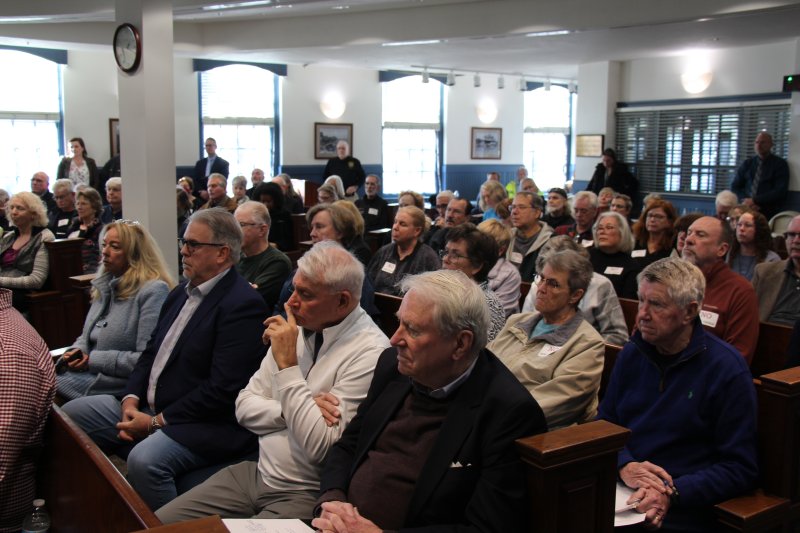
Sussex County Council’s unanimous defeat Jan. 13 of a zoning change for the 665,000-square-foot Atlantic Fields retail development illustrates failures in state road planning, a county councilman said afterward.
Steve McCarron, who took office a year ago, aired his concerns during a comment period for council members, but many in the audience for the council’s decision had already filed out of the room.
“A vote considered controversial was taken earlier today, and it requires both the county and the state to confront a reality that has been ignored for far too long,” McCarron said.
“Today, this council was forced to deny a multimillion-dollar private investment because the state has failed to deliver the infrastructure necessary to support development in a corridor it has identified as a growth area for decades,” he added.
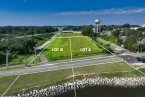
While Atlantic Fields was expected to be completed in 2028, there is no firm funding or schedule for construction of road improvements in the area around the site at the corner of Route 24 and Mulberry Knoll Road.
Decades of booming residential growth have not been matched by adequate state investment in roads to support it, which was one of the reasons given for rejecting a project that would create about 1,750 jobs.
“Growth has brought benefits: Landowners have gained equity, motivated individuals can readily find work and small businesses continue to thrive,” McCarron said. “There are regions of this country that would welcome the level of demand Sussex County has sustained for decades.
“But growth without infrastructure is not success; it is failure,” he said.
Agriculture and tourism, Sussex County’s top two industries, rely on the transportation system, McCarron said.
“They cannot function efficiently, safely or competitively when primary corridors suffer from a lack of investment,” he said.
The state has criticized Sussex County for allowing housing sprawl in rural areas, where increasing traffic congestion is burdening roads, schools, healthcare providers, emergency services and the environment.
The Atlantic Fields site is in a Coastal Area on the county’s Future Land Use Map, where growth is anticipated. It is also in a state Transportation Improvement District, where traffic is projected and developers fund some road improvements. A separate state spending and policies document expects growth in that location.
McCarron said the county has not seen enough return for the financial windfall it has provided for Delaware.
“Sussex County has consistently produced for this state,” he said. “In the same areas, the state has collected hundreds of millions of dollars in realty transfer tax revenue. Yet the very roads generating that revenue remain mostly unchanged. It is going to take more than 2.5 miles of a dual-lane Route 24, five roundabouts and 100 four-way stops.”
Traffic issues on routes 5, 9, 16, 24 and 54, and other roads have been studied for decades and options discussed, McCarron said.
“Some of the proposed solutions date back to the early 1990s, when limited-access concepts were already being discussed,” he said. “Thirty years later, Sussex County residents are still sitting in traffic, still facing safety concerns and still being told to wait.”
McCarron noted state Rep. Claire Snyder-Hall, D-Rehoboth Beach, had opposed the project during public hearings last year and urged her to press the county’s concerns in the General Assembly.
“I am still shocked by the testimony of a sitting state representative opposing a $150 million investment in their own district,” he said. “I hope that same representative takes that frustration back to Dover and directs it where it belongs – at the state’s failure to invest in the infrastructure it alone controls.”
“We need to get the infrastructure in place before we build,” Snyder-Hall said Jan. 14. “I’m definitely working with my colleagues in Dover to talk about the need for infrastructure before we build.”
She declined to provide information about those discussions.
A big part of the problem has been Sussex County approving housing growth not only where it is expected, but also where it is not anticipated, Snyder-Hall said.
“Is there an obligation for the state to keep up with all of that when it is not involved in the planning?” she asked.
The meaning of the county’s Atlantic Fields zoning change denial should not be misconstrued, McCarron said.
“This was not a rejection of growth,” McCarron said. “It was a rejection of pretending this area can absorb more traffic without meaningful state investment.”
“I could not possibly say it any better than Councilman McCarron,” said Council Vice President John Rieley. “I fully agree, 100%, and I hope the 5-0 vote today helps to send that message.”
“It is time for Delaware to seriously reconsider how it treats its workhorse county,” McCarron said. “When Sussex County is forced to deny transformative projects solely because the state has failed to invest, it sends a clear message: Sussex County cannot continue to serve as the ATM for the rest of the state while receiving inadequate infrastructure in return.”

Kevin Conlon came to the Cape Gazette with nearly 40 years of newspaper experience since graduating from St. Bonaventure University in New York with a bachelor's degree in mass communication. He reports on Sussex County government and other assignments as needed.
His career spans working as a reporter and editor at daily newspapers in upstate New York, including The Daily Gazette in Schenectady. He comes to the Cape Gazette from the Cortland Standard, where he was an editor for more than 25 years, and in recent years also contributed as a columnist and opinion page writer. He and his staff won regional and state writing awards.
Conlon was relocating to Lewes when he came across an advertisement for a reporter job at the Cape Gazette, and the decision to pursue it paid off. His new position gives him an opportunity to stay in a career that he loves, covering local news for an independently owned newspaper.
Conlon is the father of seven children and grandfather to two young boys. In his spare time, he trains for and competes in triathlons and other races. Now settling into the Cape Region, he is searching out hilly trails and roads with wide shoulders. He is a fan of St. Bonaventure sports, especially rugby and basketball, as well as following the Mets, Steelers and Celtics.