












Milton parks committee close to wrapping up report
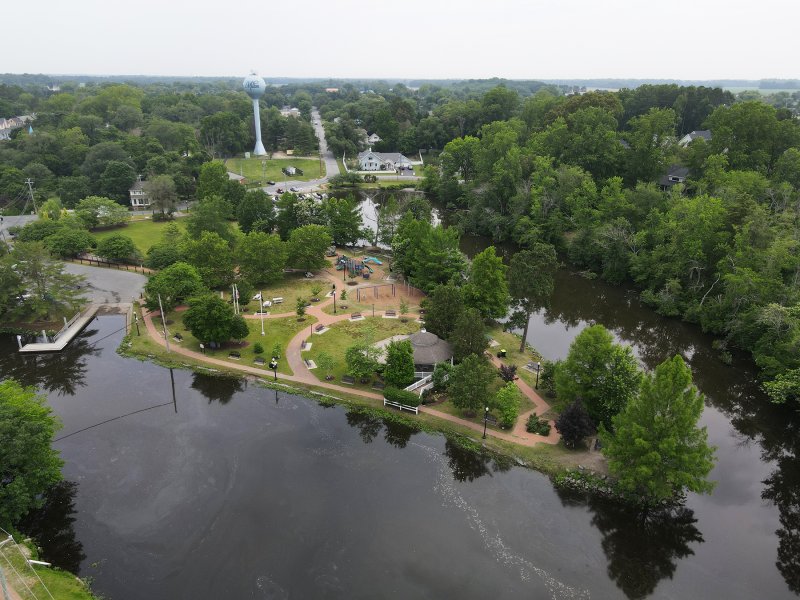
The Milton Parks and Recreation Committee is close to completing a report for town council detailing the present conditions of parks and recommendations for how those parks can be improved moving forward.
The report is part of a year-long effort by the committee aimed to take an inventory of Milton’s park system, an overview of the parks’ native natural resources, an assessment of available open space for the expansion of public parks, and a summary and recommendations for enhancing existing recreational facilities.
At the committee’s Jan. 28 meeting, the report identifies four major parks in Milton: Memorial Park, Mill Park, Governor’s Walk and the Rails to Trails.
As the largest park, 5.5 acres, Memorial Park has the most recommendations for how to potentially improve it going forward, including shoreline protection measures, access upgrades for the boat ramp, assessment and potential upgrade of the playground equipment, shade structures near the playground, fencing near the shoreline, continued investment in lighting and power at the gazebo, and erecting wayfinding signs to direct people to local businesses.
At Mill Park, the committee recommended continuing public art projects through the Milton Arts Guild and Milton Main Street, wayfinding signs for nearby businesses, historical signs on the town’s history of milling and the history of the Broadkill River, and possible upgrades to the floating dock.
Governor’s Walk and Rails to Trails are more walkways than parks, so the main recommendations are for seating, native plant displays and, at Governor’s Walk, historical tie-ins to the Delaware History Trail.
The report acknowledges opportunities to acquire more land for parks within the town are limited. As for acquiring land, the Granary at Draper Farms is planning to include dedicated park land within its development, and town officials have discussed having a basketball court or some type of recreational facilities at the proposed new administration building on Magnolia Street. The town will also have available land once the current wastewater treatment facility on Front Street is demolished, with early proposals calling for a bicycle connection and park at that site.
The report recommends adopting a Recreation For All strategy aimed at utilizing shared resources, such as trail connections, pocket parks and public access improvements, including a proposed pathway between Heritage Creek and Cannery Village that has been planned by the state.
In its conclusion, the report calls for three potential next steps: First, implementing the Recreation For All strategy in order to maximize what the town already has by improving connections between places.
Second, position Milton as an ecotourism hub by promoting natural resources within town such as the Broadkill River and places outside town like Prime Hook National Wildlife Refuge.
Finally, and the most long-term aspiration of the committee, is to establish a dedicated parks and recreation department within the town government. The report says that as Milton continues to grow, it makes less sense for so many functions of maintaining the park system to spread out among multiple departments. The report recommends hiring one paid professional as a parks and recreation supervisor who would work with the town manager and parks supervisor.
Still, as committee chair and Councilman Scotty Edler put it, “This is aspirational.”
The committee will meet again Wednesday, Feb. 25, to review the report one more time before possibly voting on it and sending it to town council.

Ryan Mavity covers Milton and the court system. He is married to Rachel Swick Mavity and has two kids, Alex and Jane. Ryan started with the Cape Gazette all the way back in February 2007, previously covering the City of Rehoboth Beach. A native of Easton, Md. and graduate of Towson University, Ryan enjoys watching the Baltimore Ravens, Washington Capitals and Baltimore Orioles in his spare time.