











Wastewater upgrades driving Rehoboth budget increase
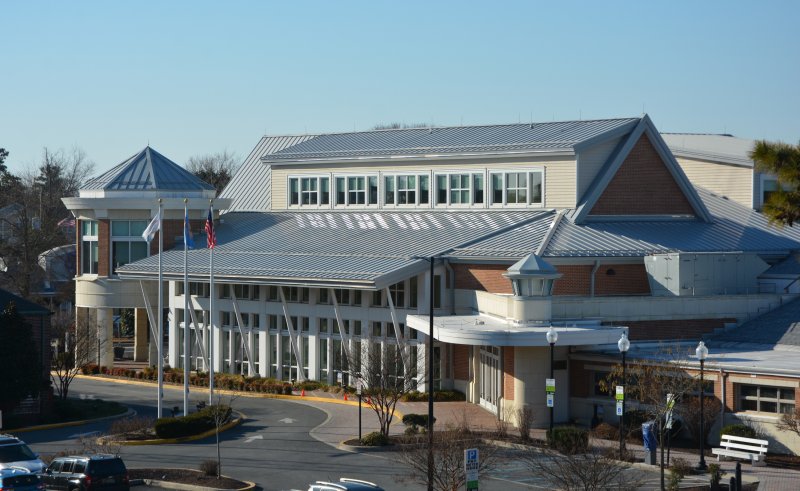
Rehoboth Beach officials have begun discussions for Fiscal Year 2027, and if the budget passes as proposed, the city will exceed $50 million in expenses for the first time. However, a significant portion of the expenses are wastewater capital improvements, which is a cost the city shares with Sussex County.
Rehoboth’s fiscal year runs April 1 to March 31. Each year, city commissioners begin their budget review in January.
City Manager Taylour Tedder presented the staff-recommended budget to commissioners during a special meeting Jan. 16. There are no tax increases and no new employee positions, but there is a 2% cost-of-living increase for employees, he said.
As proposed, the total among the city’s three funds – general fund, water fund, wastewater fund – is about $50.6 million, which represents a year-over-year increase of roughly 16%. The approved budget for the current fiscal year is roughly $43.7 million.
As proposed, the general fund, which the city uses for day-to-day operations, would increase by about 1.8%, from roughly $28.3 million approved for the current year to $28.8 million for next.
The proposed budget includes a capital outlay of roughly $16.2 million. Nearly half of it – $7 million – is for Phase IV of capital improvements to the city’s wastewater treatment plant.
Back in October, the city awarded a $21.3 million contract to complete the final phase of a years-long plan to improve the city’s wastewater treatment plant. The new contract would be added to the $63 million spent on the other three phases.
Henry Matlosz, public works director, said to pay for the final phase, there will be similar amounts in FY 2028 and FY 2029.
Commissioner Craig Thier said it was important to remember that the city would only be responsible for roughly $7 million of the total $21 million because of a cost-sharing agreement with the county that has its customers picking up 65% to 70% of those costs.
The general fund capital budget includes $150,000 for a new audiovisual system for the convention center; $200,000 worth of punch-list items for the new beach patrol building; $325,000 for a new trash truck; $235,000 for a new leaf vacuum truck; $600,000 for the city-wide street paving program; $350,000 for storm sewer assessment and repairs; at least $100,000 for sidewalk repairs; $550,000 for Phase II and Phase III of the LED retrofit project for city streetlights on Rehoboth Avenue and the Boardwalk; $800,000 for repairs to the Delaware Avenue stormwater outfall; $200,000 for a project to clean out the western prong of Lake Gerar; and $200,000 for replacement of the Lake Gerar fishing pier, almost all of which has been funded by a city resident’s donation.
The water department capital budget includes $300,000 to replace Well 6; $500,000 to replace water meters; $350,000 for water main replacement; $250,000 for carbon filter media replacement for the Lynch Wells; and $100,000 to replace the department’s building by incorporating it into the wastewater headquarters.
Changes to fees, fines and penalties
Despite no proposed increase in taxes, there are increases in other areas.
Back in November, the city adopted an official schedule of its fees, fines and penalties. At the time, staff said they would be back during the budget season with proposed changes to the schedule. Those changes were also discussed at the first budget meeting.
One of the changes is related to labor costs associated with staff time fulfilling public requests. Currently, it’s $20 an hour. As proposed, the first 30 minutes would be free, but additional time would be billed in 15-minute increments at the hourly plus overhead rate of the lowest-paid staff member capable of performing the service.
Assistant City Manager Evan Miller said some requests can be handled by multiple employees, and not all employees are paid the same.
There’s a proposed change to signs. Currently, real estate signs are $10, while all other signs are $50. As proposed, all signs would be $75.
There is a proposed increase in reviewing plans – from $200 to $300 for all major residential construction; $500 to $750 for new construction with one dwelling unit; the same increase for new construction with more than one dwelling unit, but the per-dwelling unit review would increase from $10 to $50; $300 to $500 for all major commercial construction; $1,000 to $1,500 for all new construction not involving minor or major interior or exterior renovations; and $25 to $100 for each failed inspection.
There would be a 20% increase across the board for all business licenses. There would also be an increase in fines for licensing violations – $200 for the first offense and $500 for each subsequent offense.
The license for a private pool would increase from $50 to $100.
Restoring water service that’s been discontinued would increase from $30 to $200. There are also proposed increases to general water connection charges.
The staff didn’t recommend any changes, but there was also a discussion about the fees the city charges for use of the convention center.
Budget review schedule
Looking ahead, Rehoboth officials are expected to resume budget discussions Monday, Feb. 9, with department-specific presentations, except for public works.
The third budget meeting is slated for Friday, Feb. 20, and will include presentations on enterprise funds – wastewater and water – and public works.
The fourth budget meeting is set for Monday, March 9, and will focus on community partner contributions and final questions.
The expectation is that the commissioners will approve the budget during their meeting Friday, March 20.

Chris Flood has been working for the Cape Gazette since early 2014. He currently covers Rehoboth Beach and Henlopen Acres, but has also covered Dewey Beach and the state government. He covers environmental stories, business stories and random stories on subjects he finds interesting, and he also writes a column called Choppin’ Wood that runs every other week. He’s a graduate of the University of Maine and the Landing School of Boat Building & Design.