












DAR to host ‘America’s Tapestry’ traveling textile exhibit Feb. 28
To commemorate the 250th anniversary of the Declaration of Independence in 2026, artist Stefan Romero is leading “America’s Tapestry,” a traveling textile exhibition featuring 13 hand-embroidered panels representing each of the original colonies, created in partnership with historical organizations and the Embroidery Guild of America.
The Col. David Hall Chapter of the Daughters of the American Revolution will host a public event for the Delaware panel from 10 a.m. to 4 p.m., Saturday, Feb. 28, at the Maull House, 536 Pilottown Road, Lewes. Participants will have the opportunity to add stitches directly to the artwork. Stitchers must register in advance for one-hour time slots, with space for four stitchers at a time. No previous sewing experience is required, and all materials will be provided. To learn more and register, contact Mary Alice Kelly at makelly.dar@gmail.com.
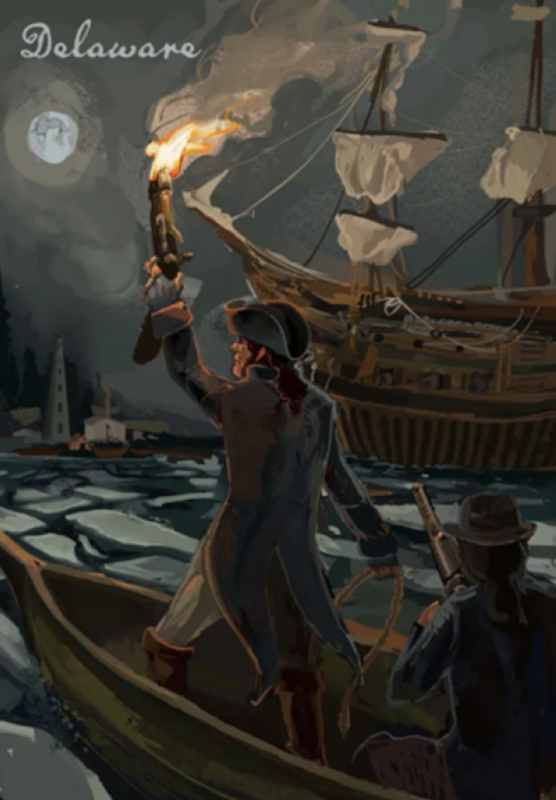
The Delaware panel captures a pivotal moment in the American Revolution, highlighting the heroism of Maj. Henry Fisher of Lewes, known as the “eyes and ears of the Revolution.” A steadfast patriot, Fisher played a critical role in safeguarding the Delaware River and surrounding areas from British incursions. He raised and funded a force of 100 soldiers to defend Cape Henlopen and the bay, often using his own resources to feed and care for his troops. In the embroidered scene, Fisher is depicted firing a signal gun to warn patriot forces of an enemy ship near the Delaware Bay.
“It is an honor to represent our nation through a needlework project that will serve as a lasting legacy of this historic anniversary,” said Romero. “Preserving this traditional art form is an important way to honor America’s cultural identity as we look toward the next 250 years.”
Romero, 27, is a graduate of Carnegie Mellon University’s College of Fine Arts and a specialist in Colonial American dress and textiles. He is leading the partnership with William & Mary, Seton Hill University, and several historical and craft organizations. Each panel tells the story of a colony’s struggle for independence, highlighting contributions that are often overlooked in traditional historical narratives.
Artisans from New Hampshire to Georgia are collaborating with historical organizations to research, design and stitch the imagery, with many sites hosting stitchers as the work progresses.