













DNREC explains energy funds
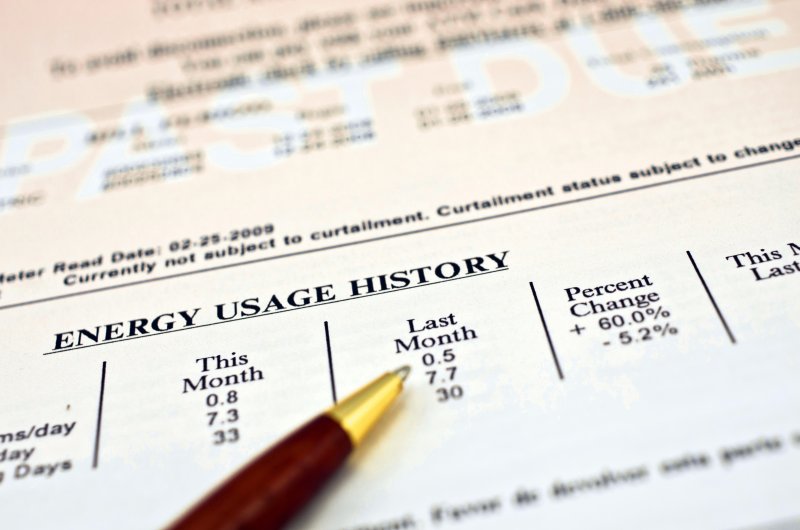
Department of Natural Resources and Environment Control officials recently shared how surcharges on customer energy bills are used to fund several energy programs.
During the Feb. 17 Joint Finance Committee hearing, DNREC Secretary Greg Patterson said hundreds of millions of dollars in energy bill surcharges have helped fund several state programs stemming from 2008 legislation that was passed and signed into law.
Sen. Stephanie Hansen, D-Middletown, asked about energy programs that DNREC runs and where the money comes from.
“It’s a very confusing area, and there’s been a lot said that has been untrue,” Hansen said.
Last year, Delaware received $50 million in RGGI funds, 65% of which went to Energize Delaware, the state’s sustainable energy utility, to help weatherize and make homes more energy efficient for low- to moderate-income residents, and provide loans for solar panels and other green power programs, Patterson said.
Over the past two years, he said, $12 million has gone to farms to reduce their energy bills, and communities across the state for energy efficiency and renewable energy projects. Laurel has received $6 million, Milford $7.5 million and Wilmington $10 million.
DNREC’s weatherization project helped improve 400 homes in 2025, using 10% of Delaware’s RGGI funds. Another 5% goes to a low-income housing assistance program, and a greenhouse gas fund goes to projects aimed at reducing greenhouse gas emissions.
Patterson said RGGI originated with former President George W. Bush’s administration as a way for power plants to pay for pollution created by them.
“It becomes a cost of doing business for them … This is our regulatory tool to control emissions,” Patterson said.
Hansen then asked about alternative compliance payments – million of dollars predominately paid by Delmarva Power customers through its renewable compliance charge placed on every bill.
Patterson said the alternative compliance payments are not fines or penalties, but an option offered by the renewable portfolio standard that allows a regulated utility to pay a charge instead of buying renewable energy credits – mostly from solar or wind – when those market-based costs are too high.
Patterson said it’s a business decision, broadly along the lines of supply and demand.
Delmarva Power has made alternative compliance payments for the past three years, he said, and the cost is added to the bill. Under the renewable compliance charge on a Delmarva Power bill, there is a charge for wind and solar, and qualified fuel cells, which are Bloom boxes, a controversial energy source brought to Newark by former Gov. Jack Markell with promises of jobs and clean energy. Natural gas, a fossil fuel, however, is used to create a hydrogen energy source from fuel cells, and Bloom announced in 2024 that it was moving jobs to Mexico.
Still, Delmarva Power customers are on the hook for a monthly surcharge until 2033. Based on kilowatt usage, the charge can average $5 to $10 a month. The monthly wind and solar charge is about $5 more than the Bloom box charge.
Patterson said alternative compliance payments also help fund state energy programs.
These include $4 million for low-income home energy assistance created by 2025 legislation, and about $2.5 million a year for a Green Energy Fund line item on every Delmarva Power bill.
Alternative compliance payments help fund rooftop solar projects for low- to moderate-income earners, which can then be used by a utility to meet their renewable energy credit obligations required under RGGI.
“It’s the circle of life there,” Patterson said, adding other ACP funds go to projects and studies to advance renewable energy.
But as utility bills continue to rise to astronomical levels, Sen. Eric Buckson, R-Dover South, asked whether money could be redirected to help all Delawareans.
“This bill we’re seeing now transcends households. It’s into everybody’s household now, and it’s a significant impact,” he said.
Pausing Delmarva Power’s $26 million requirement could be a way to help all customers hit with high energy bills, Buckson said.
Patterson said any change would have to come through legislation.

Melissa Steele is a staff writer covering the state Legislature, government and police. Her newspaper career spans more than 30 years and includes working for the Delaware State News, Burlington County Times, The News Journal, Dover Post and Milford Beacon before coming to the Cape Gazette in 2012. Her work has received numerous awards, most notably a Pulitzer Prize-adjudicated investigative piece, and a runner-up for the MDDC James S. Keat Freedom of Information Award.