













Sussex OKs rules to limit stormwater releases from building sites
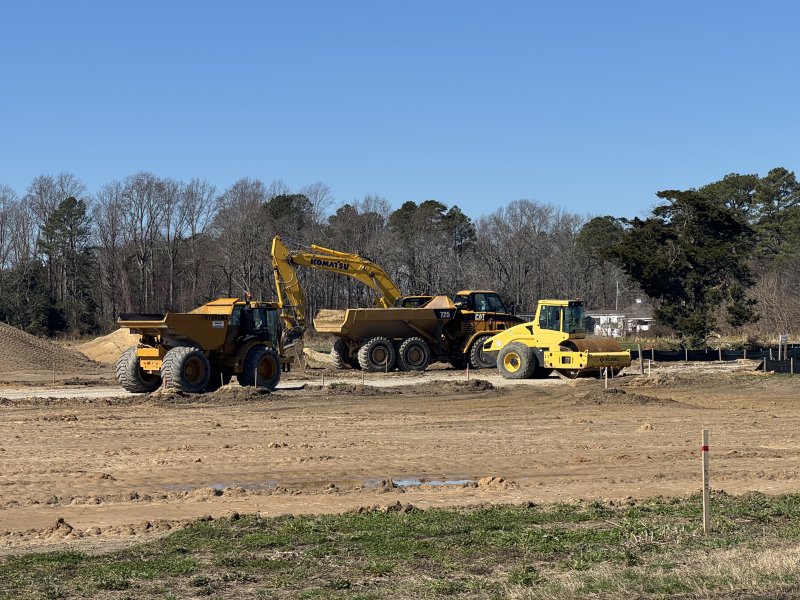
A year after repeated heavy rains caused stormwater from housing development sites to spill onto adjacent properties and into waterways, Sussex County Council has approved rules to limit such impacts.
Prior to the final March 3 vote, council approved 16 amendments.
Some changes were necessary to eliminate conflicts with state regulatory authority and responsibilities of the Sussex County Conservation District, said Vince Robertson, a county attorney.
The county will rely on the conservation district, Delaware Department of Natural Resources and Environmental Control, and enforcement authority that already existed in county code, said Hans Medlarz, a county engineer.
“There’s no particular enforcement mechanism built into this, am I correct?” asked Councilwoman Jane Gruenebaum.
“We have the enforcement mechanisms already codified,” Medlarz said. “They are certainly there. They include revocation of permit, which we modified.”
Additional enforcement measures were taken off the table at the request of council early in the process as the rules were being formulated, he said.
“My overriding concern from the beginning is, at the end of this process, can we expect to see no more large amounts of sediment running off new developments?” Council Vice President John Rieley asked.
“Just keep the dirt out of the water is the goal here,” Rieley said. “How successful do you anticipate all of this change will be?”
Gruenebaum said she had the same question.
Medlarz said the original intent of eliminating 90% of all discharges from home construction sites was no longer realistic.
“We cannot expect that 90% discharge to be met,” he said. “We can expect a significant reduction.”
Increasing the buffer required in the critical areas of developments will be a big improvement, he said. The conservation district will cooperate in preventing stormwater releases, Medlarz added.
“I think what you are doing today, if you follow our recommendations, you make a significant reduction in discharges,” he said.
Medlarz said the new rules allow the county to reduce the maximum disturbance of land below the state limit of 20 acres, based on criteria that consider the slope of the land and uphill area that drains through the site.
Robertson said the new rules require the developer and county planning and zoning department to discuss stormwater issues early in the approval process, well before a project comes to the planning & zoning commission.
Councilman Matt Lloyd asked if the rules can be changed again if there are unintended consequences. Robertson said they can be.
“You’ll see as we go through these that a lot of these are not deleting things in the ordinances; it is changing the wording,” he said as amendments were considered March 3. “I don’t want you all to think because there are 16 changes that it was a gut job on this ordinance. It was an improvement, and also making that distinction over jurisdiction.”
Sussex Conservation District Coordinator David Baird said March 9 the rules will give his agency another way to reduce risks of stormwater runoff from construction sites, along with stricter buffer rules the county enacted a couple of years ago.
“This is one of those collective steps that is going to make a difference,” Baird said.

Kevin Conlon came to the Cape Gazette with nearly 40 years of newspaper experience since graduating from St. Bonaventure University in New York with a bachelor's degree in mass communication. He reports on Sussex County government and other assignments as needed.
His career spans working as a reporter and editor at daily newspapers in upstate New York, including The Daily Gazette in Schenectady. He comes to the Cape Gazette from the Cortland Standard, where he was an editor for more than 25 years, and in recent years also contributed as a columnist and opinion page writer. He and his staff won regional and state writing awards.
Conlon was relocating to Lewes when he came across an advertisement for a reporter job at the Cape Gazette, and the decision to pursue it paid off. His new position gives him an opportunity to stay in a career that he loves, covering local news for an independently owned newspaper.
Conlon is the father of seven children and grandfather to two young boys. In his spare time, he trains for and competes in triathlons and other races. Now settling into the Cape Region, he is searching out hilly trails and roads with wide shoulders. He is a fan of St. Bonaventure sports, especially rugby and basketball, as well as following the Mets, Steelers and Celtics.