













Caretaker says Nathan Leppo was looking for peace


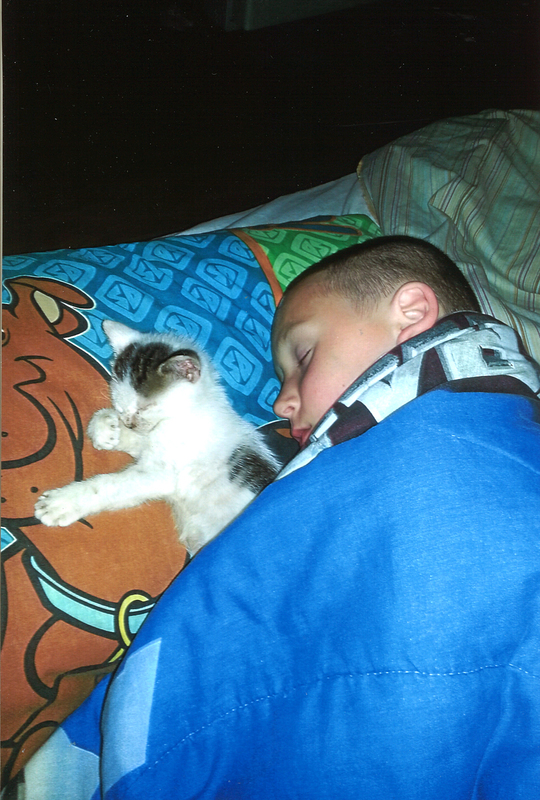
Martha Sexton is the last person who saw 7-year-old Nathan Leppo alive. She has waited patiently to tell her side of the story. She has listened while Nate’s family members said how much they loved him. She’s listened to them question how a state agency could allow him to stay with someone not related to him. And she has also heard them question how he could have committed suicide while in her Oak Orchard home.
Now she wants to speak her mind.
“No one cared about that boy when he was alive,” said Sexton, 49. “Then when he dies everyone came out of the woodwork and acts like they care.”
Sexton, a mother of six, with long, brown hair and a deep, raspy voice, said Nate, his father, his father’s girlfriend and Nate’s two half brothers moved to a home across the street from her in January 2015.
Neighbors in the close-knit community, with rows of homes set along Indian River Bay, say Nate often ran wild outside. Michael Layman said everyone watched out for the kids, especially after Nate’s 2-year-old half brother was found walking near Oak Orchard Road blocks away from his home.
“Everybody in this neighborhood took care of those kids,” Layman said. As manager of Serendipity restaurant, Layman said, he used to bring food to Nate and his brothers. “We used to feed Nate all the time from the restaurant,” he said.
Neighbor Amy Walsh said she could hear arguing from Nate’s home at all hours of the night. “It woke me up out of a dead sleep,” she said.
The first time she saw Nate, she said, he was trying to break into an empty trailer. Another time, she said, she watched Nate try to crawl out of his second-story bedroom window.
At first, Walsh said, she kept her son away from Nate because of his coarse language. But one day, she said, something changed. “He had manners. He was saying please and thank you. Before, he would curse and try to tear up everything.”
Walsh let her son play with Nate, and the two became fast friends.
“Nate wasn’t bad. He was in a bad environment,” she said.
Walsh said she soon heard the lady across the street – Sexton – had turned Nate around.
State involvement
Nate’s father, Wayne Leppo, says he agreed to let Sexton take care of Nate after Wayne left the house in Oak Orchard and moved into a house in Georgetown. A social worker told him Nate could not live with him there; Leppo said no one living there knew that one of the housemates was a sexual offender.
“All they told me was that your son is not allowed to be in that house,” Leppo said. “They also didn’t want him moving around too many times.”
Nate’s mother, Kayla Brown, is at an out-of-state facility following several drug, theft and violation of probation convictions, according to court records. Nate remained in Oak Orchard with Leppo’s girlfriend and two half brothers.
In March, Sexton said, the girlfriend asked her to help get Nate to the school bus stop in the morning. Morning duty increased to occasional overnight stays that became more frequent. A daybed was expanded to an air mattress for Nate’s sleepovers, Sexton said.
Then in June, the family was evicted from their Oak Orchard home. “The day they got evicted, Nate came over and moved all his stuff to my apartment,” she said.
By June 21, the Division of Family Services had named Sexton a nonrelative caretaker for Nate.
Sexton said a case worker spoke with Nate in July after he said Leppo’s girlfriend had thrown a toy lawn mower at him. “The case worker said she was there because she had received a lot of calls about abuse,” Sexton said.
Family services then conducted a Child Safety Agreement Review stating, “Nathan will stay with Martha until DFS meets with father or until DFS further notice.”
The safety review also stated Nathan should not be unsupervised with Wayne or his girlfriend, and if he tried to remove Nathan, Sexton should immediately notify DFS.
On Aug. 31, Leppo formally gave Sexton temporary guardianship of Nate.
“I agreed to it because it was convenient, and we felt we could trust her,” he said.
He said he didn’t seek out a family member to take Nate because no one mentioned it.
He acknowledged family services investigated an abuse charge against his girlfriend involving Nathan and a toy lawn mower. A Sept. 15 letter from a case worker states there was “inappropriate interaction/discipline” between the girlfriend and Nathan, but not enough to continue with Child Protection Registry proceedings.
“There was never any abuse of my son,” Leppo said, adding the family services letter arrived Sept. 22, the day Nate died.
‘More worried about everything’
The way Sexton sees it, no one cared about Nate.
She said she took care of him from June to Sept. 22, the day he killed himself in her home.
She said Wayne Leppo called his son every day. Sexton said she saw little evidence the calls comforted Nate. Instead, they left him agitated. Sometimes, she said, she could hear the conversation on speaker phone. Both Sexton and her friend Robert Gordy said they heard Leppo tell Nate that he would soon be leaving Sexton’s home. “He said don’t get comfortable there because you won’t be there for long,” Gordy said.
Those conversations took a toll on Leppo, Sexton said. “Why couldn’t they let him be 7 and happy?” she asked.
In the days leading up to his death, Sexton said, Nate complained of an upset stomach, and he asked to talk to a social worker. At 11 a.m. Sept. 22, Sexton sent a text to a social worker saying, “Last night, Nathan said he wants to have a meeting and talk to you. He’s getting more worried about everything.”
There was no reply.
Sexton said nothing about Sept. 22 was unusual. If anything, she said, Nate was more calm and relaxed than she had seen him in months. Normally, he complained and procrastinated doing his homework, just like any kid. But that night, he sat at the table and finished his spelling assignment with no grumbling.
Sexton said Leppo called as usual. Nate said his stomach hurt, and he later went to take a shower.
“He normally would take 30 or 45 minutes in the bathroom. He had made me promise me to never come into the bathroom when he was in there,” she said.
That night, she broke her promise.
“It was too quiet,” she said. “I went in, and I thought he was hiding and going to jump out at me because he always loved to jump out and scare me.”
What she found was no game. She struggled with Nate’s limp body while trying to pull a shower spray hose from the wall. She called 911, and then watched as emergency responders carted Nate away. She never saw him again.
In hindsight, Sexton said there may have been warning signs. Nate’s friend later told her Nate had said he was going far away, and they would never see him again.
“He just wanted to know where he was going so he could have some peace,” she said.
Sexton didn’t go to Nathan’s funeral. She said tension between family members has made her feel uncomfortable. About $8,300 was raised in a GoFundMe account to pay for Nate’s funeral and cremation. Leppo said he is holding on to Nate’s cremains. “I blame myself every day for what happened,” he said.
Sexton said she’ll always remember Nate as the little boy who loved to star gaze off the pier behind their home.
“He would go out and look at the stars, and I always wondered why he was looking at them,” she said. “One day he turned to me and asked, ‘Do you ever think that maybe my mother is looking up at the stars and thinking of me?”
Legislators want answers
Recent child deaths prompt concern
Delaware legislators have voiced concerns following the Cape Gazette’s story about Nate’s death and a second tragedy involving the death of an infant boy. The infant’s Harbeson parents, both known heroin addicts, according to court records, are charged with murder by abuse and neglect in the infant’s death. In November, Division of Family Services reported a total of four child deaths since May. Spokesman Joseph Smack said there was a connection of heroin use by caretakers in three infant deaths.
Sen. Brian Pettyjohn, R-Georgetown, whose district covers the area where both boys died, said legislators must prevent future tragedies.
“There has to be a fundamental change in how the state handles issues such as these, and we have to ensure that the state government operates in an open and transparent manner,” he said.
Rep. Ruth Briggs King, R-Georgetown, said changes in parental rights are needed, particularly when drugs are involved. She said the recent deaths are alarming.
“We need to make changes that also include a pregnant addict be considered for abuse of her unborn baby when the child is born an addict and must go through withdrawal,” she said. In those cases, she said, the child should not be allowed to go home with its mother until she is clean and well.
Upstate legislator Rep. Kim Williams, D-Wilmington, said she was heartbroken to read Nate’s story. She said she has asked state officials for more information on Nate’s case.
“I know we cannot bring this little boy back, but we can attempt to make sure this does not happen again if certain laws and regulations were not being followed,” she said.
Linda Shannon, program manager for intake and investigation for the Division of Family Services, said the state examines many factors before it would sever parental rights.
Even giving birth to a child addicted to any substance is not reason enough to sever parental rights.
“There’s not a one-size-fits-all,” she said. “Obviously you want to keep the children with their families.”
A state-appointed team meets to make sure the child is safe with its parents or another family member. “We want to mediate and keep the child with the family,” Shannon said.
In cases where a child must be removed from a home, Shannon said, the child typically goes to foster care. However, she said, the state’s goal is to reunify the child with its family within a year’s time.

Melissa Steele is a staff writer covering the state Legislature, government and police. Her newspaper career spans more than 30 years and includes working for the Delaware State News, Burlington County Times, The News Journal, Dover Post and Milford Beacon before coming to the Cape Gazette in 2012. Her work has received numerous awards, most notably a Pulitzer Prize-adjudicated investigative piece, and a runner-up for the MDDC James S. Keat Freedom of Information Award.