












Allen Harim cited for excess nitrogen discharge
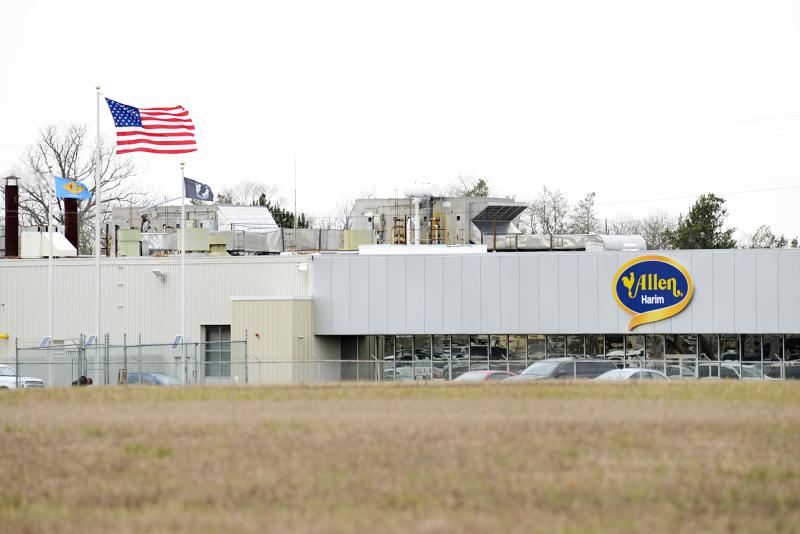
The Allen Harim Foods poultry processing plant in Harbeson discharged more nitrogen in January than allowable, resulting in a notice of violation from the Delaware Department of Natural Resources and Environmental Control.
The notice was issued March 2 after Allen Harim informed DNREC Jan. 30 that the Harbeson plant had exceeded its total nitrogen concentration for about four days.
“The facility was experiencing challenges with nitrification due to prolonged unseasonably cold temperatures. Due to the elevated total nitrogen, the facility diverted treated effluent to the on-site diversion lagoon instead of discharging to [Sussex Regional Recharge Facility] from Jan. 30, through Feb. 1, at midnight,” the notice states.
Officials with Allen Harim and Artesian Wastewater Management, which owns and operates the Sussex Regional facility, met Feb. 3 with DNREC officials, letting them know that total nitrogen has exceeded the allowance, “but conceded for now to allow flows from Allen Harim to continue given the lower TN concentration of the effluent currently stored in their SRRF lagoon near Milton.”
At the time, DNREC requested corrective action plans from Allen Harim and Artesian explaining how they intended to address the elevated nitrogen levels.
DNREC spokesman Michael Globetti said March 10 that Allen Harim continues to perform corrective measures to address ongoing violations and progress has been made, but the company has not yet achieved a return to compliance.
Globetti said DNREC continues to investigate the incident.

Melissa Steele is a staff writer covering the state Legislature, government and police. Her newspaper career spans more than 30 years and includes working for the Delaware State News, Burlington County Times, The News Journal, Dover Post and Milford Beacon before coming to the Cape Gazette in 2012. Her work has received numerous awards, most notably a Pulitzer Prize-adjudicated investigative piece, and a runner-up for the MDDC James S. Keat Freedom of Information Award.