













Artesian details new Milton spray facility plans
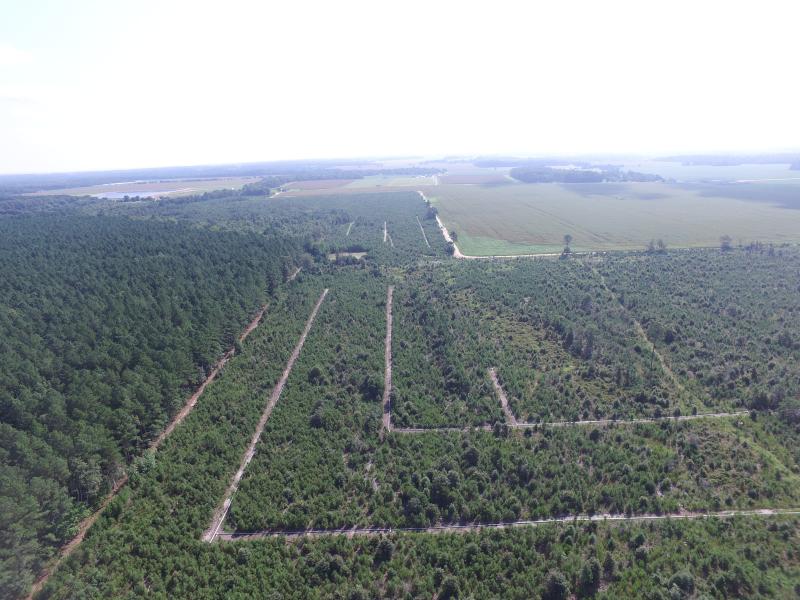
Artesian Water Company unveiled plans for the second phase of its Sussex Regional Recharge Facility that will include a new wastewater treatment plant to serve development on the way in the area.
But more than 100 people who attended a Jan. 19 public information session at Milton’s CHEER Center challenged the project, as well as Artesian’s partnership with poultry processing company Allen Harim.
Anthony Scarpa, co-founder of citizens group Keep Our Wells Clean, which has appealed Artesian’s construction permit for the facility, said there are still questions about the quality of the water Allen Harim will be sending to the facility for spray disposal. He asked how Artesian will know whether the water Allen Harim is sending will affect nearby wells.
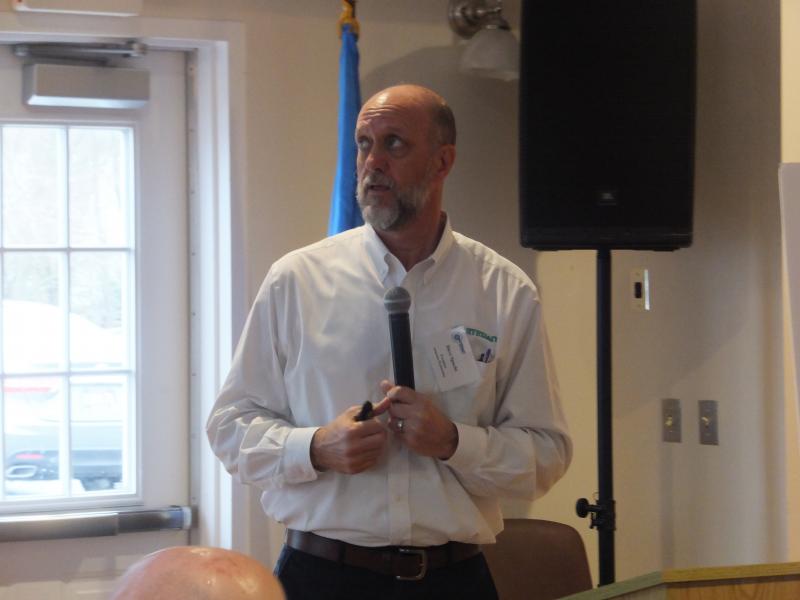
Dave Spacht, president of Artesian’s wastewater management section, said Allen Harim will be required to treat its water to state environmental standards. He said Artesian is awaiting permits on operations from Delaware Department of Natural Resources and Environmental Control, and he did not wish to speak about the permit process.
“We will meet all permit requirements,” he said.
Spacht said he wanted to talk about Artesian’s future development at the site.
Regarding the recharge facility, Spacht said the company believes spray irrigation is the best, most environmentally friendly method of disposing of treated wastewater.
“We do not discharge to streams,” he said.
Spacht said the company has no past history of violations and has a similar spray facility in Middletown. He said representatives from DNREC declined to attend the session; he said the meeting was not required but Artesian wanted to inform the public.
Spacht said the first phase of the project is installing a pipe from Allen Harim’s plant in Harbeson to Route 30. He said the company also has a separate raw wastewater line coming from Huff Road up Gravel Hill Road to the 400-acre site, at the intersection of Route 30 and Route 16.
The raw line is in anticipation of the next phase of the project: taking raw wastewater from surrounding developments and treating it at a new, 625,000-gallon-capacity treatment plant at the recharge facility. Spacht said additional lines will be constructed to the plant, but that the company will not mingle raw wastewater and treated effluent from Allen Harim. Spacht said Artesian is working on a DNREC permit for the new plant and pipelines.
Daniel Kostanski, engineer for Artesian, said the new plant will include diversion lagoons to store water in case of problems during treatment.
While he was there to explain the new treatment plant and how it would work, those in attendance still questioned Allen Harim’s treatment of its wastewater.
Kostanski was specifically asked about how water would go from Allen Harim to Artesian’s spray fields. He said Allen Harim will perform metering and monitoring of its wastewater. Tests of treated effluent would be sent to an independent lab and then forwarded to Artesian and DNREC. When it comes to Artesian’s wastewater treatment, Kostanski said Artesian will test samples both before and after disinfection of effluent, and sampling will be sent to a third-party lab, with monthly reports going to DNREC.
Kostanski and Spacht were asked what makes Allen Harim different from Mountaire, which is subject of a class-action lawsuit for environmental violations in Millsboro.
“Spray irrigation is used successfully throughout this country,” Kostanski said. “This is a well-established, proven method of disposal. One bad actor here in Delaware does not disprove or refute a science that is used around the world.”
When another audience member asked a similar question, Spacht said, “We have no violations at this point for any reason. Our track record is clear. We do react to the public’s concern regarding wastewater. We can’t afford to mess up. We do water. Period. And we’re good at it.”
Audience members questioned the effects on air from the open-air lagoons, odor from the site, the location of the facility and the proximity to neighbors. Artesian had planned breakout stations with particular aspects of the treatment plant project, but the question-and-answer portion took up the entire two-hour session. Most of those who spoke were highly skeptical, such as Milton resident Keith Steck, who questioned whether the site of the facility was appropriate given its location near surrounding drinking wells.
“That is not an excellent site,” he said.
Still, the project had some defenders. Sara Smyk, a resident of Beaver Creek in Harbeson, said the Artesian proposal was the best solution to keep up with growth surrounding Milton.
“They are being as practical and as environmentally practical as possible,” she said of Artesian. “The people who are opposed to this have good reasons, but a compromise lies in the middle. Let’s compromise.”
Sen. Ernie Lopez, R-Milton, said he appreciated Artesian hosting the forum and understood why people are sensitive about the facility. While he did not take a side, Lopez said he thinks the project is a good step forward in planning for future growth.
“We need to get ahead of the game, as opposed to 20 years from now wishing we had done it,” he said.

Ryan Mavity covers Milton and the court system. He is married to Rachel Swick Mavity and has two kids, Alex and Jane. Ryan started with the Cape Gazette all the way back in February 2007, previously covering the City of Rehoboth Beach. A native of Easton, Md. and graduate of Towson University, Ryan enjoys watching the Baltimore Ravens, Washington Capitals and Baltimore Orioles in his spare time.