












Cape Region juniors excel in PGA Jr. League
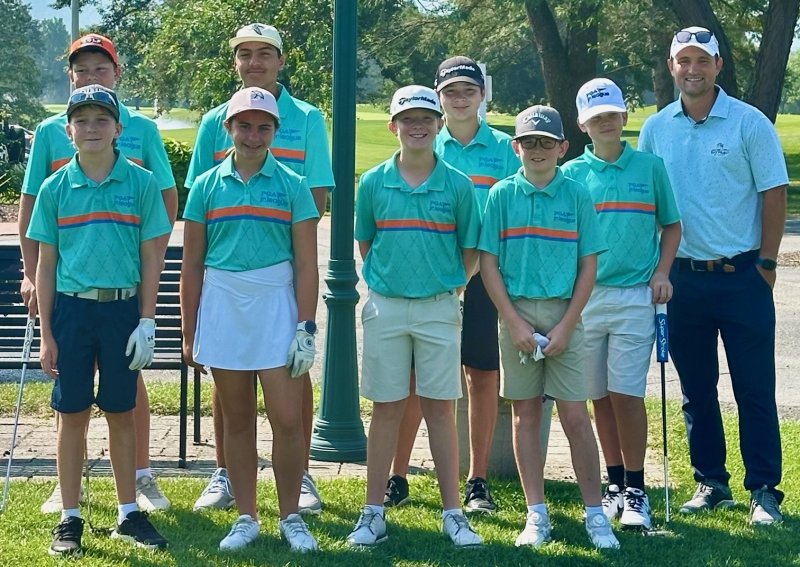
The PGA Jr. League is a national program with junior teams from local clubs competing against each other, then regionally, and with regional winners going to a national tournament. In several respects, the system is much like Little League.
The Cape Region PGA Jr. League all-star teams included players from Rehoboth Beach Country Club, Maple Dale Country Club, Plantation Lakes Golf & Country Club and Baywood Greens. Baywood golf pros Tony Hollerbeck and Corey Phillips coached the squads.
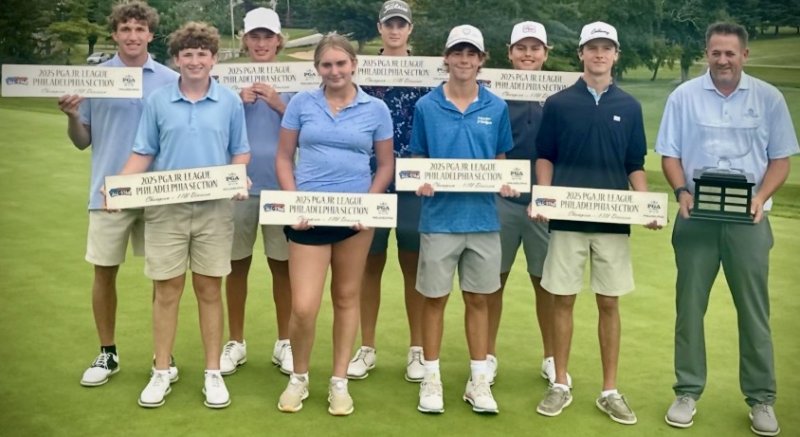
This year’s teams in both the 10-13 and 14-17 age brackets won the Philadelphia PGA Section events, a first for the section since the league began. The younger group included Ben Adkins, Sahil Shajwani, Michael Agnew, Brody Rollins, Maddie Fisher, Grayson Throm and Grant Fifer.
The 14-17 age-group winners included Kingston Davis, Sammy Metz, Jake Hollerback, Ryan McNett, Ben Fifer, Ellie Walls, Jack Tunnell and Mason Pusey.
A fitting conclusion
In past columns, I discussed using the Arccos shot tracking system to gather data about my rounds and look for places to improve. Smart sensors are embedded into plastic caps screwed into the butt end of golf grips. The swing movement data transfers to the phone app and provides a wealth of useful information.
As this year’s golf season wound down, the shot data from my irons showed a definite and unwelcome change from 2024. My yardages stayed roughly the same, but the balls were landing a lot more left or right of my intended target than last year.
It did not seem to me that my swing changed. I started thinking it was more about what I was swinging. I bought these irons in 2019, and as an avid player, I subjected them to dozens of rounds and even more time banging away on the practice range.
Worn club faces can cause issues that can creep up on otherwise unsuspecting golfers.
I took photos of the club faces and sent them to Ryan Diehl of Eastern Shore Custom Club, a golf pro and fitter at The Foreland Club in Ocean View. Diehl agreed it was worth checking out, and I made an appointment.
After several swings, the Trackman data confirmed what the Arccos app told me. The shot dispersions left to right and sometimes long or short were just a bit much for a single-digit handicapper.
We began testing several potential replacements. In addition to the worn face issue, Diehl also suggested I consider using club shafts that were heavier than the 50-gram Accra shafts in my current set. He said my swing speed could handle more than those light shafts, and that heavier shafts could also address a tendency to go left.
In essence, my irons were a bit too whippy, adding to the need for maintaining good tempo for the best results.
As for the iron designs themselves, I was not a candidate for blade or muscle back designs. My swing speed is fast for my age, but I remain a very senior golfer.
On the other hand, I do not need all the help the game improvement designs provide, with the wide soles, deep cavity backs and other design elements that help golfers flight their balls as high as possible. Going high is no problem for my swing.
The irons I needed to replace were Callaway X-Forged ‘18s, in a category called players’ performance or players’ distance clubs. These and similar designs are often forged, not cast. They also feature narrow soles and modest cavity back elements that provide more forgiveness for mishits than blades, but without the clunky appearance of many game improvement models.
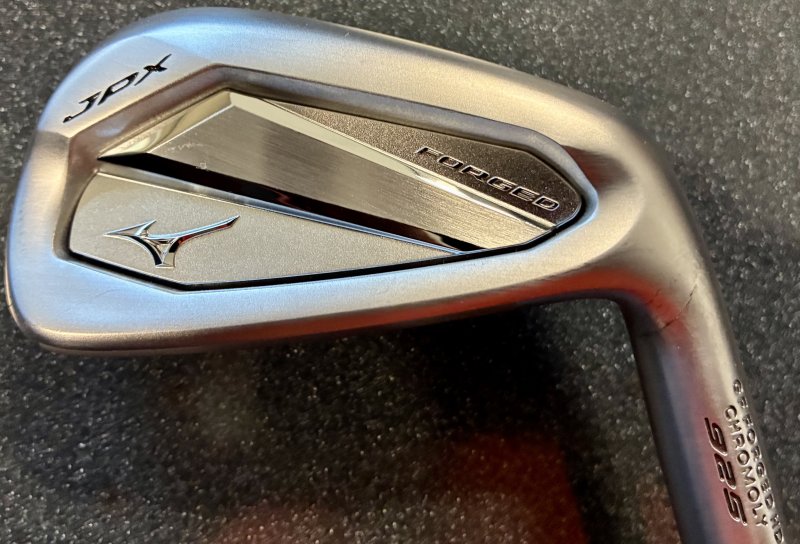
We tested several clubs and shaft options. These included popular models such as TaylorMade P790s, Titleist 250s and the Callaway Ai200 designs. I also tried my luck with clubs from companies with great reputations but not as large a market share, including Mizuno’s JPX Forged and Srixon’s ZXi4 line.
As for shafts, we also tried several brands at different weights ranging from 65 grams up to 85 grams. The brands included options from Project X, KBS and Recoil, as well as Mitsubishi’s Ventus and MMT lines.
The process is only partly scientific, to be frank. For example, the impact sound I made with the Titleist 250s was very different and, for me, too sharp, despite decent results. The heaviest shafts at 80 and 85 grams were OK, but we both agreed I could more easily tire myself out as the round continued.
The dispersion and distance data were often very similar among the choices, which brought the final decision down to a mixture of apparent consistency and overall feel.
We eventually decided to go with the Mizuno JPX Forged irons with the Mitsubishi MMT 65-gram shafts. That seemed to be the best combination for my swing tendencies. In addition, as a stock shaft option there was no up charge. That saved some nice change compared to other choices.
With this configuration, the Mizuno irons also produced a nice little bump in carry and overall distance compared to my now-worn clubs.
We shall see what happens when better weather returns.

-

Fritz Schranck has been writing about the Cape Region's golf community since 1999. Snippets, stories and anecdotes from his columns are included in his new book, "Hole By Hole: Golf Stories from Delaware's Cape Region and Beyond," which is available at the Cape Gazette offices, Browseabout Books in Rehoboth Beach, Biblion Books in Lewes, and local golf courses. His columns and book reviews are available at HoleByHole.com.
Contact Fritz by emailing fschranck@holebyhole.com.