













DNREC: Year-round hunting of coyotes to begin Jan. 11
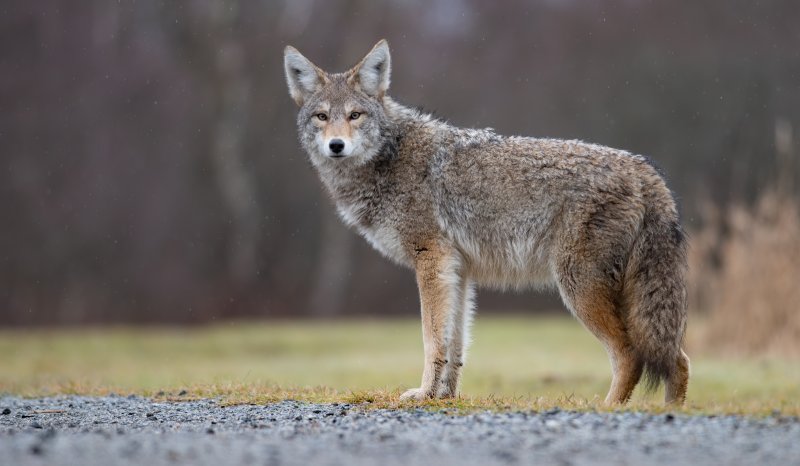

Beginning Sunday, Jan. 11, hunters in Delaware will be allowed to hunt coyotes year-round.
The change in coyote-hunting season was one of a handful of hunting-related regulatory changes approved by Delaware Department of Natural Resources and Environmental Control Secretary Greg Patterson. The order approving the changes was issued Dec. 8.
Since the regulations were first introduced in 2014, coyote hunting season has been Sept. 1 to the last day of February. During the four-year period between 2020 and 2023, the reported harvest has been eight, four, five and 12 individual coyotes. The state does not anticipate that a year-round hunting season will significantly increase harvest numbers.
“The [Division of Fish and Wildlife] notes that the proposed expansion to the hunting season is not intended to better manage coyotes on a statewide level, but rather to improve management of coyotes at the local or land parcel level,” said Patterson. “Increasing hunting opportunities for landowners can be very effective in reducing local numbers of coyotes, as year-round hunting pressure provides more opportunities for harvest and can cause coyotes to abandon an area.”
The state received comments from five individuals who supported the extension and six individuals opposed to it, including a five-page report from an organization called the Humane World of Animals. The state said it thought much of their arguments were counterintuitive. However, they agreed in one area.
“There is over a century’s worth of data showing that hunting, trapping and even extensive predator control methods [bounties and poisoning] will not control coyotes on a landscape or even statewide level. Ultimately, what will determine how many coyotes are in Delaware is the coyotes themselves,” said Rob Hossler, a wildlife biologist for the state, in a technical response provided as part of the secretary’s order.
A reporting requirement for harvested coyotes is eliminated because, said the state, the belief is this information can be accurately calculated through annual hunter and trapper harvest surveys. These surveys are currently used to estimate the harvest of all other furbearers like red foxes, raccoons, muskrats and opossums.
Additional changes to hunting regulations include:
- A change in the special season for youth hunters of wild turkeys and deer. Regulations now say hunters younger than 16 years of age, not between the ages of 10 and 15
- Motorized electric carts, wagons or wheelbarrows may be used to transport hunting/fishing equipment or game/fish on lands administered by the state, provided they are not ridden or used to transport any person. Anyone using such equipment must walk while using them.
Boating regulations
Patterson also approved a number of changes to boating regulations. This order was also issued Dec. 8, and the changes also go into effect Jan. 11.
“The department’s proposed amendments serve to align Delaware’s boating safety measures in accordance with the safety procedures outlined by the United States Coast Guard and federal law,” said Patterson. “Specifically, the amendments seek to raise the threshold for reportable accidents, introduce immediate notification requirements, establish no-wake buffer zones for emergency vehicles and to update mandatory safety equipment standards.”
Specific changes include:
- An increase in the reporting damage threshold from $500 to $2,000; and the addition of a requirement that says boaters must immediately notify the Natural Resources Police in the event that a vessel causes property damage and the property owner cannot be immediately located
- In an effort to reduce collisions, property damage and injury in high-traffic waterways, the Chesapeake and Delaware Canal has been added to the list of areas prohibited for water skiing
- In an effort to improve safety conditions for first responders, a slow-no-wake zone requirement has been established when a vessel is within 100 feet of any law enforcement or other emergency vessel with emergency lights activated.
There are also a number of changes and additions to the section on definition.
Both orders and a full list of the specific regulatory changes can be found under the Secretary’s Orders tab on the DNREC website, dnrec.delaware.gov. For more information, call the secretary’s office at 302-739-9000.

Chris Flood has been working for the Cape Gazette since early 2014. He currently covers Rehoboth Beach and Henlopen Acres, but has also covered Dewey Beach and the state government. He covers environmental stories, business stories and random stories on subjects he finds interesting, and he also writes a column called Choppin’ Wood that runs every other week. He’s a graduate of the University of Maine and the Landing School of Boat Building & Design.