













DRBA Police earn Advanced Law Enforcement Accreditation Award
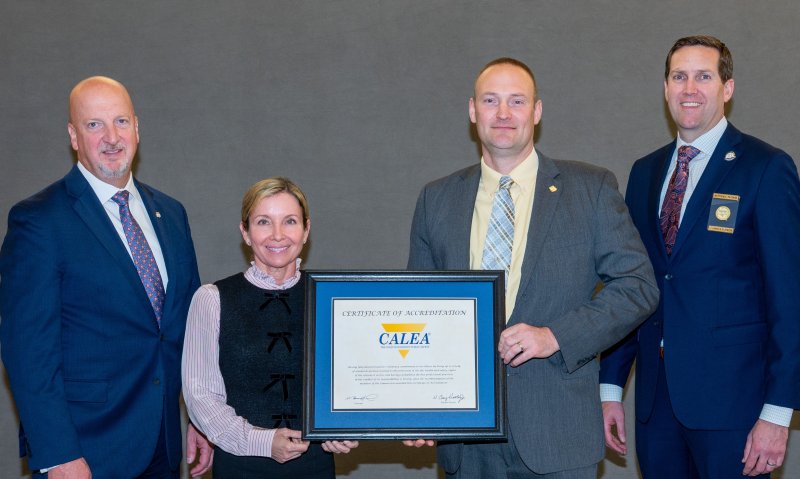
Delaware River and Bay Authority Police Department officials announced that the Commission on Accreditation of Law Enforcement Agencies Inc. recently voted unanimously to reaccredit the DRBA Police Department with its Advanced Law Enforcement Accreditation Award. The agency was first accredited in 1996.
“I am extremely proud of our department’s dedicated men and women who worked tirelessly to once again earn this prestigious recognition,” said Lt. Col. Christopher Field, DRBA deputy police administrator. “This department earned its ninth consecutive 100% compliance rating during the assessment process, a feat not many law enforcement agencies can claim. Accreditation is a rigorous process, and our officers stepped forward to meet the challenge.”
Following a multiyear self-evaluation phase and a meticulous site-based assessment of community engagement, policy, procedures, equipment and facilities by CALEA assessors, the department was presented before CALEA’s 21-member board of commissioners, which reviews all findings and determines each agency’s accreditation status.
The DRBA now transitions into CALEA’s four-year accreditation cycle that includes four annual remote, web-based file reviews and a site-based assessment in the fourth year. CALEA’s accreditation program provides public safety agencies with an opportunity to voluntarily demonstrate that they meet an established set of professional standards based on the industry’s best practices and approved by an all-volunteer board of commissioners.
In 2011, CALEA introduced the Gold Standard with Excellence Assessment, now termed Advanced Law Enforcement Accreditation Award, for agencies that voluntarily seek a higher level of evaluation during the reaccreditation process. The rigorous Advanced Accreditation Assessment focuses not only by inspecting compliance files but also permits on-site inspectors to spend more time observing personnel in the field. The assessment process measures the impact of accreditation on operations rather than simply confirming compliance through a file-by-file review.