













The fishing outlook for 2026
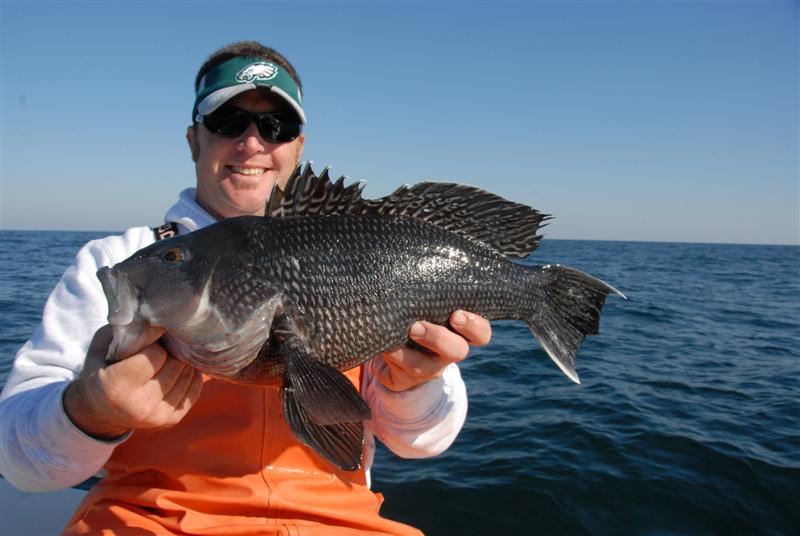
I do this every year just so people can say, “Boy, he was wrong again.”
Of course, the big unknown is the weather. As I write this, it is snowing, and we have a gale watch posted on area waters. I can’t remember the last day boats were able to sail to ocean structure, and the main body of striped bass is still up off New Jersey. Right now, even the usually reliable freshwater fishery is hampered by skim ice on area ponds.
As many of you know, I sit on the Advisory Council for Summer Flounder, Scup (Porgies) and Black Sea Bass. Also the Advisory Councils for Bluefish and Spiny Dogfish. To the best of my knowledge, I am the only recreational fisherman on all those councils. All the other members are either for-hire fishermen or in the case of the spiny dogfish, commercial fishermen. Believe me, I do not sit in the corner like some timid mouse. I let my opinion be known, and I hope I speak for most recreational fishermen.
What my position on the advisory councils has let me know is the status of the stocks of summer flounder, scup, black sea bass and bluefish. All are in good to excellent shape, with the exception of summer flounder, and they are on the increase.
You would think with this information, the Mid-Atlantic Council would liberalize the regulations for scup and black sea bass, keep status quo for summer flounder and maintain the already increased bag limit for bluefish. This, while maintaining the conservation equivalency for states like Delaware, Maryland and Virginia.
What I have discovered over my many years of service is the roles of the two opposing entries. The councils that have to report to NOAA seem to be devoted to mantling the stocks of fish at the highest levels possible. They have no regard for the recreational fisherman or the industry we support. Oh, they give us lip service, but when it comes time for action, they guard the fish as if they were some sort of precious commodity. Yes, they are precious, but only if they let us catch them!
For some reason, the councils consider the commercial fishermen more important than recreational fishermen. Now, I don’t want to infringe upon the commercial fishermen – they work hard for every dollar they make – but when it comes to dollars per fish, there is no doubt that a recreationally caught fish is worth much more than a commercially caught one of the same species.
The Mid-Atlantic Fisheries Management Council met in Washington, D.C., Dec. 15-17, to set the federal regulations for recreational fishing for summer flounder, scup (porgies) and black sea bass. Thanks to virtual eavesdropping, I was able to listen to the discussion on all three species, and discuss they did.
First up was flounder. The science provided that the spawning biomass was stable and the recent spawn was good. Then we get into the confidence equation. In other words, how confident are the scientists in their own figures? For summer flounder, they were reasonably confident, so the board voted 19-0 to maintain status quo.
What does that mean when it comes to regulations for Delaware in 2026 and 2027? It should mean that we will have the same regulations we had in 2025. We won’t know for sure until our fish and wildlife people get together with their counterparts from Maryland and Virginia to settle on the exact regulations. At this point, I see no reason why there would be a change.
Next up was scup (porgies). It went pretty much the same as flounder. Status quo. A 10-inch minimum size and a 40-fish bag limit.
Black sea bass began at 10:30 a.m. and concluded at 1 p.m. Why did it run so much longer than the other two? The confidence equation.
The Scientific and Statistical Committee could not decide on a number of either 75% or 80%, and neither could the board. The difference is with an 80% confidence we get status quo, and with a 75% confidence, we have a 40% liberalization. The discussion dragged on right through lunchtime.
The chair made a motion to increase the recreational quota for black sea bass by 20%. It received a second. Once the board members had said all they had to say, with some in favor of the 80% and others in favor of the 75%, they opened the floor to the rest of us.
When my turn to speak came I said, “As a member of your advisory council from Delaware and a recreational fisherman, I fully support the motion.”
The motion passed 15-3.
Once again, the final regulations for Delaware await further discussion.
-

Eric Burnley is a Delaware native who has fished and hunted the state from an early age. Since 1978 he has written countless articles about hunting and fishing in Delaware and elsewhere along the Atlantic Coast. He has been the regional editor for several publications and was the founding editor of the Mid-Atlantic Fisherman magazine. Eric is the author of three books: Surf Fishing the Atlantic Coast, The Ultimate Guide to Striped Bass Fishing and Fishing Saltwater Baits. He and his wife Barbara live near Milton, Delaware. Eric can be reached at Eburnle@aol.com.