













Gary and Carol Smith bring a bit of Florida to Milton
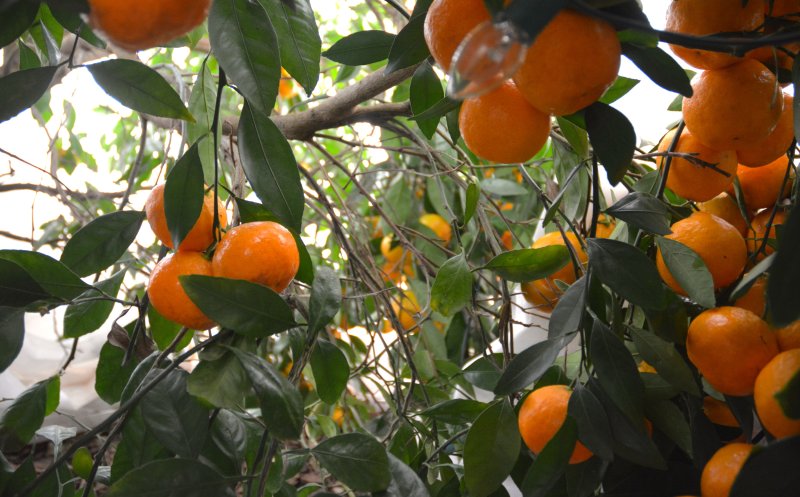
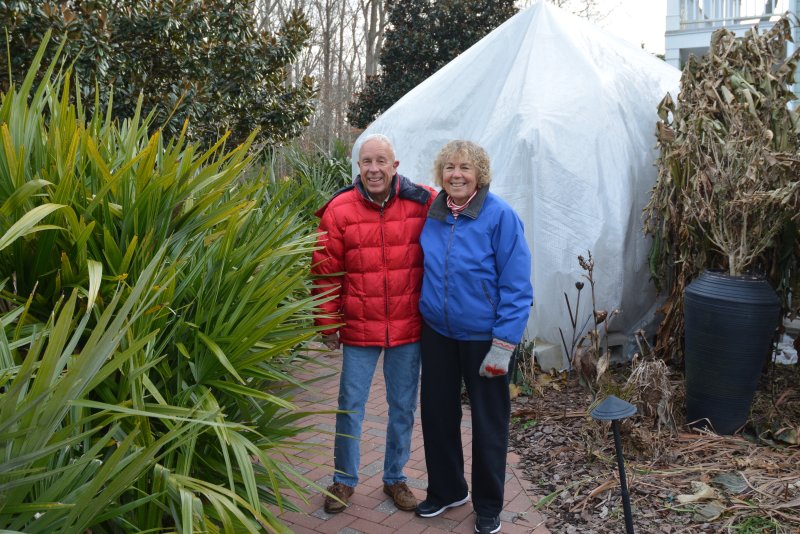
A few weeks before Christmas, Gary and Carol Smith were messing around with lights on their evergreens. They’ve been doing it since before Halloween.
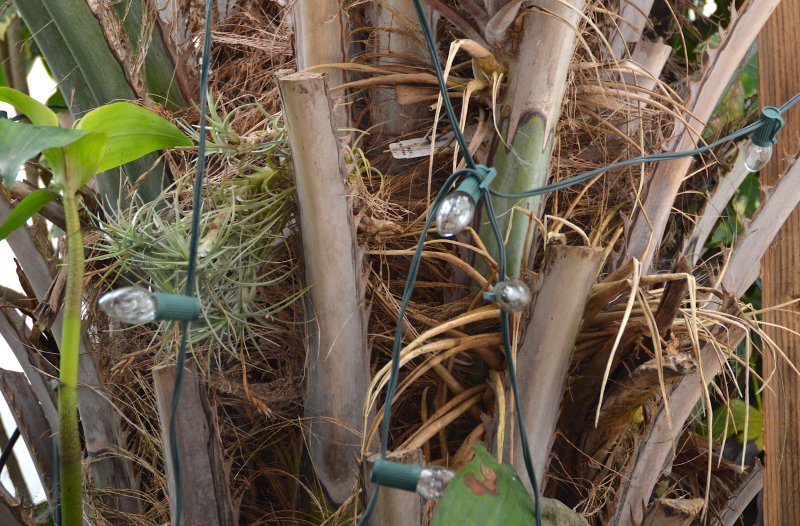
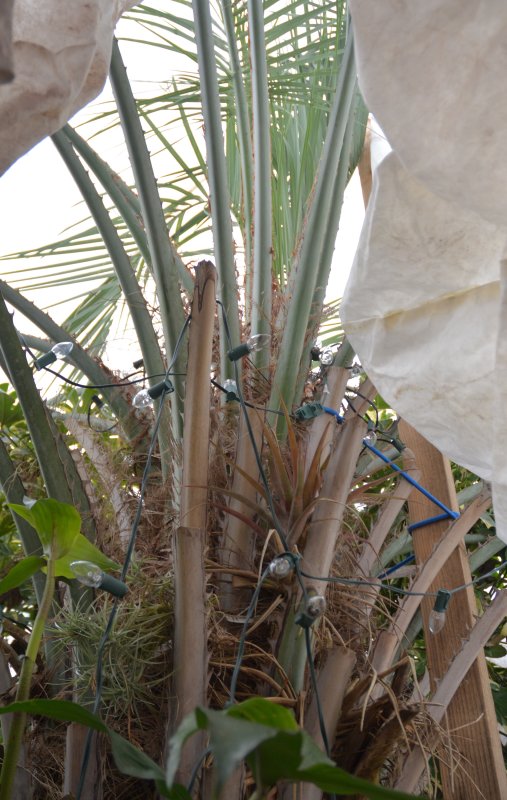
However, the Smiths aren’t Christmas superfans who dress up a row of arborvitae for the holidays. They’re using those lights to ensure their tropical palms and citrus trees – oranges, lemons, grapefruit, key limes – survive the winter.
“We like to think of our garden as where Florida comes to Delaware,” said Gary. “It’s a lot of work.”
Native Delawareans, Gary and Carol Smith travel to Florida annually and have been successfully growing citrus plants for years on their 2-acre property off Cave Neck Road. To keep the citrus trees and palms alive through the winter, the Smiths cover the plants in two layers of protection – an agriculture fabric called Agribon and plastic. They start running extension cords in October, wrapping tree trunks and branches in old incandescent Christmas lights because of the heat they give off. They have an array of solar panels running along the back of their property to offset the electric needs.
The lights come on when temperatures drop below 38 and turn off when it reaches 50, said Gary, showing off a heat controller that gets plugged into an outlet.
The couple have two 25-foot-tall windmill palms that also need to be wrapped. It takes three people to wrap the trees, and the Smiths rent a 55-foot lift when they do it.
“It never fails. The day we’re doing it, it’s blowing a gale,” said Carol.
The Smiths don’t have agricultural backgrounds. Gary worked at the Delaware Economic Development Office, while Carol worked as a bookstore manager at Delaware Tech’s Terry Campus in Dover. Their garden is a labor of love, and the polar vortex in early 2019 had them looking for ways to preserve their tropical plants. The Smiths are involved with a number of gardening organizations along the East Coast. One of those organizations, Southeastern Palm Society, is where they were inspired to implement the warming method.
Gary said the society featured a story about a garden in Atlanta, Ga., that had a coconut tree surviving outdoors using a teepee and Christmas lights.
The Smiths, who recently celebrated their 35th wedding anniversary, started growing citrus trees in pots before they were married. This process involved the delicate balance of bringing the trees inside when the weather turned cold and then bringing them back out when warmer weather returned.
The trees enjoy being outside, but need to be brought in to survive the winter, said Gary. The problem is, the leaves would drop while they were inside, so they needed to get back outside as quickly as possible to give them time to re-leaf, he said.
In a typical winter, the Smiths will harvest dozens of oranges and lemons. There are too many for personal use, so they give them to a few of the local restaurants and chefs.
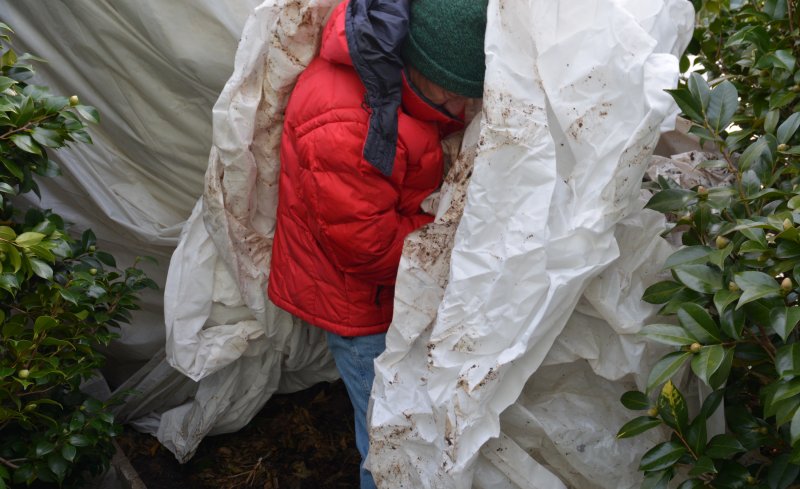
Retrieving the fruit is a bit of an involved, dirty and sometimes bloody process. The wrapping is held in place with cinder blocks and only the bare minimum is moved to gain access.
It’s a good workout, said Gary, throwing on a winter coat that he doesn’t care about ruining as he prepares to pick some oranges. It’s like being a contortionist trying to get around branches and lights, he said.
“They’re kind of a pain in the butt to pick,” said Gary.
Lemons are also a pain to pick, because they’ve got huge needles, said Gary.
“You look like you’ve been attacked by a porcupine. A bloody mess,” said Gary.
Carol added, “We try and do it when it hasn’t rained recently because it gets pretty muddy under there.”
The Smiths say their citrus doesn’t have the visual appeal of citrus found in grocery stores, but they’re confident in the taste.
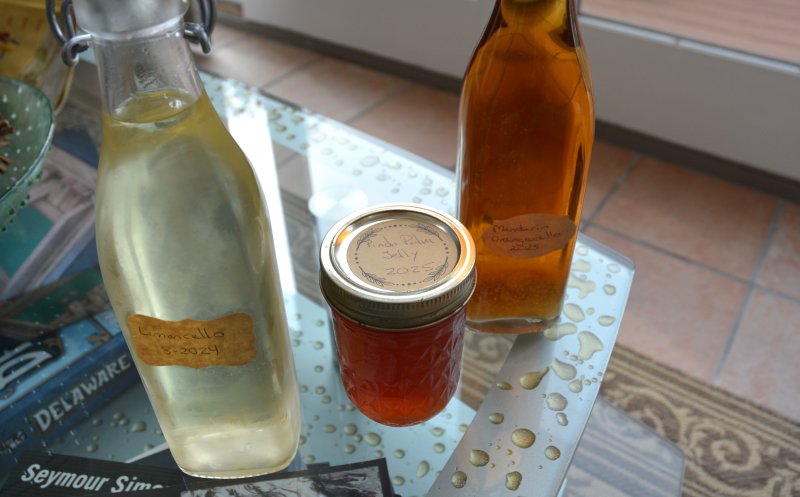
“The oranges at the stores got ripe while sitting in a warehouse,” said Carol. “Ours have little imperfections, but they can just be rinsed off and eaten. They’re also good for limoncello and orangecello.”
Over the years, they’ve learned which oranges they grow are going to taste the best.
The thinner the skin, the sweeter the orange, said Gary, handing one over. “That’s going to be a good one,” he said as it was being peeled, because the rind was translucent and there was almost no pith.
The Smiths have also have a pindo palm tree; Carol turns its fruit into jelly. It's a tedious process because the fruit is mostly seed, which means the juice is barely worth the squeeze. She does it because Gary loves to make peanut butter and jelly sandwiches with it.
“It’s my favorite jelly,” said Gary, appreciatively.



Chris Flood has been working for the Cape Gazette since early 2014. He currently covers Rehoboth Beach and Henlopen Acres, but has also covered Dewey Beach and the state government. He covers environmental stories, business stories and random stories on subjects he finds interesting, and he also writes a column called Choppin’ Wood that runs every other week. He’s a graduate of the University of Maine and the Landing School of Boat Building & Design.