












Henlopen Acres approves stricter rules for tree removal
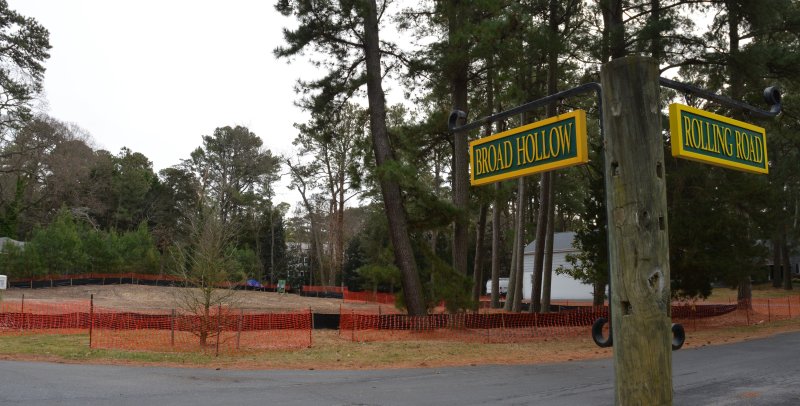
In an effort to retain the community’s trees, Henlopen Acres commissioners have approved changes to code that added restrictions on the removal of canopy trees on public and private property.
The town has been wrestling with how to broaden the scope of the tree code for years, but took up the subject in earnest last spring. In May, before making any specific code changes, the town issued a moratorium on severely cutting back, topping, damaging or removing canopy trees in the setback areas of residential lots. The moratorium was extended twice and slated to end at the end of January.
The issue has caused acrimony among commissioners, split between those who wanted the stricter standards for everyone and those who wanted the standards applied only to new construction.
Joni Reich stepped down as mayor in July; she said it was because she didn’t want to play a lead role in implementing a policy she strongly disagreed with. She had been mayor since 2018 and served as a commissioner since 2014.
Then in August, candidate Alex Jacobs defeated incumbent Jeffrey Jacobs in the town election. Jeffrey Jacobs had been one of the commissioners pushing for stricter rules for all property owners.
The changes were approved during a meeting Jan. 9. Mayor Tim Hidell and Commissioner Alex Jacobs tried to make the case that new construction was the issue, and they weren’t in favor of imposing the restrictions on existing property owners.
Commissioner John Staffier introduced the proposed changes. He said he thought it was important to have rules that applied to all property owners and that the new restrictions would, in the end, be a non-issue.
The discussion ended when Commissioner Beatrix “Paddy” Richards, the town’s longest-serving commissioner, grew tired of the discussion continuing in circles. The town is split and something needs to be done, she said, calling for a vote to accept Staffier’s recommendations.
The vote was taken and the recommendations were passed. In turn, the moratorium was also lifted.
As approved, a permit will be required to remove any protected public tree or to remove any protected canopy tree on private property.
For construction-related tree removals, the lot must meet a minimum tree density of one canopy tree per 2,000 square feet of lot area after construction is completed; at least 50% of minimum tree density must come from existing mature canopy trees, unless infeasible; a more detailed tree plan is required; and a contractor must obtain a surety bond for every retained canopy tree to ensure its protection during construction.
For tree removals not related to construction, a permit is required to remove any canopy tree. When the removal of a canopy tree brings the lot below the minimum density requirement, the application will be approved or denied based on certain criteria, and when the removal of a canopy tree does not bring the lot below the minimum density requirement, the permit shall be approved automatically upon receipt of a completed application. Also, while property owners are encouraged to plant a replacement canopy tree, they are not required to do so.
Penalties were also set for the removal of a canopy tree without permission. As approved, there’s a $750 fine per violation, plus $2,000 for each illegally removed canopy tree or the value of the tree as calculated by the International Society of Arboriculture, whichever is greater. Illegally removed canopy trees must be replaced. Additional penalties for protected public trees are based on ISA value.
The new restrictions went into effect immediately.

Chris Flood has been working for the Cape Gazette since early 2014. He currently covers Rehoboth Beach and Henlopen Acres, but has also covered Dewey Beach and the state government. He covers environmental stories, business stories and random stories on subjects he finds interesting, and he also writes a column called Choppin’ Wood that runs every other week. He’s a graduate of the University of Maine and the Landing School of Boat Building & Design.