












Lewes has an economic, environment and resiliency commission that can benefit from a long-range view of the community's challenge for sustainable energy – a focus that must address interconnected systems and problems of safety, security, access, affordability, health, pollution, industry, jobs, economy, and even international relations and conflict.
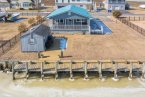
Multiple articles on beach communities have explored the need to plan for progressive retreat from sea-level rise and, indeed, the Delaware Climate Action Plan projects at least 5 feet by the end of the century.
At the Feb. 11 commission meeting, a presentation was made on cameras for monitoring sand movement and advising on replenishment, following a discussion of flood disaster housing preparation, and further comment on lack of funding from federal sources. During the public comment period, I noted my participation on the Delaware Sustainable Energy Utility Board and that our funding from the Regional Greenhouse Gas Initiative does not rely on federal sources.
I suggested the proposed possible use by Lewes of land for temporary housing could be combined with use for regular parking away from the beach, and electric buses to reduce emissions. Also, a Jubilee Cycle Strategy of 50- and 100-year projections beyond the 10-year comprehensive plan could consider infrastructure changes that will be needed, along with new housing and construction innovations, especially as accelerating sea-level rise forces retreat that will overwhelm any sand management efforts.
While considering long-term challenges, we should address how best to meet such imminent and future community needs as affordable housing for a workforce that includes frontline workers and first responders; and whether to invest in meeting urgent shortages in both the quality and quantity of providers in affordable and accessible healthcare, such as energy, complementary, alternative and integrative medicine; or to expend precious resources putting a competing traditional medical school into a floodplain.
These concerns can include community-based sustainable energy from solar, wind, ocean and geothermal sources that DESEU might help finance with Lewes Board of Public Works, along with reforesting, sustainable aquaculture and agriculture, and nature-based climate cooling and carbon capture. The upcoming Resilient And Sustainable Communities League’s annual summit Thursday, March 5, in Dover might be a good place for discussions to begin with broader community participation.
-

A letter to the editor expresses a reader's opinion and, as such, is not reflective of the editorial opinions of this newspaper.
To submit a letter to the editor for publishing, send an email to viewpoints@capegazette.com. All letters are considered at the discretion of the newsroom and published as space allows. Due to the large volume of submissions, we cannot acknowledge receipt of each submission. Letters must include a phone number and address for verification. Keep letters to 400 words or fewer. We reserve the right to edit for content or length. Letters should be responsive to issues addressed in the Cape Gazette rather than content from other publications or media. Letters should focus on local issues, not national topics or personalities. Only one letter per author will be published every 30 days regarding a particular topic. Authors may submit a second letter within that time period if it pertains to a different issue. Letters may not be critical of personalities or specific businesses. Criticism of public figures is permissible. Endorsement letters for political candidates are no longer accepted. Letters must be the author’s original work, and may not be generated by artificial intelligence tools. Templates, form letters and letters containing language similar to other submissions will not be published.