













Meatballs are familiar dish with roots in several cultures
In the frenzy of festivities leading up to Christmas, we found ourselves out and about with friends and neighbors nearly every night last week. We’ve been sampling a variety of fancy (and delicious) appetizers like artichoke casserole and apple leek salad, beautiful cheeses and spicy sausages. Now that things have settled down a bit, we’re ready for one of our favorite comfort meals: spaghetti and meatballs.
Meatballs (the food, not the Bill Murray movie) are a familiar American dish with roots in several cultures. To begin, a meatball is just that - a ball formed by hand from ground meat mixed with seasonings and binders.
The types of main ingredients for meatballs include beef, veal, lamb, pork, turkey, chicken, fish and (a modern option for vegans and vegetarians) textured vegetable protein. Cooking techniques run the gamut: frying, baking, braising and steaming. The size of various meatball styles are related to both how they’re cooked and their accompanying sauces.
Food historians haven’t reached a consensus about the origin of the meatball, but it seems likely to be based in the practice of using every last bit of meat. Since meat was usually the most expensive food in the diet, any leftover bits would be pounded, shredded or minced into meatballs.
Kofte is the Persian word for meatball and refers to several varieties of ground meat and spices rolled into balls or cylinders found throughout the Mediterranean, Asia and North Africa. And, like so many foods we enjoy today, the fifth-century Roman cookbook Apicius includes recipes for various kinds of meatballs.
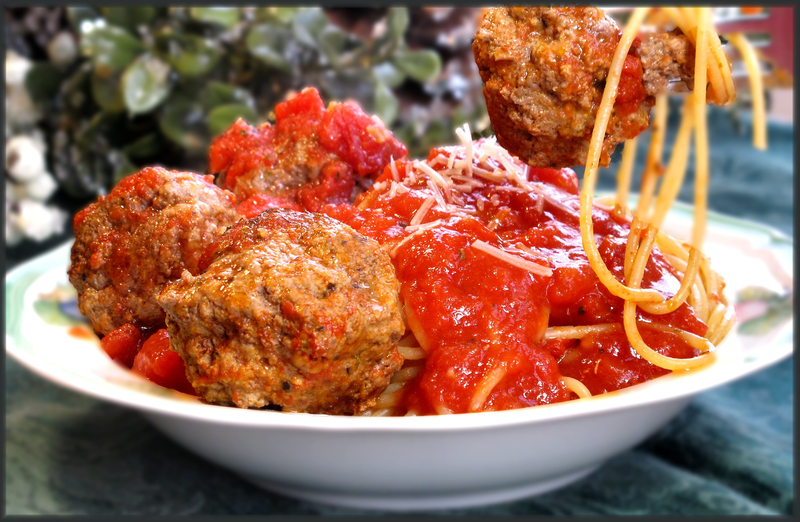
The meatballs we’re most familiar with are seen in the photo, sitting atop a mound of pasta, drenched in tomato sauce. Although a popular item on many Italian restaurant menus, this is not a traditional food from Italy. Instead, what you’ll find on family tables in that country are a dish of polpettes (savory meatballs) served as a meal. Alternatively, marble-sized polpettines are a type of meatball found in soups.
One difference between the Italian meatball and the American version is the ratio of meat to filler (typically bread soaked in milk). A polpette will have equal parts bread and meat, creating a soft, moist and very tender meatball. Our modern version has a higher proportion of meat, resulting in a mouthful that can be quite dense.
The ubiquitous red sauce we call marinara originated in Naples. Marinaro, the Italian word for sailor, gave the sauce its name: the wife at home would throw together a sauce of garlic, oil and tomato when she saw her husband’s fishing boat in the harbor. In this country, during the late 19th and early 20th centuries, Italian immigrants introduced this sailor sauce as an accompaniment to pasta.
At a traditional Italian meal, pasta is served as a first course and meat or fish as the second (main) course. We’re not sure how the American practice began, the combination of pasta, sauce and meat all in the same dish. Perhaps it was the convenience of serving just one plate or maybe from the habit we developed of serving a starch with our meat.
If you’d like to try traditional kofte, here’s a Lebanese recipe we enjoy. I’ve also included a recipe for the meatballs in the picture, which are made from a combination of ground veal, pork and beef for the best balance of tender, juicy and rich flavors. Like many family dishes, there are as many versions of meatballs as there are kitchens.
Meatballs
1 slice bread
1/4 C milk
1 egg
1 T grated parmesan cheese
1/2 t oregano
1/2 t marjoram
1 t basil
1/4 t garlic powder
1/4 t salt
1/2 t pepper
1/2 lb ground beef
1/2 lb ground veal
1/2 lb ground pork
Preheat oven to 375 F. Line a baking sheet with aluminum foil; set aside. Tear bread into small pieces and toss into a large mixing bowl. Add milk and egg, whisking to combine. When bread has dissolved into the liquid, stir in seasonings. Add meats and mix together to combine thoroughly. Using your hands, form into rounds the size of walnuts and set them on prepared baking sheet. Bake until browned, about 25 minutes.
Tomato Sauce
2 T olive oil
2 crushed garlic cloves
1 diced onion
1 diced celery stalk
1 diced carrot
2 T fresh parsley
1 T fresh basil
2 T tomato paste
1 28-oz can plum tomatoes
salt, to taste
In a large saucepan, heat the olive oil over medium high. Add vegetables and cook until softened, about 15 minutes. Stir in the tomato paste and cook an additional 5 minutes. Pour the juice from the canned tomatoes into the saucepan. Roughly chop the tomatoes and add along with any released juices. Cover and simmer over low for 45 minutes. If a smoother sauce is preferred, pass sauce through a food mill or process with an immersion blender.
Kofte
2 eggs
1/4 C bread crumbs
1 1/2 lb ground lamb
2 T chopped parsley
1 minced onion
1/2 t dried mint
1/2 t salt
1/2 t pepper
2 T pine nuts
Preheat oven to 350 F. Line a baking sheet with aluminum foil; set aside. Whisk eggs until smooth in a large mixing bowl. Stir in lamb; sprinkle evenly with bread crumbs and seasonings. Mix thoroughly to combine. Form mixture into flat rounds, about 2 inches in diameter. Place a few pine nuts in the center of each patty and fold up and around the nuts to form a ball. Arrange balls in a single layer on prepared baking sheet and bake for 35 minutes. Alternatively, meatballs may be sautéed in a nonstick skillet until completely browned on all sides. Serve with yogurt sauce.
Yogurt Sauce
8 oz plain yogurt
1 T lemon juice
1 pressed garlic clove
salt, to taste
Whisk ingredients together in a small serving dish. Store in the refrigerator covered with plastic wrap.