













Milton unveils 2020 budget
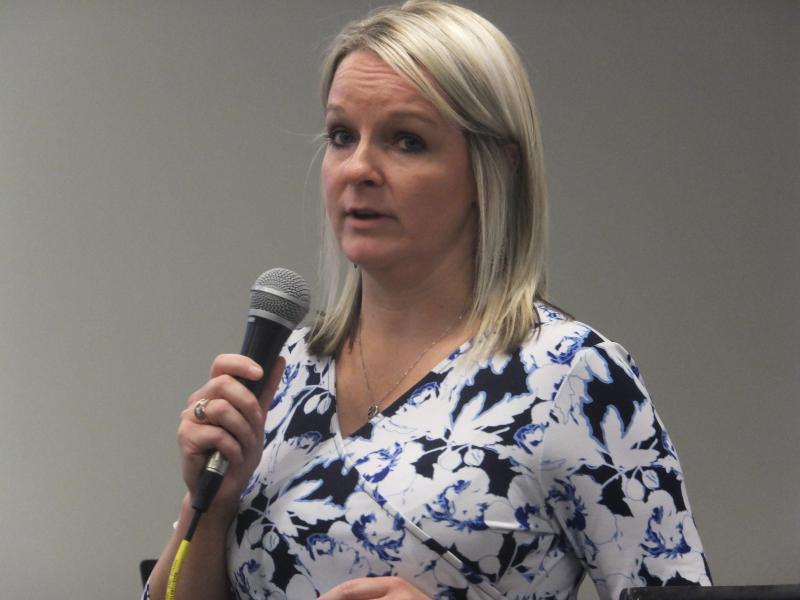
Milton officials unveiled the first draft of the town’s fiscal year 2020 budget, and town council was pleased to discover the town is running a $4,100 surplus.
The budget includes no rate or tax increases.
At council’s July 22 meeting, Town Manager Kristy Rogers said the town’s general fund revenues are projected to be $2.15 million, while expenses are $2.146 million. The town’s proprietary fund, which includes water and sewer, has a budget surplus of $47,000.
Rogers said the proprietary fund revenues are $1.1 million versus $1 million in expenses, but $70,000 of that difference is for water impact fees that can only be used for water-related capital projects. She said the town’s drinking water projects are still in the planning stages but not at the point of construction.
While rates and fees will not be increased, Rogers said she is proposing to change the way the town uses its municipal street aid funds, grant-in-aid monies provided by the state. Rogers said for many years, the town has used street aid funds to pay the monthly costs of street lights, but she would like to see that money used for street improvements instead.
Rogers said municipal street aid can vary wildly depending on the state’s budget; typically, she said, funding varies from $4 million to $6 million for towns, but that could be reduced to $0 in a budget crunch. Thinking that operational costs like street lights should not be funded by an inconsistent revenue source, Rogers wanted to use the street aid money to do three street repaving projects and pay for street lights out of the town’s general fund. The three streets are all in Shipbuilder’s Village and include Shipbuilders Boulevard, South Spinnaker Lane and Bay Court.
As Milton does not have parking meters or permits, the town’s revenue sources are realty transfer tax, property tax and fees. Projected at $1.1 million, property taxes are the town’s largest source of revenue. The town’s tax rate is 24 cents per $100 of assessed value; the town’s total taxable assessed value is $451 million. Rogers said property tax makes up 52 percent of revenues.
Rogers said the town’s transfer tax revenue comes from 1.5 percent of real estate sales within the town of Milton. The projected transfer tax revenue for 2020 is $255,000, but Rogers said that figure represents the share of revenue the town plans to spend on items such as public safety and capital improvements. State law limits what transfer tax can be spent on, which includes public safety services, economic development programs, public works services, capital improvements, infrastructure projects and debt reduction.
While there are no plans for tax increases in the 2020 budget, Rogers said town council may want to consider a small property tax increase in the future in case the real estate market slows down. She said this year, she anticipates 35 new residential units built within Milton.
On the expense side, Rogers broke down the general fund expenses as 44 percent for police, 29 percent for streets and parks, and 22 percent for administration. Rogers said the town is repaying two outstanding loans from the state’s clean water revolving fund; one, from 2006, that has a remaining balance of $181,000 and will be paid off in July 2023, and the 2018 loan for the Wagamon’s water main and Shipbuilder’s well and treatment plant projects, which Rogers said would be paid off in 2039.
Finally, Rogers said the town has about 13 months of cash reserves saved up, but she urged a continued strict adherence to the budget and to continue to hold on to reserve funds built up by prior surpluses. She also asked council to continue to grow and upgrade infrastructure, such as water main upgrades on Atlantic Avenue, Atlantic Street and Chestnut Street, new sidewalks and handicapped-accessable ramps on Front Street, and a drainage project at the municipal parking lot on Magnolia Street.
Rogers’ presentation was an introduction to the budget, and the July 22 meeting did not feature debate from council, which will happen at council’s Monday, Aug. 5 meeting.

Ryan Mavity covers Milton and the court system. He is married to Rachel Swick Mavity and has two kids, Alex and Jane. Ryan started with the Cape Gazette all the way back in February 2007, previously covering the City of Rehoboth Beach. A native of Easton, Md. and graduate of Towson University, Ryan enjoys watching the Baltimore Ravens, Washington Capitals and Baltimore Orioles in his spare time.