












Promising signs for Indian River Bay oyster reef project

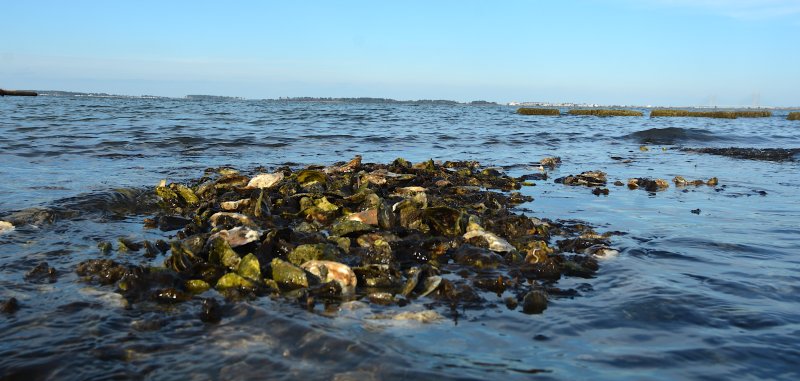
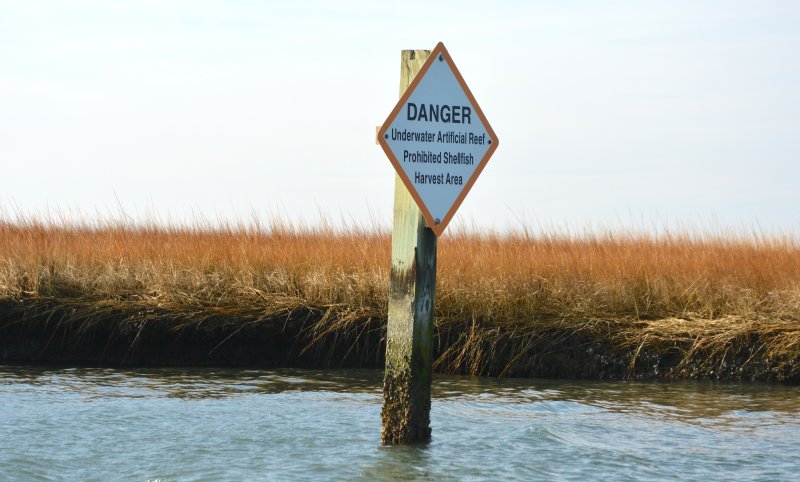
About 14 months ago, Delaware Center for the Inland Bays scientist technician Morgan Krell oversaw the creation of the Inland Bays’ largest oyster reef near Pasture Point, just offshore of James Farm Preserve in Ocean View.
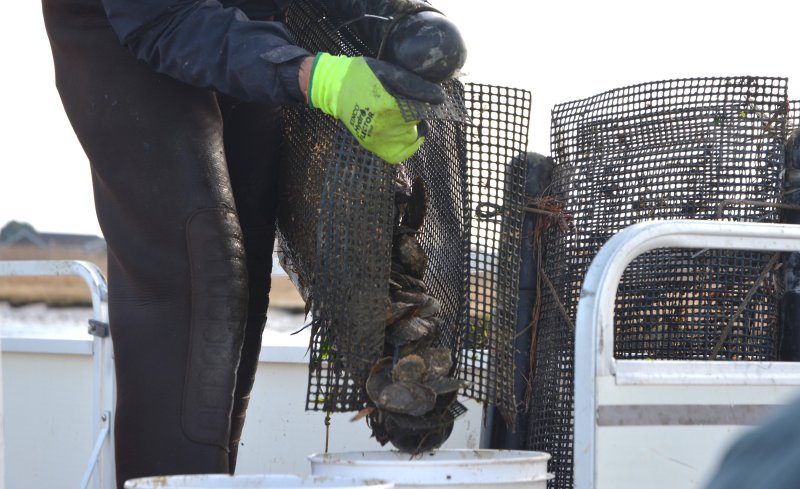
Krell and a handful of volunteers split about 250 cubic yards of oyster shells into four subunits, because he’s conducting a multi-year experiment on what type of man-made reef would best promote oyster growth in the Inland Bays, which in turn improves the health of the Inland Bays. Three of the piles had something constructed on the Indian River Bay side – just burrito bags (oyster shell-filled coconut fiber bags), burrito bags arranged in pyramids, and burrito bags with large concrete pyramids called wave attenuation devices. The remaining pile, with nothing between it and the bay, is serving as the experiment’s control.
A little more than a year later, Krell is reporting that things are going well.
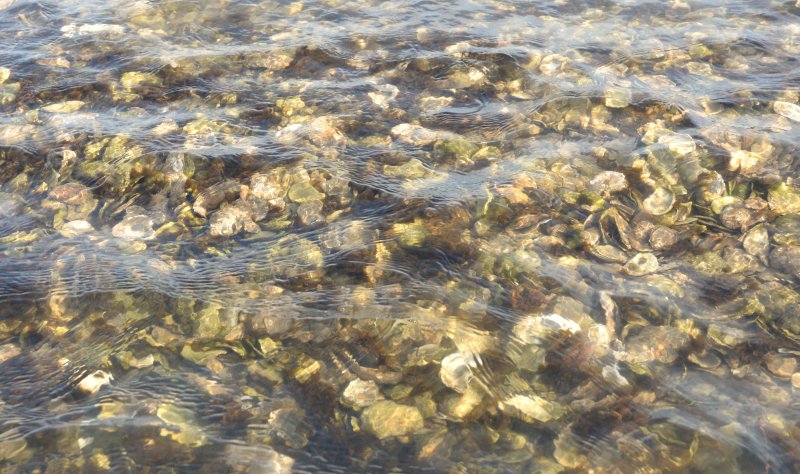
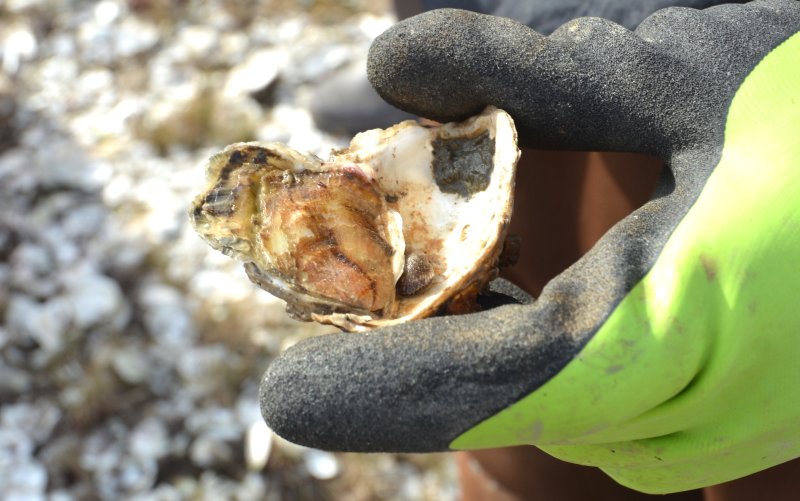
Oysters were stocked last November and in July, and there has been strong survival, Krell said. Perhaps most exciting, he said, is that hundreds of wild oyster spat were observed on the reef this summer, and there were at least two separate successful spawning events confirmed.
Additionally, said Krell, the reefs are structurally solid, and there has been little change in the shape or height of the shell piles.
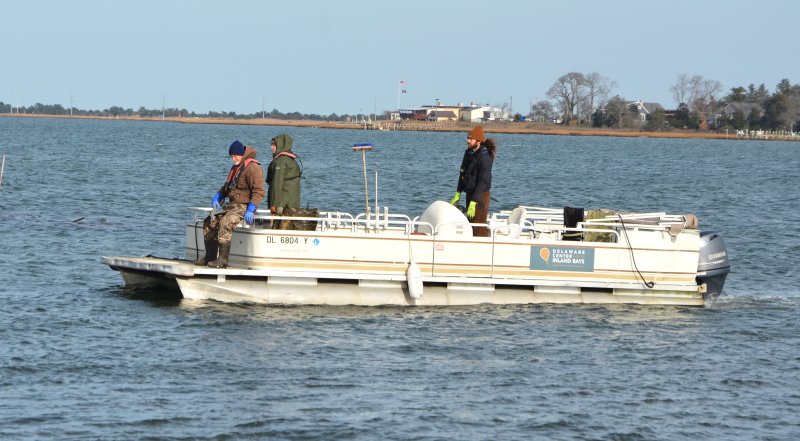
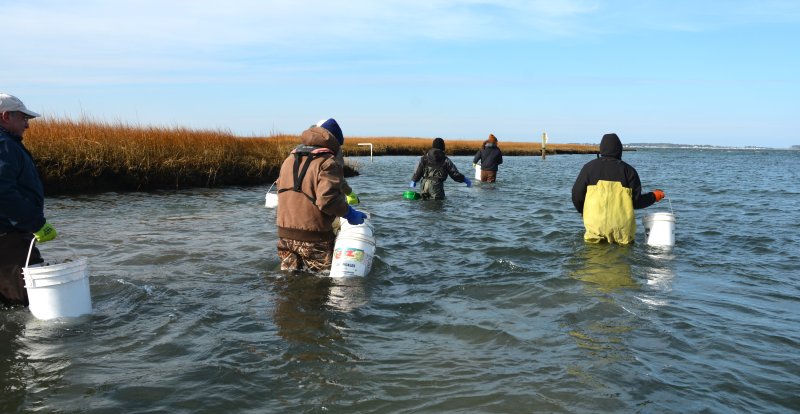
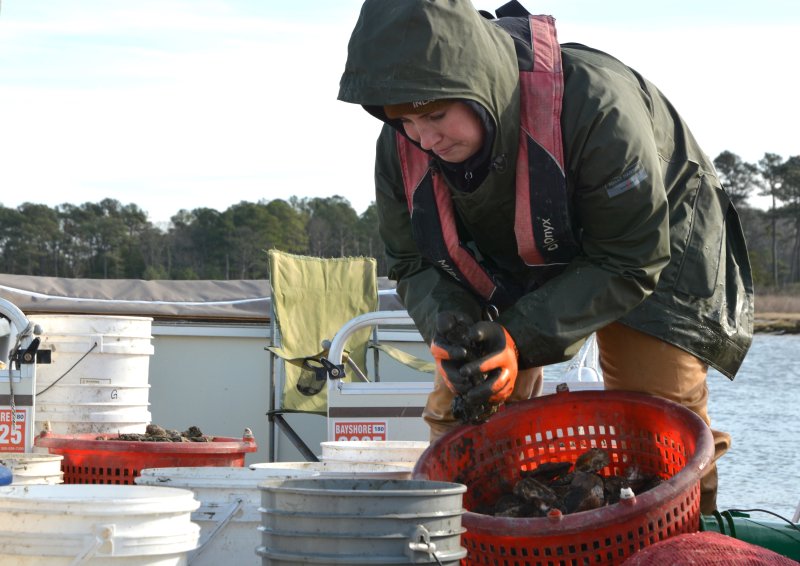
“It seems the new designs we are testing here and the improved location selection are succeeding,” said Krell, who was recently at the reef with volunteers for a third round of stocking.
The oysters stocked by Krell originated at the University of Delaware/Delaware Sea Grant shellfish hatchery in Lewes, but came in two different sources.
The spat on shell oysters came to the center directly from the hatchery in July, and have been growing larger in protected cages on the center’s research oyster lease since then, said Krell.
The seed oysters came from Inland Bays aquaculture farmers, who received their stock from the hatchery over the summer, said Krell. Now, the center is purchasing some of those oysters in order to add to the stocking program, he said.
Krell said the oysters came from three farms – Arrowhead Point Oysters, Nancy James Oysters, Delaware Cultured Seafood – and there were 55 bags of spat on shell stocked, which contain an estimated 25,000 individual oysters, said Krell. There were also about 30,000 seed oysters from Arrowhead Point, he said.
It’s not just oysters growing on the reefs, as there’s a whole underwater ecosystem forming.
Krell said blue crabs and juvenile black sea bass were very prevalent during summer sampling. There have also been wild bay scallops on the shell piles, birds resting and foraging on the reef structures at low tides, and striped bass, dogfish and dolphins swimming around the reef area, he said.
“A super exciting catch was a juvenile spotfin butterfly fish this summer, a mostly southern fish species you might see on a coral reef or in someone's tropical aquarium,” said Krell.
As for which one of the four different styles is performing better, Krell said the most survival has been from the subunit that was stocked with spat on shell oysters. That’s why the center expanded the stocking of the spat on shell to more subunits this fall, he said.
Looking to the immediate future, Krell said they still have to finish stocking the oysters they’ve purchased and then analyze data from 2025. For next year, the center is getting ready to grow and buy more oysters for stocking, continue monitoring this project and hopefully start construction on more reefs in other areas of the Inland Bays, he said.





Chris Flood has been working for the Cape Gazette since early 2014. He currently covers Rehoboth Beach and Henlopen Acres, but has also covered Dewey Beach and the state government. He covers environmental stories, business stories and random stories on subjects he finds interesting, and he also writes a column called Choppin’ Wood that runs every other week. He’s a graduate of the University of Maine and the Landing School of Boat Building & Design.