












Rash of dead birds raises concern at beaches
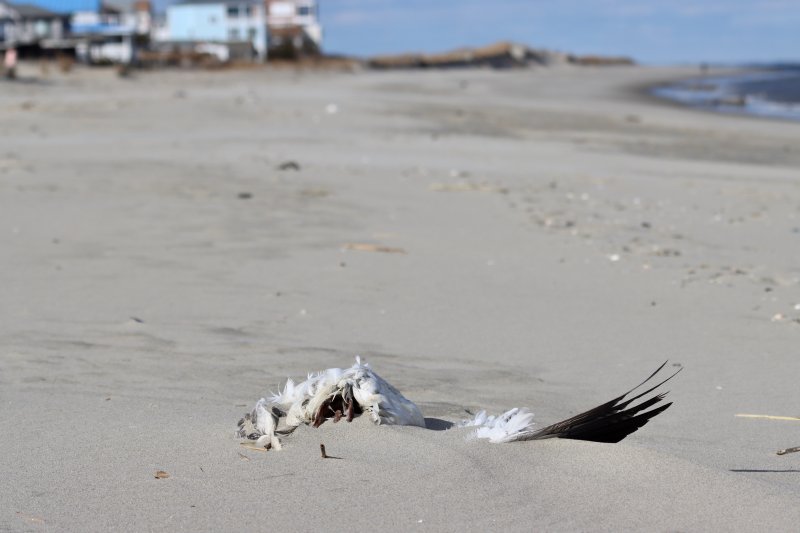
The Delaware Department of Natural Resources and Environmental Control has started treating every reported dead snow goose as if it is infected with bird flu.
A DNREC spokesman said reports of sick and dead geese started coming in before Christmas. Dead birds have been seen on the beach and in the dunes at Broadkill Beach, Lewes Beach and in Cape Henlopen State Park.
DNREC said it does not anticipate testing any of the dead geese.
The agency said in a Dec. 30 news release, “While the DNREC Division of Fish and Wildlife and the U.S. Department of Agriculture’s Animal and Plant Health Inspection Service will soon begin collecting sick and dead birds from locations throughout the state for safe disposal, we would also reiterate that not every report of a sick or dead bird will draw a DNREC response.”
The Centers for Disease Control and Prevention said bird flu is highly contagious among birds, but is not easily spread to humans. Still, DNREC said people should take precautions and not touch or handle sick wildlife.
It offered safety tips for anyone who does have the need remove dead birds from their property.
• Use disposable or washable gloves to remove the carcass
• Place carcass in a plastic bag, along with gloves, then place all in a second plastic bag before disposing in the trash
• Wash hands immediately after disposing carcass and disinfect the area where it was found.
DNREC said people who see sick or dead birds should use the Wildlife Mortality Survey form on its website, dnrec.delaware.gov.
Tri-State Bird Rescue & Research is also able to respond to reports of sick or injured birds.
Andrea Howey-Newcomb, clinic programs director at the Newark-based nonprofit, said volunteers will pick up birds and take them to their wildlife hospital.
She said this is the second year they are seeing high mortality rates in snow geese due to avian flu, the majority being at the beaches.
“Although this is not the only place where deaths are occurring, higher numbers are being seen near bodies of water. Snow geese and other waterfowl tend to gather in large groups around water, which can lead to higher mortality in these areas,” she said.
Howey-Newcomb said Tri-State does not monitor bird populations or remove dead birds from the environment.
She said anyone with health questions or concerns should contact their doctor, the Delaware Division of Public Health or their pet’s veterinarian for guidance.
For details on Tri-State Bird Rescue & Research, go to tristatebird.org.

Bill Shull has been covering Lewes for the Cape Gazette since 2023. He comes to the world of print journalism after 40 years in TV news. Bill has worked in his hometown of Philadelphia, as well as Atlanta and Washington, D.C. He came to Lewes in 2014 to help launch WRDE-TV. Bill served as WRDE’s news director for more than eight years, working in Lewes and Milton. He is a 1986 graduate of Penn State University. Bill is an avid aviation and wildlife photographer, and a big Penn State football, Eagles, Phillies and PGA Tour golf fan. Bill, his wife Jill and their rescue cat, Lucky, live in Rehoboth Beach.