












Ron Gray remembers the Rehoboth Beach farmlands
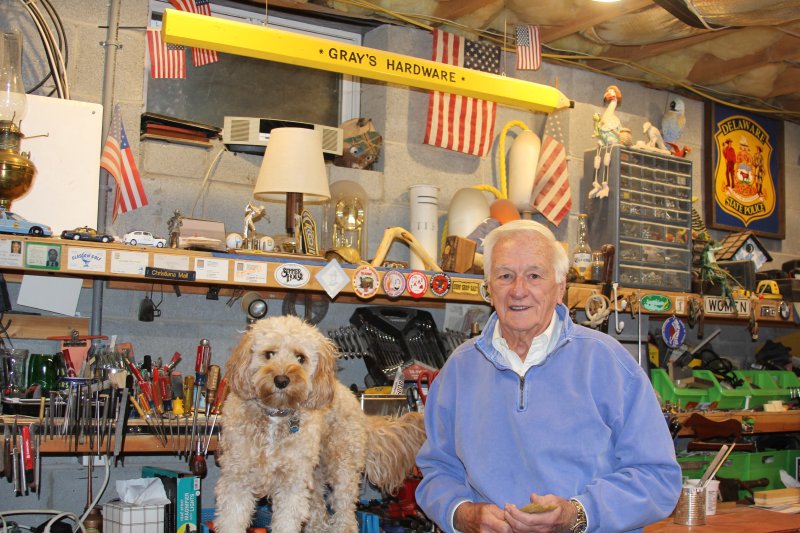
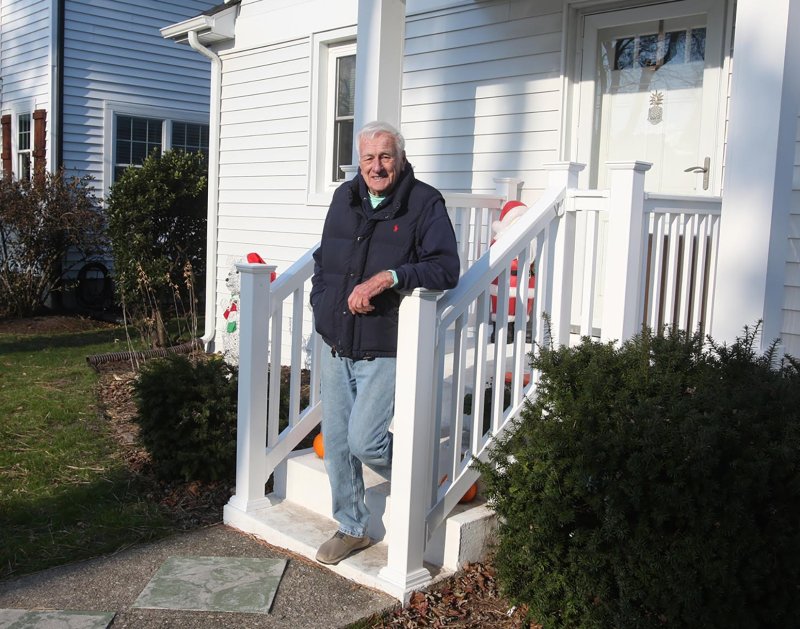
Ron Gray grew his house on a plot of land that once was his mother’s garden. That goes back to 1952, when the house now on Anna B Street along the Forgotten Mile was considered farmland.
“When I was growing up, kids used to tease me and call me a country boy,” said Gray, now 79.
The two plots his parents bought were part of the Dodd Farm that once spanned from Rehoboth Beach’s southern border to the Seabreeze neighborhood of Dewey Beach.
His parents, Walter and Thelma, moved to the area to run his grandfather’s grocery store on the corner of Bayard Avenue and Norfolk Street. Gray’s love and respect for his parents shines through when he speaks about them.
Setting down roots, his parents bought two plots of land for $500 from Anna B. Dodd herself, Gray said.
At the time, only a handful of vacation homes dotted the area, all made from plywood and built for summer use only, in an area affectionately known as the Plywood Jungle.
Gray recalls heading to school at the original school building, last known as Rehoboth Elementary before it was torn down for the new elementary. Back then, the school housed all grades from kindergarten to 12th – about 500 kids total. One bus went down to the inlet to pick up students who lived there. “Everyone else had to fend for themselves,” Gray said.
Every day, he said, he walked to school, crossing a pasture and timing it just right to avoid the bull that lived there – not far from Bull Woods, which housed more of the same.
Gray said working for the Rehoboth Beach Patrol as a high school upperclassman was one of his early highlights.
After graduating from Rehoboth High in 1964, Gray said he went off to college to study architecture and engineering. “But that lasted one semester,” he said.
Returning home, he promptly joined the Air Force and went off to Fort Worth as part of the Strategic Air Command, where he officially worked as an architectural draftsman.
“Anything they needed done, I could do, on posters or whatever didn’t fit in a typewriter,” he said.
When he was sent to Guam, his job changed to bomb handler, loading B-52s for their cross-Pacific missions to Vietnam.
“It was a beautiful place, a tropical island with huge white cliffs,” Gray said.
But after four years, he came back to Delaware, where he was born and raised.
“I missed the ocean. Had to get home to my ocean,” he said.
He soon followed in the footsteps of his former sergeant, who introduced him to police work.
“He was a part-time officer at night and invited me to ride along one night,” Gray said. “I hadn’t even thought about being an officer until then.”
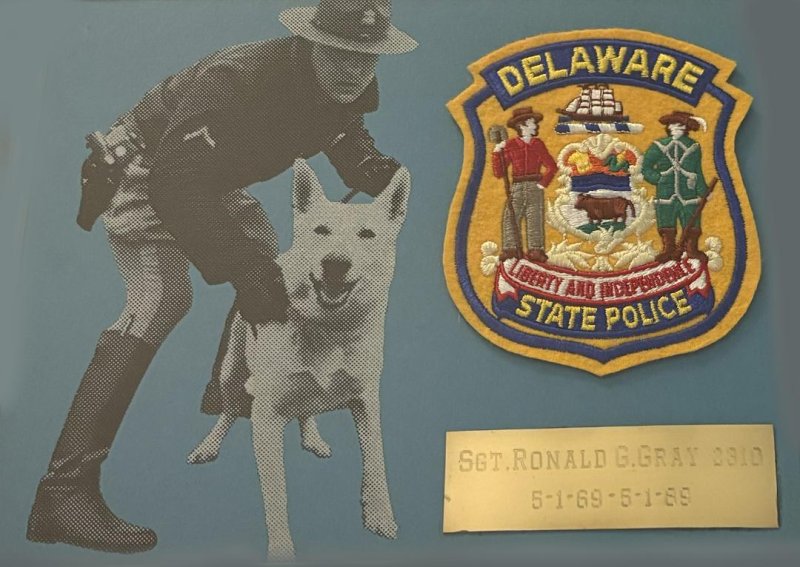
Signing up with the Delaware State Police in 1969 turned into a 20-year career. Back then, Gray said, all new recruits were sent to New Castle County. He lived in Glasgow and covered the Troop 2 area that ran from the Delaware River to the Maryland state line, and from the Chesapeake & Delaware Canal to the southern boundary of Wilmington. His time there included working with a K-9 unit before promotion to detective sergeant.
Looking back at all the cases he worked, Gray said one stands out. He was working undercover with an auto theft unit investigating the infamous Johnston crime family. The Chester County family was notorious for stealing bush haul tractors, among a host of other vehicles, and selling them to a counterpart in Kentucky. As federal indictments loomed, the gang began killing anyone who could be a potential government witness. The move “At Close Range,” starring Sean Penn and Christopher Walken, was based on the mushroom-country crime family.
“These were bad dudes,” Gray said. Two of the brothers killed a girlfriend and also a confidential informant. One shot at Gray but missed. “Thank God he didn’t hit,” he said.
After 20 years with the state police, mandatory retirement caught up to him at age 41, but Gray said he would’ve stayed on if he could. “Sure enough, after I retired, they relieved the mandate,” he chuckled.
But he enjoyed his next career just as much, working as an arson investigator for Nationwide. He held that job for 22 years.
By 2007, he had built his house on Anna B Street behind his childhood home, where his mother still lived. “Mom said she wanted me close by,” he said.
His son Ryan now lives in his parents’ house, keeping it in the family. His son Ron Jr. lives in New Mexico, where he works in the healthcare field.
Two grandsons, Remington and Ridley, live close by and keep Gray busy, but he loves every minute of it. “I have no spare time,” he said with a smile.
However, his well-stocked basement workroom that he shares with partner Gerry Matison tells a different story. The walls leading to the room are lined with colorful fish he made out of scrap wood, and other odds and ends.
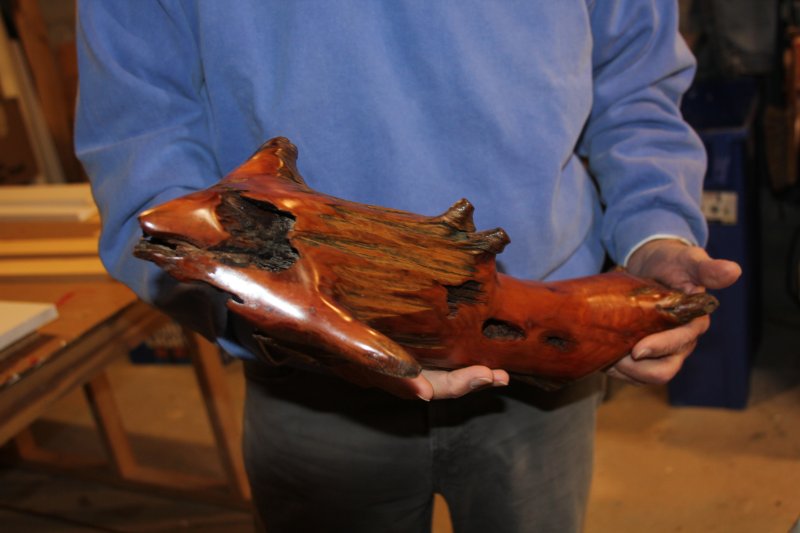
Driftwood found along the New Castle coastline is his preferred medium.
“I love the feel of it,” he said, showing off piece after piece that he has sanded and stained with tung oil to bring out the wood grain with a warm, amber glow. “I like that you can take a piece of scrap wood and make something of it.”
Several pieces of driftwood lean against the wall waiting for inspiration to hit Gray. He credits his father with teaching him everything about woodworking. “The first thing I ever made was probably a birdhouse,” he said.
He said carpentry gave him the ability to create something concrete and permanent to counter the mundane job of writing daily reports as a police officer.
His creative side is definitely flourishing these days, almost as if his short-lived college engineering days have come full circle.

Melissa Steele is a staff writer covering the state Legislature, government and police. Her newspaper career spans more than 30 years and includes working for the Delaware State News, Burlington County Times, The News Journal, Dover Post and Milford Beacon before coming to the Cape Gazette in 2012. Her work has received numerous awards, most notably a Pulitzer Prize-adjudicated investigative piece, and a runner-up for the MDDC James S. Keat Freedom of Information Award.