











Sussex will help direct grants to opioid treatment, education
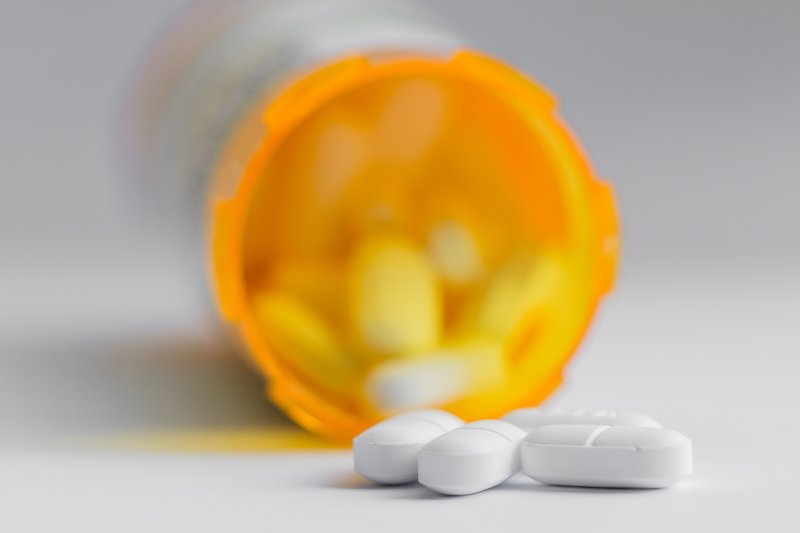
Sussex County Council will help decide how to spend nearly $500,000 for opioid treatment and education programs, with funds from a 2021 national settlement between municipalities and the drugs’ makers and distributors.
For at least the next 12 years, Delaware will have $15 million available annually for opioid treatment and education programs.
This year, for the first time, 15% of the annual allocation will be available to the 10 municipalities that signed on to the opioid agreement to fund their own eligible programs or distribute as grants to outside entities for services. In Sussex County, that means the county, Milford and Seaford.
This year and next, an additional $1 million is being divided among the municipalities. That brings the total in each of the next two years for Sussex County to $479,641, while Milford gets $196,862 and Seaford $271,908.
The state Prescription Opioid Settlement Distribution Commission will manage the settlement fund, which stands at about $50 million, but over the next 12 years is expected to receive more than $200 million.
Sussex County Administrator Todd Lawson was recently named as the commission chair.
“Our purpose is to ensure that the settlement funds are distributed to purposes related to opioid remediation,” said Bradley Owens, the commission’s new director, at county council’s Feb. 3 meeting.
“All dollars are meant to help communities and people who are impacted by opioid use disorder," added Owens, a Lewes native who now lives in New Castle County.
He asked council to provide a list of recommended grant recipients. That will be reviewed by commission staff, which will send a private link to the providers so they can apply for funds. Then the county will be consulted to determine which are sent to the commission for a final determination.
Councilwoman Jane Gruenebaum asked how the program is monitored. Owen said there are goals, monthly reporting and evaluation for compliance. Information will be posted online, he said.
Councilmen Steve McCarron and John Rieley said they hope some money can go to ambulance services, which respond to opioid overdoses.
McCarron said that is more critical than training, education and outreach, which are goals of the program.
He also said he hopes to send money to treatment centers. Owen said treatment has been a priority of the commission.
A $26 billion national settlement agreement was reached with the big three opioid distributors – AmerisourceBergan, Cardinal Health and McKesson – and Johnson & Johnson.
There is a lot of competition for Delaware’s nearly $13 million annual grant program, which is separate from the funds that local governments will help distribute. There were $100 million in requests for that money in the last funding round, Owens said.
Allocations are based on drug overdose rates; treatment admissions; social vulnerability index, which takes into account risks like poverty and housing instability; and population size.
The origin of the opioid settlement began with thousands of lawsuits filed independently by municipalities between 2014 and 2017 against manufacturers, distributors and pharmacies over opioid-related deaths.
Delaware decided to pool its allocation in one fund, creating the commission to oversee the distribution. The municipalities in 2022 and 2023 signed an agreement to drop their lawsuits in exchange for a role in the funding distribution process.
The state commission also manages the Opioid Impact Fee Fund, a separate fund established to regulate the proliferation of opioid prescriptions. It has about $5 million.
A plan is expected to be created this year for how those funds will be used, Owens said. The funds come from a one-cent fee assessed on opioid purchases.

Kevin Conlon came to the Cape Gazette with nearly 40 years of newspaper experience since graduating from St. Bonaventure University in New York with a bachelor's degree in mass communication. He reports on Sussex County government and other assignments as needed.
His career spans working as a reporter and editor at daily newspapers in upstate New York, including The Daily Gazette in Schenectady. He comes to the Cape Gazette from the Cortland Standard, where he was an editor for more than 25 years, and in recent years also contributed as a columnist and opinion page writer. He and his staff won regional and state writing awards.
Conlon was relocating to Lewes when he came across an advertisement for a reporter job at the Cape Gazette, and the decision to pursue it paid off. His new position gives him an opportunity to stay in a career that he loves, covering local news for an independently owned newspaper.
Conlon is the father of seven children and grandfather to two young boys. In his spare time, he trains for and competes in triathlons and other races. Now settling into the Cape Region, he is searching out hilly trails and roads with wide shoulders. He is a fan of St. Bonaventure sports, especially rugby and basketball, as well as following the Mets, Steelers and Celtics.