












Task force reviews nuclear power economics
The Delaware Nuclear Energy Feasibility Task Force discussed economic issues surrounding new power plants during its April 6 meeting.
John Quick, executive director of the Delaware Workforce Development Board, talked about jobs that nuclear energy could bring to the state, prompting task force member Martin Willis, a union boilermaker, to say more welders are needed in the state. He said outreach into schools is needed to let students know the option is there. “If we’re going to go to this nuclear age, we’re definitely going to need welders,” he said.
Rep. Jeff Hilovsky, R-Long Neck, asked about recruitment efforts.
Quick said there are job centers that provide options for people looking for work. His group is also in the process of staffing outreach coordinators to speak with high school students about work options and apprenticeships.
“I think it’s our job as the subject matter experts to be the ones spreading the word and giving that information out,” Quick said.
As for using social media to reach students, Quick said kids don’t use Facebook, and his group is not authorized to reach students through Snapchat or TikTok, the most popular social media venues used by students today.
Hilovsky said coordination is needed with schools in order to develop a workforce.
“This is a big deal when you only have two welders in the queue and there is such a need for welders, for example, in addition to electricians and others ... some effort should be made toward that to address this need in a quicker time frame,” he said.
Martin Heintzelman, UD professor and department chair for applied economics and statistics, spoke about community and economic issues regarding energy infrastructure. Property values are a common concern for people living near power plants, he said.
“Power lines, power plants have a negative impact on property values … suggesting people don’t like to be near them, so I would expect the same to be likely true for a new nuclear power plant,” he said.
However, the trend seemed to reverse following the Fukushima nuclear accident in 2011. Although property values went down initially, he said, prices went back up a year later. “People were temporarily afraid, and then they forgot about it,” Heintzelman said.
A recent survey even suggested that there was a willingness among residents to accept new nuclear facilities. Heintzelman said little research exists on small-modular nuclear reactors – a potential energy source that several companies are working to bring online – but the smaller SMR footprint could be a big factor for community acceptance.
“Based on everything I know about renewable energy and other studies, visibility is a huge issue. If you can mitigate that, it would reduce negative impacts and perceptions,” he said.
Compensation for those living near a facility is another factor. Money could go to individual households, or to the community as a whole, Heintzelman said.
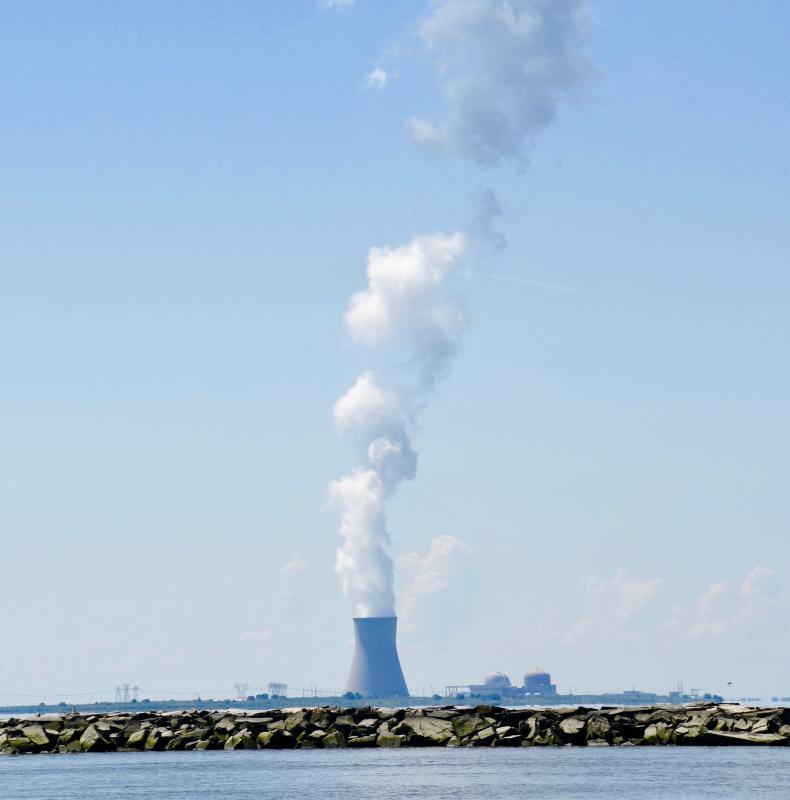
Task force member Willis said some nuclear units are less visible than the cooling towers at Hope Creek, and town halls will be needed to let communities know about the pros and cons of nuclear power. “The benefits outweigh the negatives,” he said. “We don’t have 30 acres for 70 windmills. We don’t have 300 acres for 2 megawatts of solar, but we do have enough acreage for gigawatts of nuclear power.”
Sen. Stephanie Hansen, D-Middletown, said the next meeting will be Monday, April 20, and the task force work should continue through May before final recommendations are put forward.
At the beginning of the meeting, Hansen told task force members that any issues with the process should be raised during meetings, not on social media. “This is the place to talk about those things. Not online. Not attacking other people and their positions on social media,” she said, without citing any specific posts.

Melissa Steele is a staff writer covering the state Legislature, government and police. Her newspaper career spans more than 30 years and includes working for the Delaware State News, Burlington County Times, The News Journal, Dover Post and Milford Beacon before coming to the Cape Gazette in 2012. Her work has received numerous awards, most notably a Pulitzer Prize-adjudicated investigative piece, and a runner-up for the MDDC James S. Keat Freedom of Information Award.