











Teachers' union calls for virtual learning
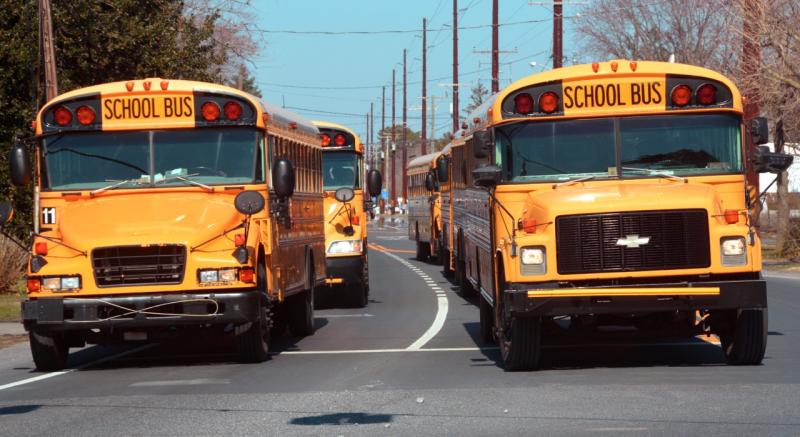
Delaware's teachers' union announced July 22 that the 2020-21 school year should start remotely – similar to the way students ended the last school year.
“Today, the DSEA is calling for the 2020-2021 school year to begin with remote learning and instruction for at least the first six weeks,” said Delaware State Education Association President Stephanie Ingram in a statement. “Protecting the safety of Delaware educators, students, and families requires this action. We believe it will allow time to further evaluate the trauma caused by the virus, its impact on our students' and educators’ mental health, [and] the impact of the virus on the physical health of children of all ages.”
Ingram said teaching students virtually will also allow time to develop health plans for students and educators who are at a higher risk of infection, and create plans to meet the educational needs of students on a district-by-district basis.
In his press conference July 21, Gov. John Carney said he wants to see a continued flattening of COVID-19 cases and other metrics as officials consider opening schools. As it stands now, he said, Delaware has minimal-to-moderate spread of the disease, which would fall under a hybrid model of remote and in-person learning for school reopening, according to recent state guidelines.
“Increased flattening would move us into the green light for as much in-person instruction as possible,” Carney said, referring to fully reopening schools for instruction with minimal community spread. The third scenario for reopening – the one recommended by the teachers' union – is remote learning only because of significant community spread.
In the latest state data, 61 hospitalizations with 7 in critical care compares to March/early April levels, far below Delaware's peak which hit April 27 with 337 hospitalizations. On July 21, the percentage of positive COVID-19 cases was 4.1 percent, leaving the total number of positive cases – more than 100 per 100,000 people – the only metric of concern. Carney said, he would like to see that number drop below 100.
“Where were are as it relates to school reopening criteria is solidly in the middle of the range, in the yellow category, which would bring us a hybrid kind of reopening,” he said.
Carney said he will make a final decision by early August on whether schools will reopen, and if so, school districts and charter schools will be able to decide whether schools fully open, reopen in a hybrid scenario, or offer only virtual classes.
Ingram said DSEA members who listened to Carney's press conference wanted answers or clarity about the upcoming school year but did not get it. “Instead, they left confused, with more questions and heightened concerns about their personal safety and well-being,” she said.
In a DSEA survey on fully reopening school, 4,400 members responded with the following concerns:
• 88.3 percent for their own health
• 91.2 percent for their family’s health
• 92.7 percent for their students’ health
• 93.2 percent for their students’ family’s health
• 93.9 percent for their fellow educators' health
“To be clear, the safest available option for our students, their families, educators, and their families is to begin the school year in a remote learning environment,” Ingram said. “We hope we have made clear where we stand on reopening schools – only when we know it is safe to do so. We encourage others who share this belief to join us.”
As part of the House Democratic Caucus Leadership, Speaker of the House Rep. Pete Schwartzkopf, D-Rehoboth Beach, issued a statement July 22 in support of the DSEA opinion.
“The health and safety of our teachers – as well as the students they educate – have to be our highest priority. While we all would like to seek a return to ‘normal’ as quickly as possible – parents loading their children onto buses and sending them to school, then heading to work – that has to take a backseat to what the health experts, educational leaders, and our own observations tell us,” said Schwartzkopf along with Majority Leader Rep. Valerie Longhurst, D-Bear, and Majority Whip Rep. Larry Mitchell, D-Elsmere.
“We agree with DSEA that until we have a better handle on this virus and a more comprehensive mitigation plan in place, we must prioritize the health and safety of our teachers and students above all else.”
“Beginning the school year using remote learning is the safest option available to us in the current climate.”
Carney did not respond to the DSEA's statement or say whether he would take its recommendation into consideration when he makes a decision on school reopening.

Melissa Steele is a staff writer covering the state Legislature, government and police. Her newspaper career spans more than 30 years and includes working for the Delaware State News, Burlington County Times, The News Journal, Dover Post and Milford Beacon before coming to the Cape Gazette in 2012. Her work has received numerous awards, most notably a Pulitzer Prize-adjudicated investigative piece, and a runner-up for the MDDC James S. Keat Freedom of Information Award.