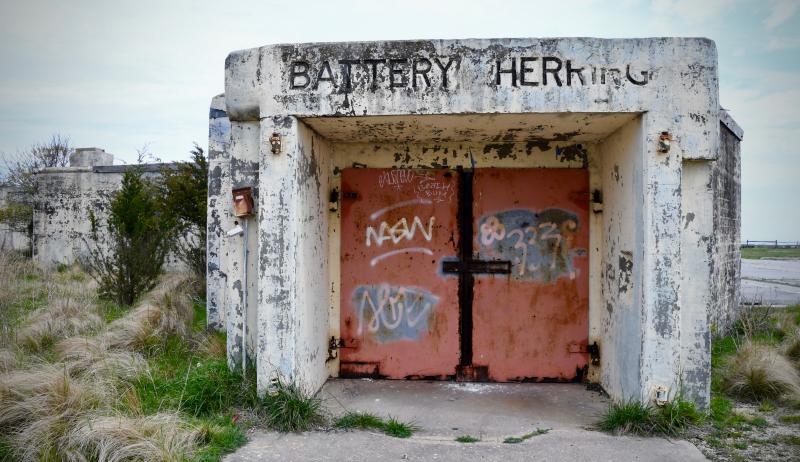











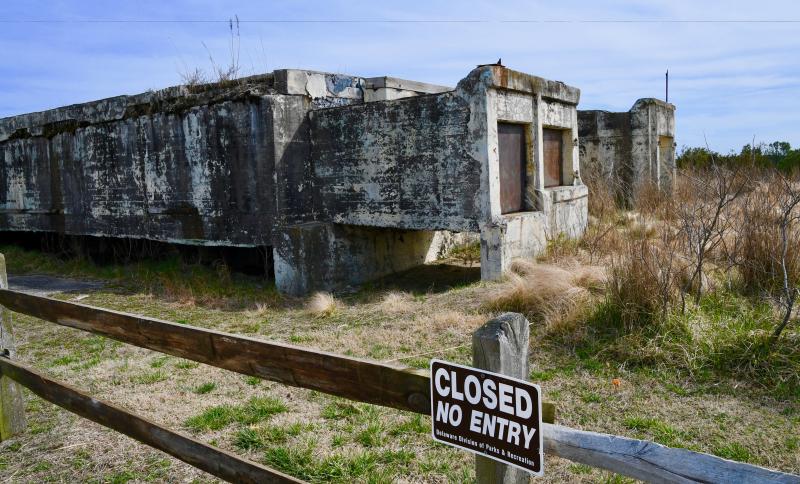
Battery Herring in Fort Miles was used in World War II as an artillery bunker and during the Cold War by the U.S. Navy as a top-secret Russian submarine listening post. RON MACARTHUR PHOTOS
Battery Herring, one of 16 bunkers built at Fort Miles, was once covered with 10 feet of sand.
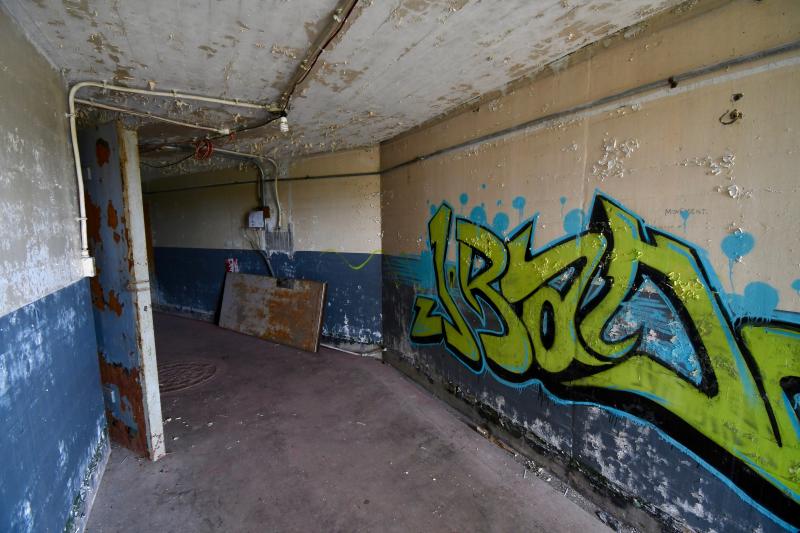
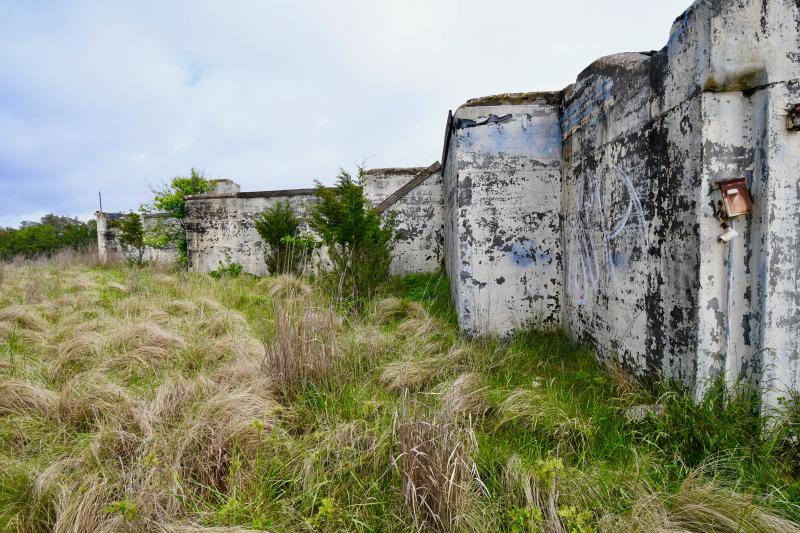
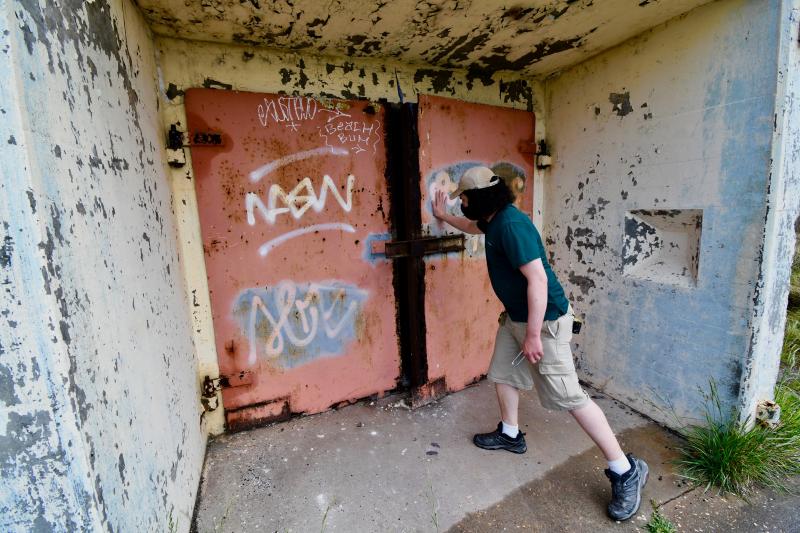
Although it’s not open to the public, over the years, people have managed to leave their mark on the walls of Battery Herring.
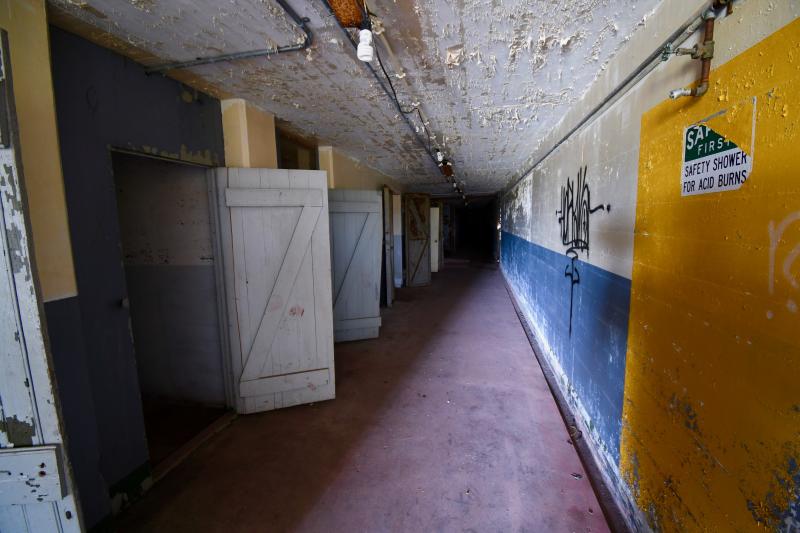
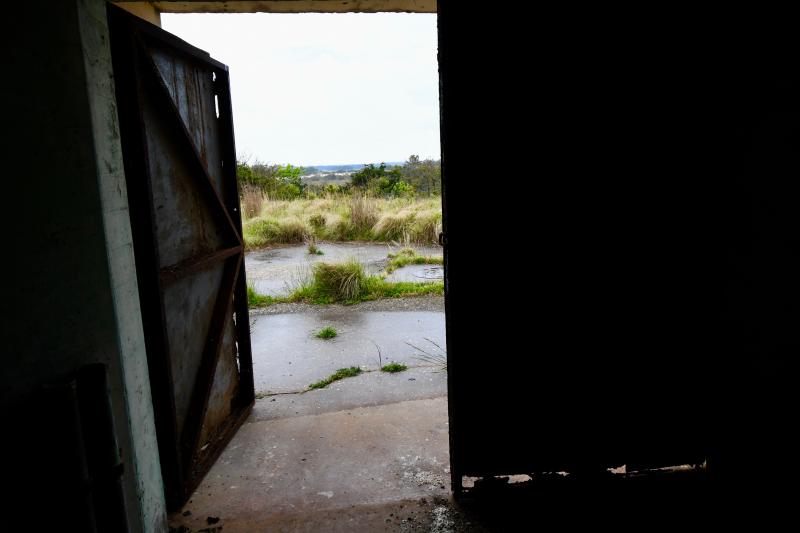
The light from an open entrance illuminates the main hallway and rooms in Battery Herring.
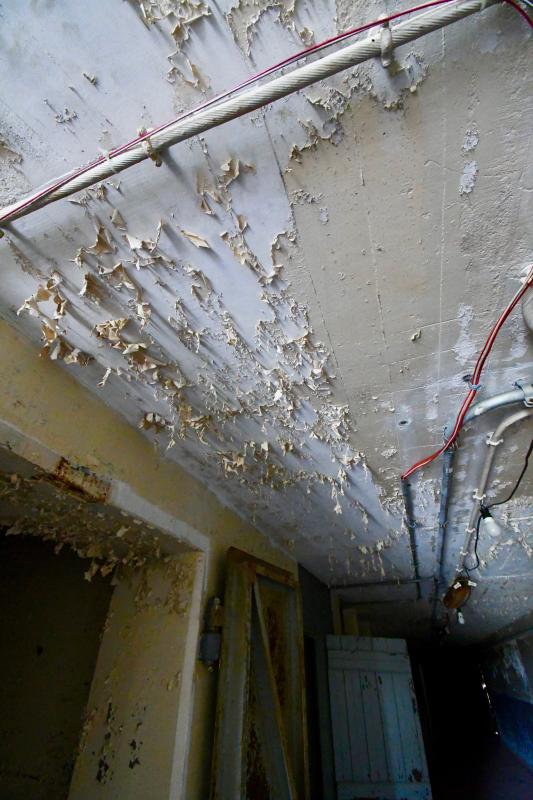
The Navy added a ceiling and painted the walls inside the bunker in the 1960s.
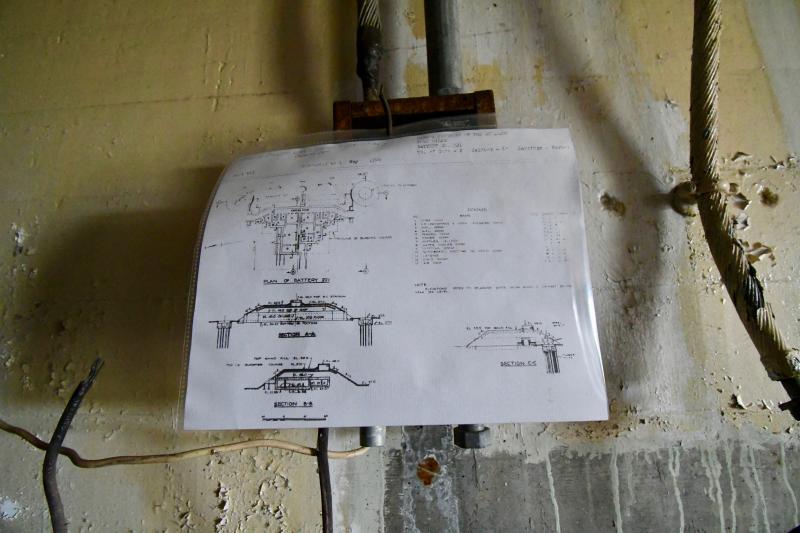
An original blueprint shows the layout of Battery Herring when it was used by the Army during World War II.
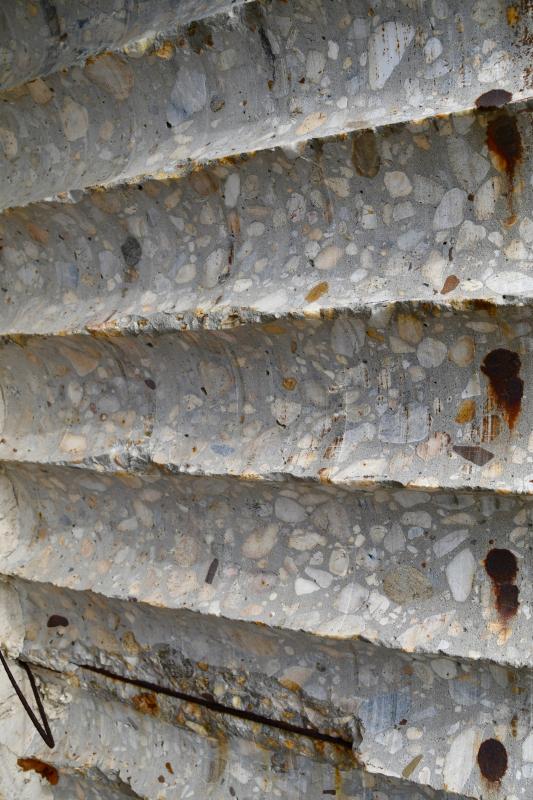
Battery Herring has withstood the elements since being uncovered in the early 1960s. The Fort Miles bunker is located at one of the highest points in Cape Henlopen State Park.
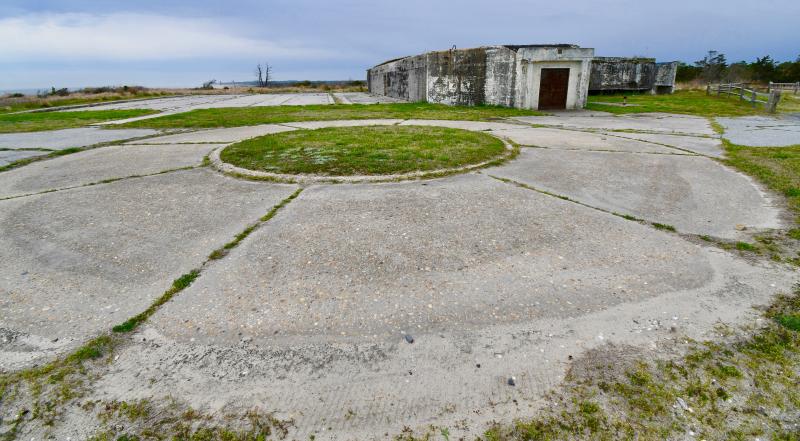
Battery Herring’s south entrance opens onto one of two gun emplacements atop the Herring Point dune.
While other bunkers had guns positioned inside with their barrels pointing outside toward the ocean or bay, Battery Herring’s two 6-inch guns were placed outside the bunker.
Tyler Dreiblatt, Cape Henlopen State Park interpretive program manager, closes the massive steel doors which provide access to Battery Herring.
Naval staff had to drill an opening in Battery Herring’s wall to provide access to an adjoining building constructed to support the Sound Surveillance System (SOSUS) project.
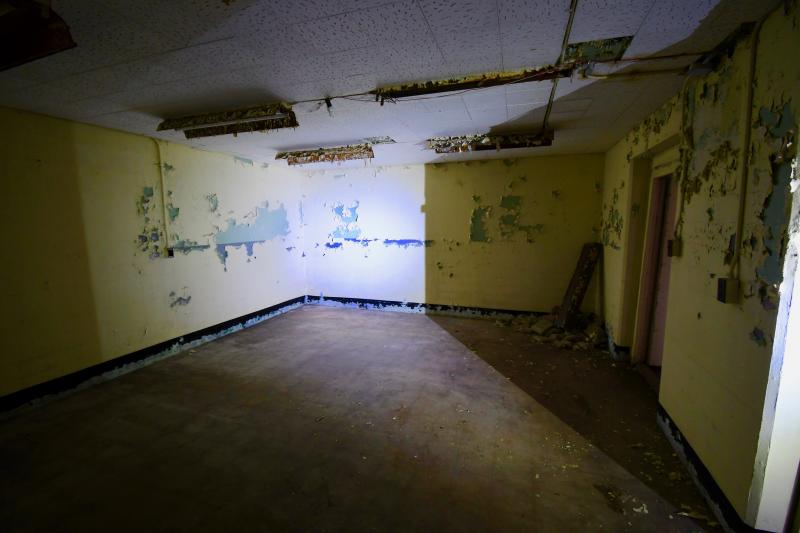
Time has taken a toll on the walls of Battery Herring as paint peels off the ceiling.
Battery Herring in Fort Miles was used in World War II as an artillery bunker and during the Cold War by the U.S. Navy as a top-secret Russian submarine listening post. RON MACARTHUR PHOTOS
Battery Herring, one of 16 bunkers built at Fort Miles, was once covered with 10 feet of sand.
Although it’s not open to the public, over the years, people have managed to leave their mark on the walls of Battery Herring.
The light from an open entrance illuminates the main hallway and rooms in Battery Herring.
The Navy added a ceiling and painted the walls inside the bunker in the 1960s.
An original blueprint shows the layout of Battery Herring when it was used by the Army during World War II.
Battery Herring has withstood the elements since being uncovered in the early 1960s. The Fort Miles bunker is located at one of the highest points in Cape Henlopen State Park.
Battery Herring’s south entrance opens onto one of two gun emplacements atop the Herring Point dune.
While other bunkers had guns positioned inside with their barrels pointing outside toward the ocean or bay, Battery Herring’s two 6-inch guns were placed outside the bunker.
Tyler Dreiblatt, Cape Henlopen State Park interpretive program manager, closes the massive steel doors which provide access to Battery Herring.
Naval staff had to drill an opening in Battery Herring’s wall to provide access to an adjoining building constructed to support the Sound Surveillance System (SOSUS) project.
Time has taken a toll on the walls of Battery Herring as paint peels off the ceiling.Story Location
Cape Henlopen Drive
Lewes, DE 19958
United States
While there is plenty to see at the Fort Miles Historical Area in Cape Henlopen State Park, the most fascinating history of the fort is hidden underground in a series of bunkers built as part of a massive effort to protect the coastline during World War II.
At its peak, Fort Miles became a military city serving as home to more than 2,200 soldiers and 250 buildings.
Four of the bunkers – Battery 519, Battery Smith, Battery Herring and Battery Hunter – served as artillery emplacements. Battery 519 is now a museum, but the other three bunkers are not open to the public.
Battery Herring is the most visible of all the bunkers, yet its long history of military service is mostly unknown. It's served as a gun emplacement, a top-secret missile testing site and a Russian submarine listening post.
During World War II, the battery overlooking the Atlantic Ocean was buried under 10 feet of sand with two 6-inch guns on either side. Located adjacent to the Herring Point parking lot, it looks nothing like it did more than 75 years ago.
The battery was placed into action on Aug. 31, 1943, after a year of construction. When Fort Miles was closed after the war, in December 1945, the military used the area around Battery Herring as a top-secret Bumblebee missile testing site. For two years, dozens of missiles were fired over the Atlantic Ocean from atop Herring Point. Testing was moved in March 1947 to a more remote location in North Carolina.
The bunker was vacant until 1962, when the U.S. Navy purchased 626 acres of the fort to construct a top-secret Cold War facility to spy on Russian submarines. As one of several Sound Surveillance System (SOSUS) facilities, Naval Facility (NAVFAC) Lewes started operations in 1961.
The sand was removed from atop Battery Herring, and a terminal equipment building was constructed in front of the battery, which served as the terminus for the underwater cable placed along the coast to aid in surveillance of Russian subs. The battery site was used to house a generator to operate the terminal equipment building.
The Navy placed a cable 104 miles out to sea equipped with 40 hydrophones, or underwater microphones, to detect and determine the positions of Russian submarines.
Today, the concrete bases of the gun emplacements and the footprint of the equipment building can still be seen.
Battery Smith and Battery Hunter were also used by the Navy. In addition, the Navy constructed a two-story headquarters facility, which is now the Biden Center.
The battery was abandoned again in 1981. Although it was closed to the public, trespassers have managed to sneak in over the years and leave behind evidence of their visits by spray-painting the walls. Over the past 15 years, state park staff have made the bunker more secure.
Battery Herring may see action once again in its long history. State park staff and the Fort Miles Historical Association Bunker Busters volunteers are working inside the battery to make it accessible to the public.
Upcoming: Inside Battery Smith, the largest Fort Miles bunker.
For more information on Battery Herring and the U.S. Navy presence at Fort Miles, go to navyatcapehenlopen.info/harborentrancecontrolpost.html and navyatcapehenlopen.info/sosusnavalfacility.html.
Battery Herring in Fort Miles was used in World War II as an artillery bunker and during the Cold War by the U.S. Navy as a top-secret Russian submarine listening post. RON MACARTHUR PHOTOS
Battery Herring, one of 16 bunkers built at Fort Miles, was once covered with 10 feet of sand.
Although it’s not open to the public, over the years, people have managed to leave their mark on the walls of Battery Herring.
The light from an open entrance illuminates the main hallway and rooms in Battery Herring.
The Navy added a ceiling and painted the walls inside the bunker in the 1960s.
An original blueprint shows the layout of Battery Herring when it was used by the Army during World War II.
Battery Herring has withstood the elements since being uncovered in the early 1960s. The Fort Miles bunker is located at one of the highest points in Cape Henlopen State Park.
Battery Herring’s south entrance opens onto one of two gun emplacements atop the Herring Point dune.
While other bunkers had guns positioned inside with their barrels pointing outside toward the ocean or bay, Battery Herring’s two 6-inch guns were placed outside the bunker.
Tyler Dreiblatt, Cape Henlopen State Park interpretive program manager, closes the massive steel doors which provide access to Battery Herring.
Naval staff had to drill an opening in Battery Herring’s wall to provide access to an adjoining building constructed to support the Sound Surveillance System (SOSUS) project.
Time has taken a toll on the walls of Battery Herring as paint peels off the ceiling.Event Details :
Cape Henlopen Drive
Lewes, DE 19958
United States