













UD to study microplastics in blue crabs
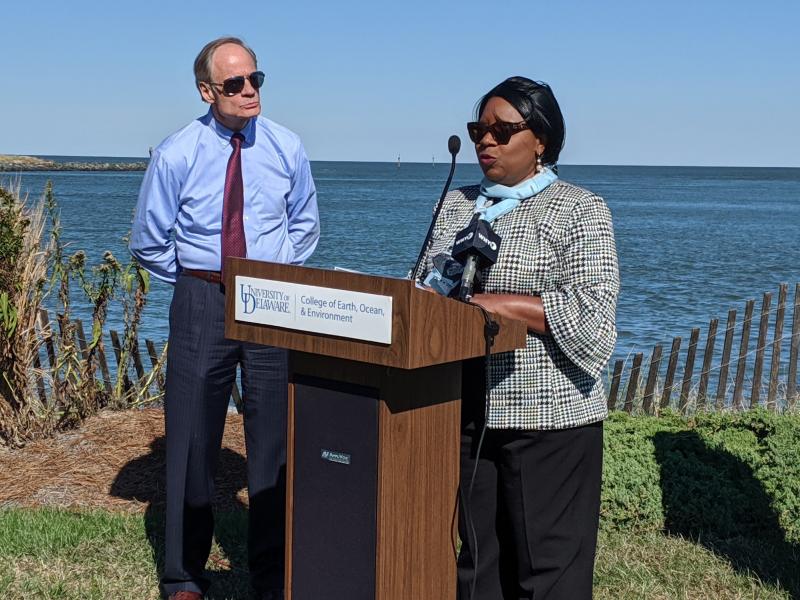
With trillions of tons of plastics littering the world’s oceans, University of Delaware scientists have received a grant of $327,000 from the National Oceanic and Atmospheric Administration to fund research into the effects of microplastics on blue crabs in the Delaware Bay.
This was one of four grants awarded by NOAA’s Marine Debris program to research of microplastics.
“The work being done by our researchers powers our economy and protects our environment,” said Estella Atekwana, dean of the College of Earth, Ocean, and Environment, during the Nov. 4 announcement of the grant.
“It is estimated that there are about 5 trillion tons of marine debris in our oceans, and about 90 percent of it is plastics. This grant can really help us advance our understanding of what these plastics do to our marine ecosystems.”
According to NOAA, microplastics come from larger pieces of plastic that break down or microbeads, tiny fragments of plastic used in cosmetic and personal care products and in industrial scrubbers used for abrasive blast cleaning as well as textiles.
Traces of microplastics have been found in the stomachs of numerous marine organisms, including blue crabs. UD scientists will research the impact of plastics on blue crab larva and crabs as well as the people who ingest crabs and the environment.
U.S. Sen. Tom Carper said, “For years, people in this part of the world have made a living by harvesting the fish, crabs, and other species that live off of our shores.”
On hand for the grant announcement, Carper said, “We want to make sure the blue crabs are healthy. We want to make sure that their larva are healthy. We want to make sure that those of us who eat blue crabs and other fish and species that come out of the ocean can do so without a worry and healthily.”
Delaware Department of Natural Resources and Environmental Control has said crabbing is the state’s single largest income producer for watermen, and the population of crabs is continuing to grow exponentially. With the grant, officials said, University of Delaware can study the impact of plastic oh crabs and initiate protocols to reduce the future impact of plastic on the environment.