











Meyer unveils plan to help schools tap artificial intelligence
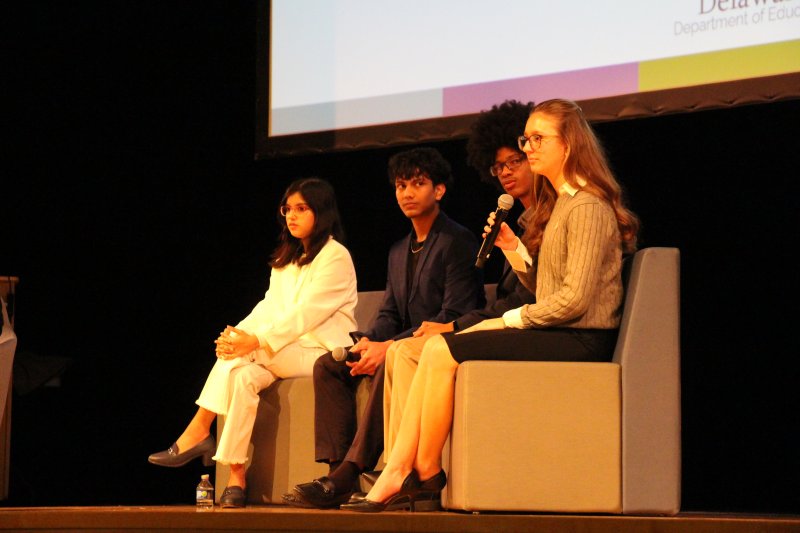
Sitting on sofas on a stage in front of hundreds of educators Jan. 10, four students from schools across Delaware related experiences with artificial intelligence, noting they often found their own way through the benefits and risks.
The discussion came near the conclusion of the AI+ Innovation Education Summit at Dover High School, attended by educators, political leaders, state education department representatives and AI vendors.
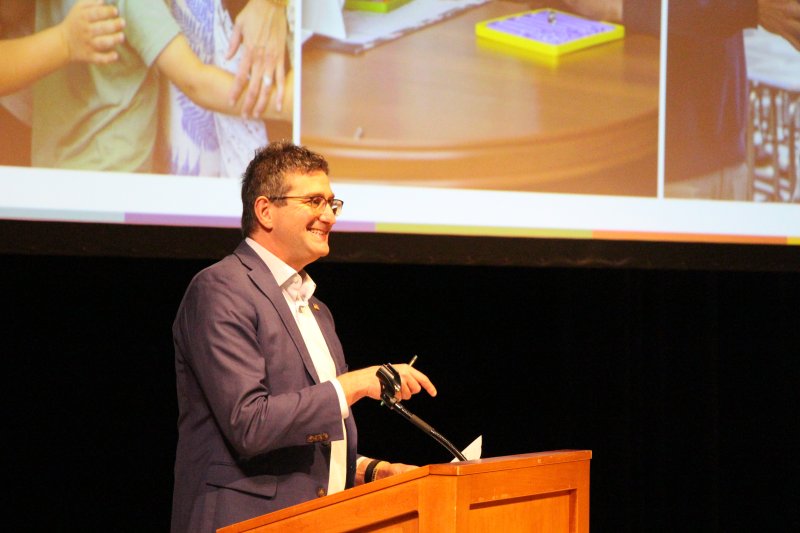
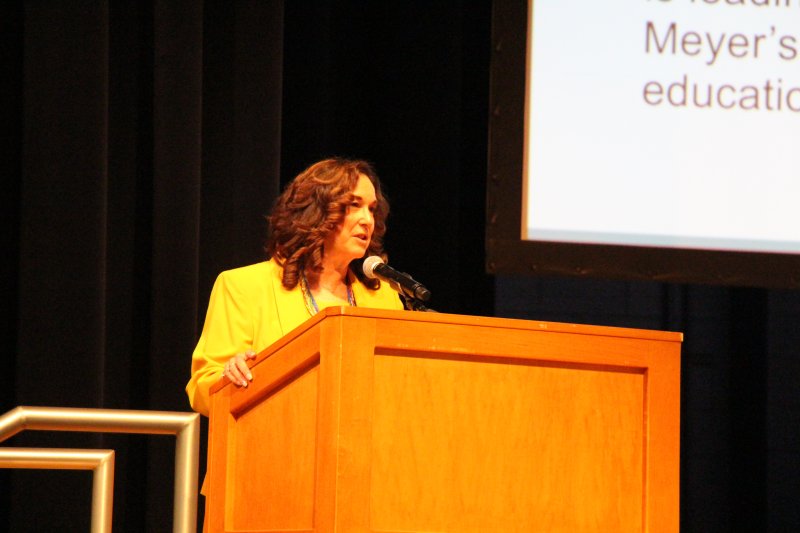
Gov. Matt Meyer unveiled a plan at the beginning of the event to pave the way for schools to expand use of artificial intelligence in classrooms and make sure all schools have equal access. AI is a computer system that performs tasks that usually require human intelligence.
The planned state AI Assurance Laboratory, which Meyer said would be the first effort of its kind in the nation, would help create state standards for AI in schools and evaluate vendors that want to provide services.
“It’s really important that we communicate as new technologies arise that both create opportunities and create new threats, that we are in open communication about how we can move this state forward and move our communities forward,” said Meyer, a former middle school math teacher.
“The world of education is changing,” Meyer said. “The economy is changing. The world’s not going to wait for Delaware, for Delaware’s education system.”
Artificial intelligence will only be pursued if it saves teachers time, helps schools operate more efficiently, and helps students learn more deeply and prepare for a rapidly changing world, the governor said.
“Our standard here is simple,” Meyer said. “Does a particular tool make learning stronger, safer and more equitable?”
State Education Secretary Cindy Marten, who was the No. 2 U.S. Department of Education official before taking her current position in early 2025, said the state needs to help students and schools to safely tap the benefits of AI.
“This is vision with guardrails,” Marten said. “We are going to be transparent, and we will make sure that as we move forward as a state – with all the local decisions you make that are so important – but statewide vision, we move forward with that part together.”
She noted the many concerns and risks associated with AI and said the state would use caution.
“I read the same headlines as you do,” Marten said. “Concerns about students becoming too dependent on these tools, students cheating, concerns about chatbots and getting into relations with the chatbots.”
As summit attendees left the high school auditorium to attend vendor demonstrations, Rep. Jeff Hilovsky, R-Long Neck, talked about the dire need to tap AI to level the playing field between schools and increase test scores.
Hilovsky, a member of the House Education Committee, said he is alarmed at Delaware students’ fourth- and eighth-grade math and English test scores, which are among the lowest in the nation.
Meyer and Marten early last year declared a "literacy emergency” as eighth-grade reading scores dropped to a 27-year low.
“We need something to supercharge education to get us to the next level,” Hilovsky said. “I think we’re moving in the right direction. I think what we need to do is integrate the human touch with the computer touch, or AI touch.”
The AI Assurance Lab will make the same technology options available to all schools and eliminate the need for each to do the extensive research involved in finding vendors to provide services.
Membership in the Assurance Lab has not been determined, but it is expected to involve school instructional technologists, superintendents, curriculum planners, students, teachers, and the Delaware Department of Technology and Information.
Use of artificial intelligence has differed greatly among school districts and even within school buildings, Marten said, and that must change.
“AI use in schools has been inconsistent, and inconsistency becomes inequity,” Marten said.
“A school ZIP code should never determine the quality, the level of resources that kids receive,” Meyer said.

Kevin Conlon came to the Cape Gazette with nearly 40 years of newspaper experience since graduating from St. Bonaventure University in New York with a bachelor's degree in mass communication. He reports on Sussex County government and other assignments as needed.
His career spans working as a reporter and editor at daily newspapers in upstate New York, including The Daily Gazette in Schenectady. He comes to the Cape Gazette from the Cortland Standard, where he was an editor for more than 25 years, and in recent years also contributed as a columnist and opinion page writer. He and his staff won regional and state writing awards.
Conlon was relocating to Lewes when he came across an advertisement for a reporter job at the Cape Gazette, and the decision to pursue it paid off. His new position gives him an opportunity to stay in a career that he loves, covering local news for an independently owned newspaper.
Conlon is the father of seven children and grandfather to two young boys. In his spare time, he trains for and competes in triathlons and other races. Now settling into the Cape Region, he is searching out hilly trails and roads with wide shoulders. He is a fan of St. Bonaventure sports, especially rugby and basketball, as well as following the Mets, Steelers and Celtics.