













New hospital review board bill moves out of Senate committee
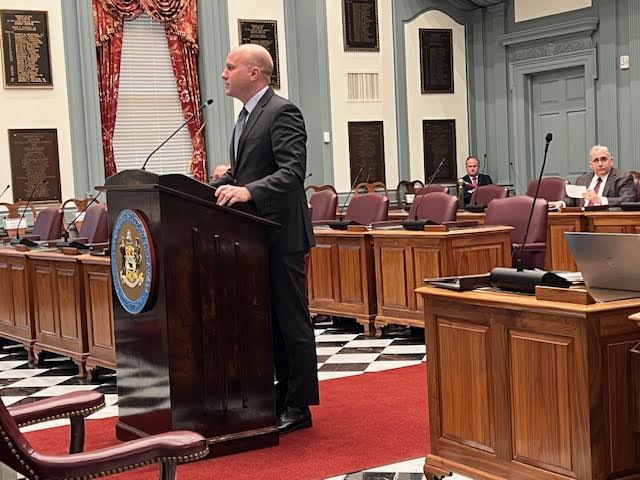
A bill that came out of a court settlement between ChristianaCare and the state over its hospital review board moved out of Senate committee Jan. 14, on schedule for passage by the Jan. 31 deadline to which the parties had agreed.
An amendment to Senate Bill 213 is expected in regard to a meaningful cost containment arrangement.
The new bill keeps the Diamond State Hospital Cost Review Board created by House Bill 350, passed by the General Assembly and signed into law in 2024 by former Gov. John Carney.
Legislators put forth the bill in an effort to contain costs, but hospitals balked at the idea of a government body approving their budgets.
SB 213 will continue to require hospitals to present detailed budget information annually to the Diamond State Hospital Cost Review Board; however, the board will evaluate hospitals based on actual expenditure and revenue information for the most recent year, rather than prospectively approving future budgets.
As with HB 350, the bill states that hospitals must report financial information, including costs of operations, revenues, assets, liabilities and expenditures; scope and volume of service information; and other information deemed relevant by the board. The bill requires hospitals to outline changes in year-over-year results and describe the actions it will take in the coming year to meet the benchmark, and also requires the board to adopt a Uniform Reporting Manual for Budget Submissions to ensure the consistency of information provided by hospitals. Hospitals must provide labor costs by units of service and budget category; salary reporting is narrowed to officers, directors, key employees and highest-compensated employees; and certain categories, such as payer contract information and three-year capital budgets, are no longer required.
Brian Frazee, president and CEO of the Delaware Healthcare Association, worked together with hospitals and the state on the bill and said it's a great step forward.
“[The bill] provides an unprecedented level of transparency in hospital finances, and still holds us accountable to the healthcare spending benchmark in Delaware, and perhaps most importantly, it also incentivizes our hospitals to enter into value-based care,” he said.
Beginning in 2027, hospitals that fail to meet the benchmark would have to submit a Benchmark Compliance Plan for the board’s approval. and the bill imposes up to $500,000 in civil penalties for hospitals that knowingly fail to comply with reporting standards.

Melissa Steele is a staff writer covering the state Legislature, government and police. Her newspaper career spans more than 30 years and includes working for the Delaware State News, Burlington County Times, The News Journal, Dover Post and Milford Beacon before coming to the Cape Gazette in 2012. Her work has received numerous awards, most notably a Pulitzer Prize-adjudicated investigative piece, and a runner-up for the MDDC James S. Keat Freedom of Information Award.