













UD studying cover crop effects on nitrous oxide emissions
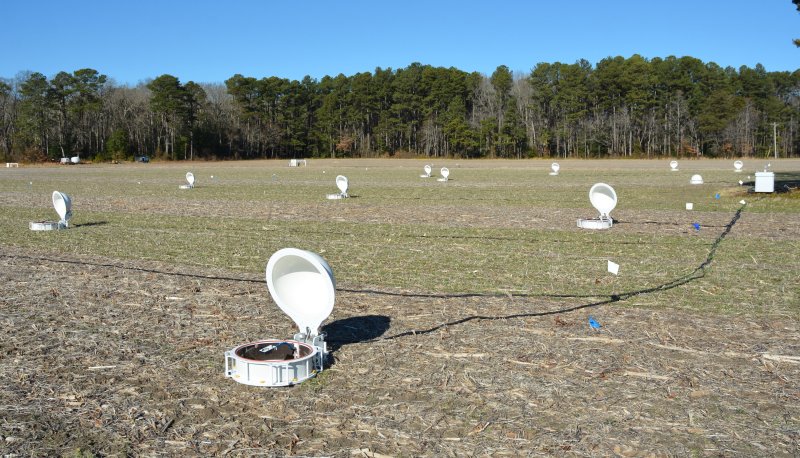
Reader John reached out recently about some odd-looking white machines that had been installed in a field at the intersection of Cool Spring and Harbeson roads. I was in the general area recently, so I stopped by and took a couple of photos. A look on Google Maps has the property labeled as University of Delaware – Warrington Irrigation Research Farm. I reached out to the university’s cooperative extension in Georgetown. I was told the white machines are chambers collecting gas samples to be analyzed for a research project being conducted by the extension’s new agroecologist Alexandra Huddell. Her experiment, with help from student Cody Mortell, is looking at how cover crops may interact with the soil nitrogen cycle.
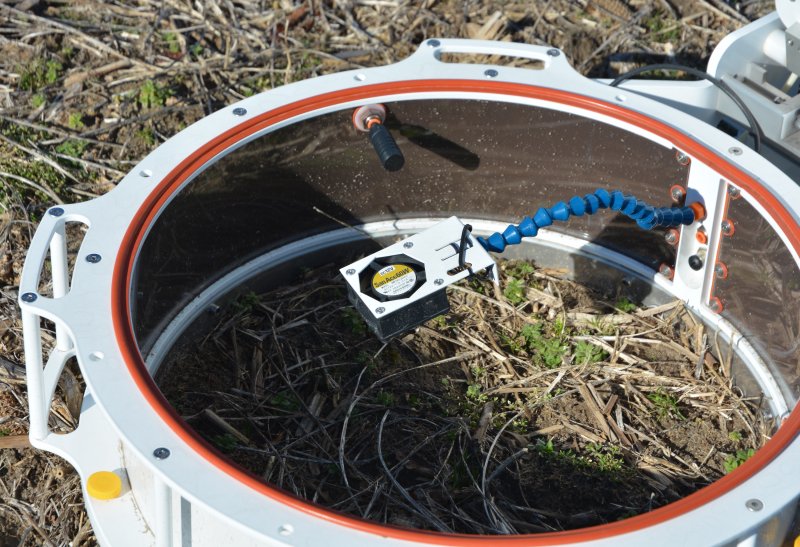
The chambers automatically close every hour and sample the buildup of greenhouse gases like carbon dioxide and nitrous oxide being released from the soil underneath, said Huddell in an email Jan. 15. In this project, she said, the focus is on nitrous oxide, which is a greenhouse gas naturally produced by microbes in the soil, and when it's released to the atmosphere, it depletes ozone and contributes to climate change.
For purposes of the experiment, Huddell said, the cover crop being studied is cereal rye. It is the most popular cover crop in the country – it’s cold hardy and is great at reducing erosion and scavenging nitrogen in the soil, she said.
The chambers were installed when the cover crop was planted last fall and will stay in the field year-round for at least two years, said Huddell, who is an ecologist by training and focuses on nutrient cycling in agriculture. Studies on the effect of cover crops on nitrous oxide emissions have been conflicting, and they are often based on infrequent measurements during the growing season only, she said.
“By capturing nitrous oxide emissions so frequently with the automated chambers, and deploying the chambers year-round, we hope to get a much better idea,” said Huddell. “Ultimately, if there is a decrease in nitrous oxide emissions from cover crops, there could be potential to capitalize on those climate benefits and sell credits for those reductions in the voluntary carbon markets like farmers do for soil carbon increases now.”
Public notices
Most of the public notices that appear in the back pages of the Gazette are useful, but perfunctory – they serve as a step in the process of government transparency. However, every now and then a notice will appear that catches my attention because it makes me stop and think about an issue I had never given much thought to before.
For example, a little more than two years ago, Watson Funeral Home in Millsboro issued a notice for a memorial service in the chapel of Woodlawn Cemetery outside Millsboro. The service was for several sets of unclaimed or abandoned cremated remains that had been in the funeral home’s care for an extended period of time.
Another example appeared in the Jan. 20 edition. It was for a hearing on a petition to involuntarily terminate parental rights. It’s addressed to “Kevin” and related to a child born July 23. The notice says a petition has been filed asking the Orphans Court of Berks County, Pa., to put an end to all rights the father has to the child. It says the court can end the rights of the parent without the parent being present. I’m assuming the notice ran in the Gazette because it is the closest publication to the father that best fits the descriptor of “newspaper of general circulation” that is often required for public notices.
From what I can tell, Pennsylvania code has 11 reasons for why this request can be petitioned, including one related to a newborn when the parent knows of the child's birth, does not reside with the child, has not married the child's other parent, and has failed for four months to make reasonable efforts to maintain substantial and continuing contact or to support the child.
I don’t know the specifics behind this petition. I know the public notice of the petition got me thinking about what it would mean to lose the parental rights of my kids. I also know that my only real takeaway is that I hope the end result is in the best interests of the child and that the child turns out OK.
Joke of the Week
As I write this, it appears there’s a significant snowstorm on the horizon for the coming weekend. Basically, every news outlet that covers the weather has inches of snow falling Saturday night into, and then all day, Sunday. If that happens, there’s going to be a limited amount of in-school school next week. Here’s a snow day joke for Day 3 of asynchronous learning. As always, send jokes to cflood@capegazette.com.
Q: How do snowmen read their texts?
A: With an icy stare.

Chris Flood has been working for the Cape Gazette since early 2014. He currently covers Rehoboth Beach and Henlopen Acres, but has also covered Dewey Beach and the state government. He covers environmental stories, business stories and random stories on subjects he finds interesting, and he also writes a column called Choppin’ Wood that runs every other week. He’s a graduate of the University of Maine and the Landing School of Boat Building & Design.