












Dewey planners back front-yard pool ban
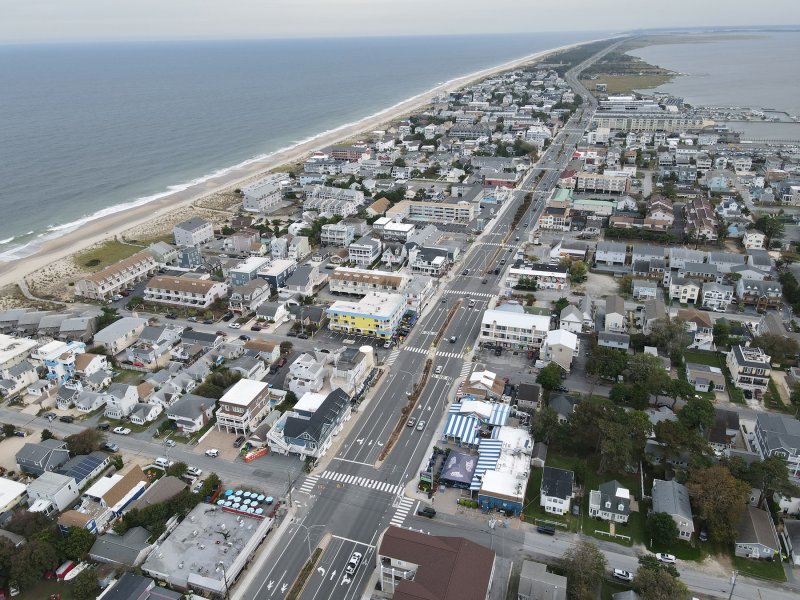
The Dewey Beach Planning & Zoning Commission unanimously voted March 3 to recommend two draft ordinances that would prohibit swimming pools and other accessory structures from being located in front of houses or other principal structures in residential zoning districts.
“Based on the feedback that we’ve received, there seems to be a number of people, especially in the north end [of town], that are not in favor of having accessory structures in front of their house,” Commission Chair Dave Lyons said.
While three residents expressed support to the commission for accessory structures in front of homes, more folks expressed opposition, citing noise complaints and saying it’s not in keeping with how residential properties in town are supposed to look.
Commissioner Mike Harmer echoed this.
“I don’t think that having pools in the front yards [is in] the best interest of the way that we want the town to look,” Harmer said.
Commissioner Jack Redefer recused himself from the vote, saying that as a real estate broker, he feels he has a conflict of interest.
What would change?
Under current code, pools are allowed in front of houses so long as they do not encroach into the required front yard.
The required front yard refers to the required open space between the front lot line – street line – and the nearest point of the house or principal building. For standard lots in the Neighborhood Residential zoning district, this is an 18-foot setback.
The first draft ordinance establishes that the town’s existing 3.5-foot height limit for hedges, fences or walls that project into or enclose any required front or side yard applies equally to required pool safety fences, which by definition must exceed 3.5 feet in height.
The ordinance also incorporates the word rear into the following area of the code: “Accessory swimming pools open and unenclosed may occupy a required rear yard or side yard, provided they are not located closer than 10 feet to an interior side lot line or 6 feet to a rear lot line.”
The word rear was in the town’s original ordinance before it was formally codified, but it was somehow inadvertently removed when the ordinance was officially transcribed into town code, said town attorney Fred Townsend.
Upon reviewing previous town meeting minutes, there was no evidence that town officials intended to remove the word, so the commission thought it should be reinserted. This would make it so that swimming pools are allowed in required side and rear yards but not required front yards.
Required front yard vs. front buildable area
The second draft ordinance defines a lot’s front buildable area, differentiating it from the required front yard.
It defines the front buildable area as the portion of a lot that lies between the foremost facade of the primary structure and the required front-yard setback line, excluding the required front yard itself. This includes any part of the lot’s buildable envelope situated in front of the foremost facade of the primary structure.
The ordinance also states that in residential districts, no accessory structures – including pools – or uses that are prohibited in a lot’s required front yard may be located within the front buildable area.
In other words, this ordinance, if passed, would prohibit pools and other accessory structures from being located anywhere in front of a house. They are already prohibited in required front yards, which in turn means they would be prohibited in the front buildable area as well.
This would align Dewey with other nearby towns, including Rehoboth, Lewes and Bethany, which do not allow pools anywhere in front of houses.
It would also align with the town’s green space requirements, which state that in the Neighborhood Residential District, the entire front yard area shall be green space except for one 20-by-18-foot driveway space or two 10-by-18-foot driveway spaces and one 4-by-18-foot space for a walkway.
Detached garages
Assistant Town Manager Jim Dedes said he did not have a definite answer during the meeting as to whether the ordinance would apply to freestanding garages that are not attached to houses but that are located within a house’s front buildable footprint.
“I don’t have a quick answer to that, but my assumption would be that [a freestanding garage] would be considered an accessory structure under this [ordinance] if it is detached,” Dedes said.
A garage that is attached to a house, on the other hand, would seemingly not be considered an accessory structure.
Next steps
The ordinance was not pursuant to a public hearing.
Since the commission voted in favor of it, it will be brought to town council, which will decide whether or not they want to move forward with it. If council decides to move forward, then the ordinance would come back to the planning & zoning commission for a public hearing. If that happens, and if P&Z votes in favor of the ordinance after the hearing, then it would be brought back to the town council, which would hold its own public hearing before officially voting on it.
To view copies of the two draft ordinances or for a recording of the March 3 hearing and meeting, go to townofdeweybeach.gov/events/42542.

Ellen McIntyre is a reporter covering education and all things Dewey Beach. She graduated with a bachelor’s degree in journalism from Penn State - Schreyer Honors College in May 2024, then completed an internship writing for the Pittsburgh Post-Gazette. In 2023, she covered the Women’s World Cup in New Zealand as a freelancer for the Associated Press and saw her work published by outlets including The Washington Post and Fox Sports. Her variety of reporting experience covers crime and courts, investigations, politics and the arts. As a Hockessin, Delaware native, Ellen is happy to be back in her home state, though she enjoys traveling and learning about new cultures. She also loves live music, reading, hiking and spending time in nature.