













The lowly turnip just might become the star of your kitchen
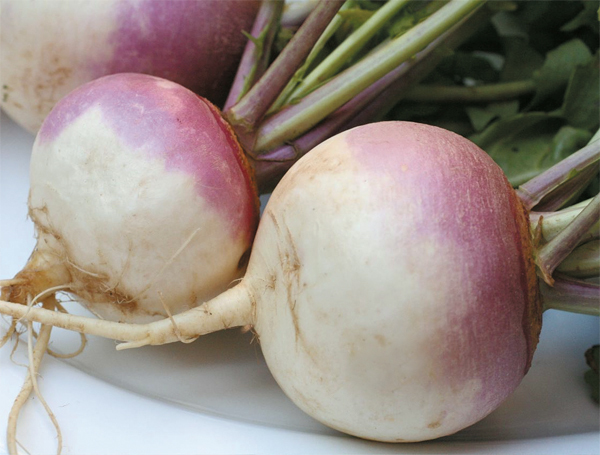
Pity the turnip, a vegetable whose very essence gets no respect. When a real unmade bed was a finalist for the Turner Prize for art, outraged artists began handing out “The Turnip Prize” for art with the sole criteria that the art must be downright garbage. The prize itself is a six-inch nail with a real turnip impaled on it. Some of the Turnip Prize winners to date include “Alfred The Grate” (two burned rolls on a fire grate), “Tea P” (used tea bags in the shape of the letter P), and “Stick Another Shrimp on the Barbie” (Barbie doll covered in shrimp).
As summer wanes and autumn approaches, the lowly turnip (Brassica napus/Brassica rapa) deserves its day in the sun, or rather its day in the cold. Like its root vegetable companions, the turnip lives below ground, stores well and can keep right through the winter. You can also eat the leaves or greens which taste better after being exposed to a freeze. Turnip greens are nutritious, containing good amounts of vitamin A, vitamin C, vitamin K, calcium, and are high in the antioxidant lutein. The greens have a spicy cabbage taste that can perk up a salad. The sharpness goes away when they’re cooked. If all you want is turnip greens, you can sow seeds as thick as grass seed and pick them at any size. Most turnips are grown for the large, often flat, bulbous roots with white, yellow or even red flesh.
Sow turnip seeds about one-quarter-to-one-half inch deep in full sun in soil with a pH of 6.5. Once they have sprouted thin the plants to stand about six inches apart in rows two to three feet apart. The plants you pull up to thin the rows are perfectly edible as greens, some with tiny roots attached. They are especially popular in Southern cooking.
Because they stand up to the cold you can plant turnips as soon as the soil can be worked in the spring. Companion plants such as onions and peas do well near turnips.
Turnips are in the cabbage family, and a disease called clubroot can attack if you plant cabbage crops in the same soil year after year, so always rotate your crops, and don’t plant any of the cabbage family in the same spot for seven years. Because clubroot is worse in acidic soil, apply lime to keep your garden soil “sweet” with a pH above 6.0.
The lowly turnip just might become the star of your kitchen. Turnip roots can be boiled or steamed, mashed or pureed, roasted, and added to soups and stews. And you may receive the coveted Turnip Award for anything but an unmade bed. If you think you “cannot get blood from a turnip” ponder this: that unmade bed was eventually sold as a piece of art by the Christie’s auction house for over $2 million. Perhaps the buyer really did just fall off the turnip truck.