













King Crop Insurance hosts U.S. Senate Agriculture Committee staffers
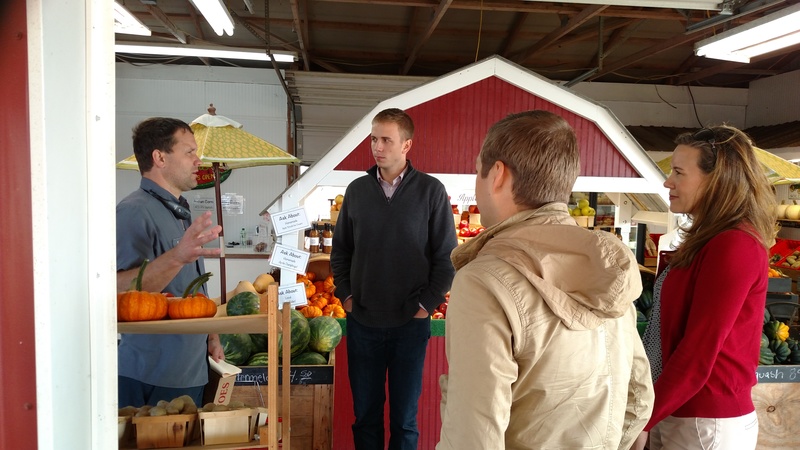
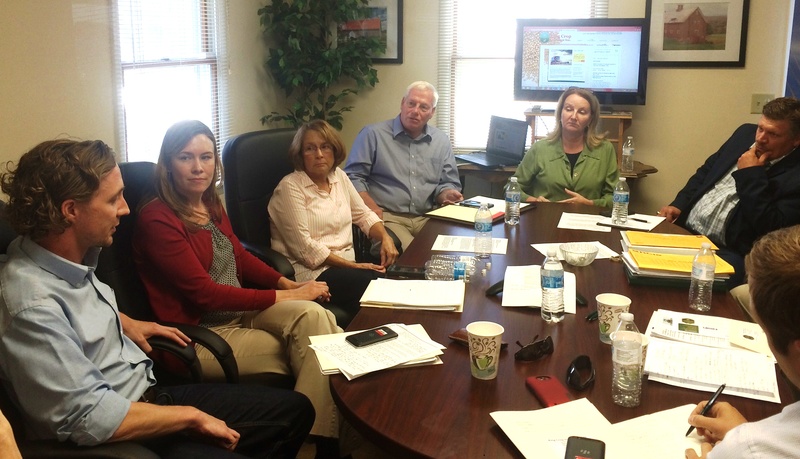
King Crop Insurance in Georgetown hosted staffers from the U.S. Senate Agriculture Committee Oct. 13. James Glueck, senior policy advisor, and Wayne Stoskopf, professional staff, from Sen. Pat Roberts' office and Kyle Varner, policy analyst from Sen. Debbie Stabenow’s office visited King Crop Insurance to learn more about the agent’s role in administering the crop insurance program to farmers on Delmarva. The staffers wanted information about an agent's daily activity, and farmer input about the program.
The 2014 Farm Bill strengthened crop insurance and added provisions to help beginning farmers. The staffers wanted some direct feedback about the impact of the farm bill changes on farming in the Delmarva region. Under the chairmanship of Roberts, the Senate Agriculture Committee helps establish, guide and examine agricultural policies while facing the challenges of community price and income supports, trade, research, food safety, nutrition and conservation. Delaware and Maryland agriculture industries each contribute over $1.5 billion to their state’s economies.
The day started with a visit to Evans Farms in Bridgeville. Kevin Evans is a third-generation farmer producing grain crops and variety of vegetables. He and his wife Katey run a produce stand on the farm and recently launched the Frozen Farmer featuring ice cream and sorbet frozen treats. Evans gave the staffers an overview of his farming operation and how he uses crop insurance as a part of his risk management plan.
The discussions continued at the King Crop Insurance office in Georgetown with a presentation reviewing the complexity of the crop insurance program from an agent’s perspective. Jackie King talked about the improvements she has seen in the program over the last 30 years. Farmers pay premiums to enjoy its protection, and they have to maintain good farming practices to get value out of the program. Crop insurance was specifically designed to shield taxpayers from mega-payouts that could result from catastrophic situations such as commodity price collapses and weather disasters.
The King agents said farmers should be able to insure double crops without acres or production requirements to receive 100 percent indemnity on both crops if losses on both crops occur. RMA requires 100 percent of the premium if there is no loss but reduces the coverage if there is a loss on the first crop. All three farmers present agreed the double cropping provision needs to be changed. The farmer falsely assumes when he insures his crops he will be 100 percent covered but acreage and production limitations can decrease coverage. Double cropping helps generate more income for farmers. Farmers want to minimize their financial risk with 100 percent coverage on all their crops.
Farm and crop insurance programs are constantly being targeted by budget cutters on Capitol Hill. The farming community on Delmarva wants the Senate Ag Committee to know that limiting or reducing premium subsidies could have negative effects on the financial condition of farms and on crop insurance program participation. To limit or cap large farming operation participation would drive premium costs higher for the small farmer.
All three farmers represented were concerned with the delay in the passing and the complexity of the 2014 Farm Bill. There were no objections to eliminating the direct payment program, the counter-cyclical program, or the Average Crop Revenue Election program. However, the complexity of the new programs and the fact the farmer was committing to the selections for the life of the farm bill was objectionable. Farmers have no degree of predictability that the right decision was made in the selection of ARC versus PLC to effectively manage their operations. The local farmers were able to share their views on the 2014 Farm Bill and make recommendations about improving crop insurance.