












Lewes planners vote against Highland Heights
The Lewes Planning Commission voted 6-3 Jan. 20 to report to mayor and city council that the proposed Highland Heights major subdivision does not meet the requirements of city code.
The action, City Solicitor Glenn Mandalas said, essentially recommends denial of the project as submitted.
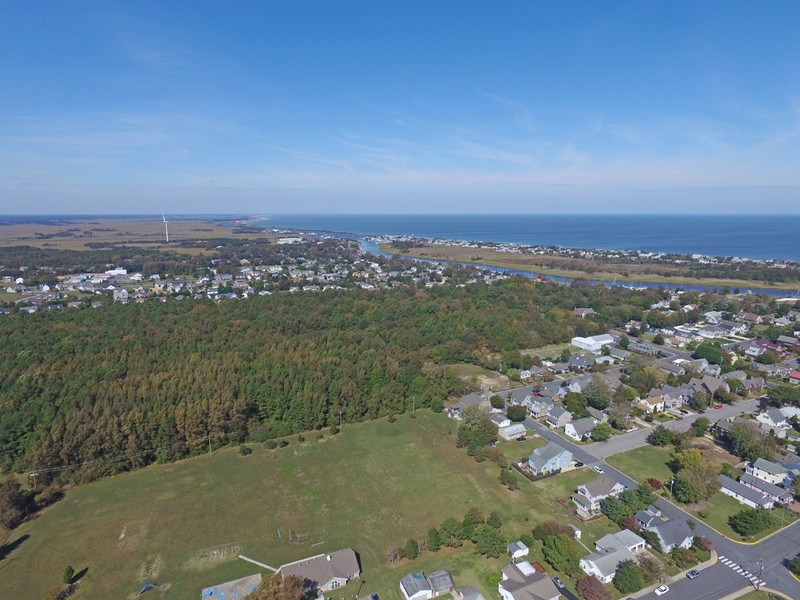
Jack Lingo Asset Management is seeking approval of a plan to build 34 single-family homes on an 18.34-acre parcel referred to as the Fourth Street Forest between West Fourth Street and Seagull Drive.
The planning commission granted preliminary consent approval in September 2014, but attached 12 conditions.
One of those conditions – interconnectivity – was the basis of some commissioners' votes against the project. According to city code and the city's comprehensive plan, the city will discourage cul-de-sacs. As designed, Highland Heights would have an entry road from Fourth Street and another from Seagull Drive, but each side of the community would end at a cul-de-sac, with only a trail connecting the two sides. Commissioners have said they would prefer to see a road connecting the two sides of the community.
Commissioner Jim Linnen said that by not having a street connecting each side of the community, the developer may be putting future residents in danger.
“It does not address the idea of health, welfare and safety of the community,” he said.
Engineer Ring Lardner of Davis, Bowen and Friedel said a roadway connecting the two ends of the development was not included in the plan because, in part, 200 residents of neighboring Reserves at Pilottown submitted a petition opposing it.
“Could an interconnection be made? Yes, it could,” Lardner said.
But it could also create other burdens, he said, like more wear and tear on neighboring residential streets that may see more traffic from motorists using Highland Heights as a shortcut from Fourth Street to New Road.
Chairman Mike Mahaffie said a through road could also do more harm to wetlands and trees than the existing cul-de-sac design. While he is against cul-de-sacs, he said, they are unavoidable in the case of Highland Heights.
“I am convinced by the arguments of [planning consultant] ERM and other professionals who have looked at this case that, by the slimmest of margins, I call this not practicable [for a through road],” Mahaffie said.
Some commissioners are also pushing for a bicycle and pedestrian trail to connect Highland Heights with neighboring Highland Acres, which would provide quicker access to the eastern part of the city. Highland Acres residents have been vehemently opposed to a connection.
Lardner also said that within the current design, it would be difficult to add a connection to Highland Acres without affecting adjacent lots.
The argument wasn’t strong enough for Vice Chair Kay Carnahan.
“I understand Highland Acres objecting to a street [connection], so I’m willing to go with a bike and pedestrian path,” she said. “Connectivity is critical. We’re all part of the city. We’re all part of the same fabric.”
Commissioner Tom Pannetta focused on the developer’s plans for existing trees within the heavily wooded area. He said topographical maps, verbiage in the application and statements in the proposed homeowners association agreement are in conflict. He said he believes the land-clearing process will eliminate far too many trees, and he wants to see as many as possible preserved. The topographical maps, Pannetta said, show grade changes of up to 2 feet throughout the entire property, leading to the conclusion that many trees will be lost.
“You can’t change grade more than about 6 inches without impacting a mature tree,” he said.
Nick Hammonds, principal with Jack Lingo Asset Management, said the goal is to save as many trees as is feasible.
“It makes all the sense in the world for us to preserve as many trees as we can,” he said. “Lots are more valuable if they have trees on them.”
Besides trees that will be removed for the street, Hammonds said, trees will be taken out that are within the footprint of a home or if they are located in a place on the property where they may fall on a home.
Three members of the planning commission were convinced the developer had satisfied the requirements for final approval – Mahaffie, Joe Hoechner and Richard Kirschner.
“I think some of the items in the code are totally unattainable and the engineers have given it their best shot,” Hoechner said.
Said Mahaffie, “I do feel on a general level that the applicant has made a good faith effort to meet both the requirements of our code … and the conditions we put on them,” he said.
Agreeing the application did not meet code requirements were commissioners Carnahan, Pannetta, Linnen, Jody Ware, Barbara Vaughan and Nina Cannata.
The final decision will be up to mayor and city council. A public hearing will be held prior to a vote.
City Solicitor Glenn Mandalas said he believes the developer will want to provide additional information prior to the city council's public hearing to further flesh out some of the issues of concern.

Nick Roth is the news editor. He has been with the Cape Gazette since 2012, previously covering town beats in Milton and Lewes. In addition to serving on the editorial board and handling page layout, Nick is responsible for the weekly Delaware History in Photographs feature and enjoys writing stories about the Cape Region’s history. Prior to the Cape Gazette, Nick worked for the Delmarva Media Group, including the Delaware Wave, Delaware Coast Press and Salisbury Daily Times. He also contributed to The News Journal. Originally from Boyertown, Pa., Nick attended Shippensburg University in central Pennsylvania, graduating in 2007 with a bachelor’s degree in journalism. He’s won several MDDC awards during his career for both writing and photography. In his free time, he enjoys golfing, going to the beach with his family and cheering for Philadelphia sports teams.