













Bills seek housing fund, free tuition for homeless students
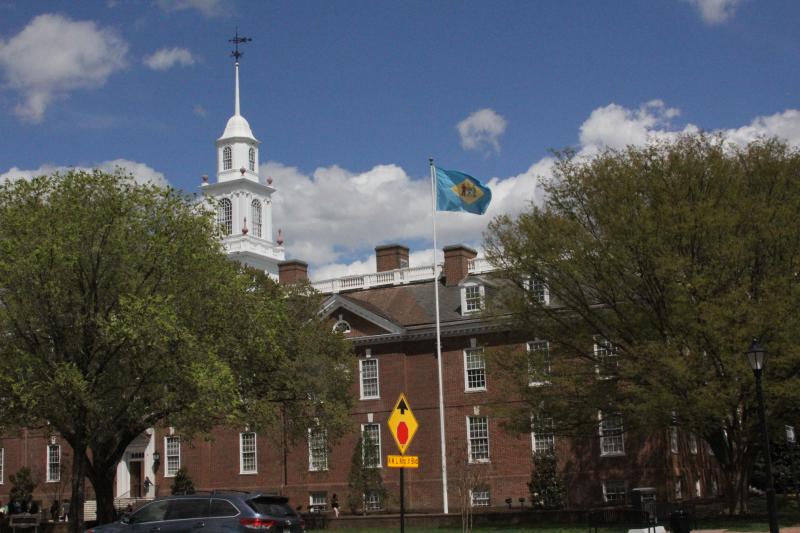
Two bills recently introduced in the Delaware Legislature would create funds and other financial assistance for students who face homelessness or have aged out of foster care.
With creation of the Korey Thompson Student Emergency Housing Assistance Fund, House Bill 240 would provide assistance for housing-insecure undergraduate students attending a college or university in Delaware. The fund is named after Korey Thompson, who struggled with the issue while attending Wesley College. He graduated with a psychology degree, joined the military in 2016, and completed a master's degree in 2021. Today, he is a New Castle County police officer.
“My grandmother passed during my junior year of college, and that’s when everything started to go downhill,” he said. “I would have never accomplished these things without help.”
The emergency housing fund would be created with $90,000 in state funding for fiscal year 2022; the Delaware State Housing Authority would monitor all money deposited into the fund. DSHA would also develop eligibility criteria and an application process that would be exclusive to students attending school in the state.
“It costs about $7,000 per student for housing, and I’m working to create a steady funding stream to make sure there’s enough for this population of students,” said House Majority Leader Rep. Valerie Longhurst, D- Bear, the prime sponsor of the bill. “No student should ever feel the burden of financial stress from emergencies that affect their ability to attend classes.”
In 2018, the Hope Center surveyed 1,741 University of Delaware students and determined that 25 percent were affected by housing insecurity, and 10 percent were affected by homelessness. Since March 2020, 395 students at Delaware Technical Community College have requested emergency support to help with or prevent homelessness. In recent years, Delaware State University provided assistance to more than 2,000 students – 41 percent of the school’s population.
HB 240 was reported out the House Administration Committee June 9 and awaits action by the full House.
In a second bill, young people aging out of the foster care system would be able to attend a Delaware college or university for free.
House Bill 123 would require the University of Delaware, Delaware State University and Delaware Technical Community College to waive all tuition and fees, including room and board, for any young person who ages out of the foster care system at age 18 or later, or who has spent at least one year in foster care as a teenager. Those enrolled as full-time students would also be able to live on the campus year-round. Youth would be required to apply for all available financial aid before having the remaining tuition and fees waived, and would remain eligible for the waiver until age 26.
About 15-20 incoming freshmen would likely be eligible for tuition waivers under HB 123 each year, according to the Department of Services for Children, Youth & Their Families.
Other legislative business is summarized below.
Senator removed from committee
Sen. Darius Brown, D-Wilmington, has been completely removed from the Senate Judiciary Committee, about three weeks after he was charged with punching a woman.
Brown was removed as committee chair on May 20 by Senate President Pro Tempore Dave Sokola, D-Newark, who announced June 8 that Brown had been completely removed from the committee.
“I informed Sen. Darius Brown last month of my decision to remove him from the Senate Judiciary Committee entirely, pending the outcome of his current legal matter,” Sokola said in a statement. “After considerable discussion, I decided this step is necessary to avoid any potential distractions or conflicts of interest for either Sen. Brown or his colleagues on the committee as they consider multiple bills dealing directly with the courts, law enforcement and the Delaware Department of Justice.”
On May 15, Brown, 39, was charged with offensive touching and disorderly conduct. Police said he argued with a woman at a Wilmington restaurant before punching her in the face and then throwing a glass of water, which shattered.
Youth minimum wage bill passes General Assembly
A bill removing a minimum wage restriction for youth has passed both houses of the General Assembly and awaits Gov. John Carney's signature.
House Bill 88 reverses a law passed in 2018 that allowed youth to make up to 50 cents an hour less than the minimum wage during their first three months of employment.
The bill passed the House on May 13 by a 26-15 vote, and passed the Senate on June 8 by a 13-8 vote. Sen. Bruce Ennis, D-Smyrna, was the only Democrat to vote no, as the bill otherwise passed along party lines.
Bill makes evictions harder
A bill protecting families from eviction passed the Senate 13-7 on June 8. Sen. Gerald Hocker, R-Ocean View, did not vote.
Senate Substitute 1 for Senate Bill 101 would provide tenants with access to legal counsel and create a diversion program to resolve most landlord-tenant disputes. The bill would also allow tenants to stay in their homes if they pay all past-due rent – as well as any applicable court costs and fees – after a possession judgment has been awarded, but before an eviction takes place.
The bill awaits action in the House Housing and Community Affairs Committee.
Elementary mental health service bill moves through House
A bill that would establish mental health services for elementary schools passed the House on June 8. Rep. Rich Collins, R-Millsboro, was absent.
House Bill 100 would allow elementary schools to hire a full-time school counselor, a school social worker, or a licensed clinical social worker for every 250 students in kindergarten through fifth grade. It would also allow the hiring of one full-time school psychologist or licensed mental health therapist for every 700 elementary students.
The bill awaits action in the Senate Education Committee.
Bill would require interrogation recording
A bill that would require law enforcement to record interrogations of anyone accused of a crime awaits action in the House.
House Bill 215 would require an audio or video recording, but would allow five exceptions including an individual's refusal to be recorded, equipment malfunction, or if the recording would put a confidential informant or an officer in danger. The bill gives law enforcement officers and agencies civil immunity, and would allow cautionary instruction to be given to a jury in the event of a violation in the electronic recording requirement.
The bill moved through the House Judiciary Committee June 9.

Melissa Steele is a staff writer covering the state Legislature, government and police. Her newspaper career spans more than 30 years and includes working for the Delaware State News, Burlington County Times, The News Journal, Dover Post and Milford Beacon before coming to the Cape Gazette in 2012. Her work has received numerous awards, most notably a Pulitzer Prize-adjudicated investigative piece, and a runner-up for the MDDC James S. Keat Freedom of Information Award.