












Cape invests in early literacy programs
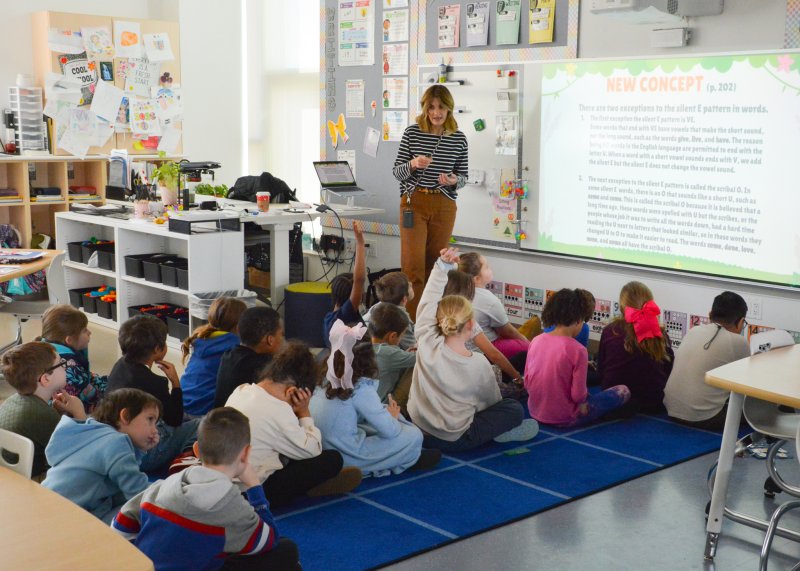
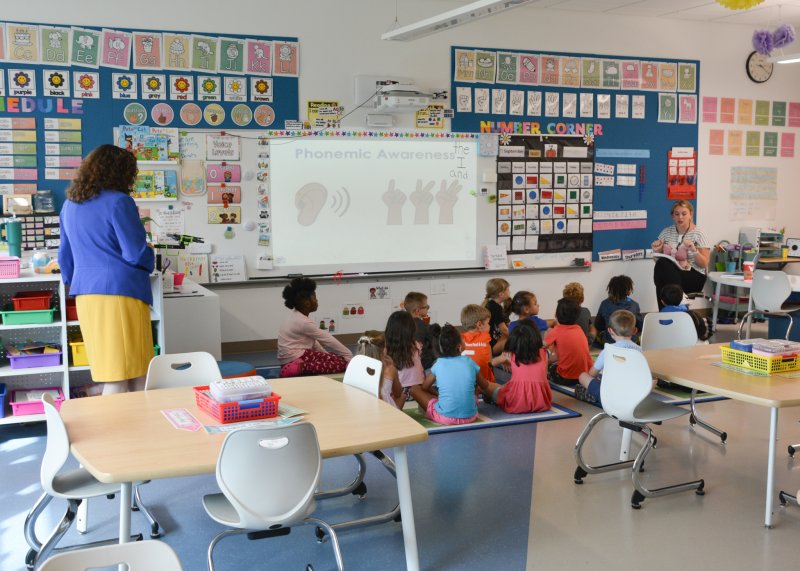
Cape Henlopen School District is turning the page toward a new early literacy goal: for every student to reach reading proficiency by the end of the third grade.
The goal, set for the 2027-28 school year, was announced at a March 12 school board meeting during an elementary literacy presentation by Elementary Education & Early Learning Supervisor Audrey Dempsey. She was joined by first- and second-grade teachers Tracey Keller and Brandy Zmuda, and H.O. Brittingham Elementary School Principal Yvette Davenport.
“Across the state right now, you are probably hearing a lot [of] conversations and urgency around pre-K to third-grade early literacy and what we’re doing to ensure all students are reading,” Dempsey said. “There are a lot of regulations and funding and statewide support going on right now.”
In January 2025, Gov. Matt Meyer and Department of Education Secretary Cindy Marten declared a statewide literacy emergency in response to Delaware’s scores on the 2024 National Assessment of Educational Progress. The state’s average eighth-grade reading score was the lowest in nearly 30 years.
Although the crisis remains, 2025 test scores showed some pockets of improvement, including at Cape, which shines as one of the leading districts in literacy proficiency statewide.
The DOE attributes Cape’s success largely to its investment in high-quality instructional materials, strong professional learning communities and training in Language Essentials for Teachers of Reading and Spelling.
LETRS, a research-based professional learning program, teaches educators the science of reading and how students learn to read. It focuses on phonological awareness, including phonics and decoding, vocabulary, language comprehension, and writing and spelling.
Cape currently has 136 staff members who have either completed or are actively participating in LETRS training, which entails 16 weeks of Zoom participation and 160 hours of out-of-school work.
“It is a heavy lift for teachers, but we believe it is important to build a strong foundation of understanding of how students learn to read,” Zmuda said.
Although the training is time-consuming, it’s producing results, said Keller.
“It’s awesome,” Keller said. “It’s March, and my students average a year’s worth of growth since the beginning of the year. In marking period one, I had 50% of my students receive a one or two in reading, in ELA. The second marking period, we were at only 15% receiving a one or two, and I had 30% receiving a four, and 55% were at a three.”
The training is in such high demand among Cape teachers that there’s a waitlist to participate.
The district is coupling LETRS and the science of reading with its adoption of the American Reading Company curriculum. This, plus instructional integrity and a differentiated multi-tiered system of supports, Keller said, will hopefully result in 100% student proficiency in third grade and beyond.
“I know we can do it,” she said.
To help fund these programs and curriculum, Dempsey applied for the Bridge to Practice grant through the state. This grant, which the state awarded, supports district and charter schools in improving early literacy instruction, aiming to get all students reading on grade level by the end of third grade.
Next steps for Cape include expanded professional learning, including more educators participating in LETRS training; model classrooms and hosting model literacy lessons for teachers to observe, collaborate and reflect on phonics and reading instruction; and continued high-dosage tutoring and summer learning.
“I’m excited to see this across all of our elementary schools,” said board member Jason Bradley. “Years ago, when I first got on the board, different schools were doing different things, and it wasn’t always equitable. That fact that you guys are rolling this out as a group of teachers together is really awesome.”
Board member Julie Derrick said her son, who has some learning disabilities, is thriving and on grade level as a result of his teachers being trained in the science of reading.
“The teachers are pumped about it, especially if you’re seeing results with those kids that learn a little differently,” Derrick said.
According to Board President Alison Myers, the board received a grant from First State Educate to fund science of reading training. They’re figuring out the logistics now, she said.

Ellen McIntyre is a reporter covering education and all things Dewey Beach. She graduated with a bachelor’s degree in journalism from Penn State - Schreyer Honors College in May 2024, then completed an internship writing for the Pittsburgh Post-Gazette. In 2023, she covered the Women’s World Cup in New Zealand as a freelancer for the Associated Press and saw her work published by outlets including The Washington Post and Fox Sports. Her variety of reporting experience covers crime and courts, investigations, politics and the arts. As a Hockessin, Delaware native, Ellen is happy to be back in her home state, though she enjoys traveling and learning about new cultures. She also loves live music, reading, hiking and spending time in nature.