













Cape reopening plan stresses mitigation strategies
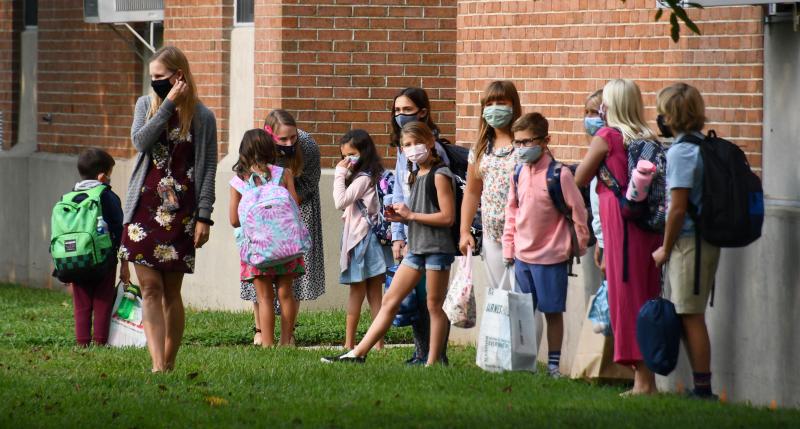
Mitigation strategies to reduce the spread of COVID-19 stood out as the focus of the Cape Henlopen School District reopening plan, which board members passed unanimously at an Aug. 19 meeting marked by outbursts and disruptions from members of the audience.
Superintendent Bob Fulton said last year, 65 to 70 percent of students attended school in person. The goal this year is to keep 100 percent of kids in school every day, all year, and the plan will allow this to happen, he said.
The governor’s emergency order effective Aug. 16 requires that all staff, students and visitors wear masks inside schools that serve students from kindergarten through 12th grade, regardless of vaccination status, Fulton said. Those with medical conditions or disabilities can request reasonable accommodations, he said.
Masks are not required in school buildings when eating, drinking, and when teachers are by themselves in their offices or rooms, Fulton said; masks are not required outdoors, but are required on buses.
The district has a prekindergarten program, Fulton said, and it is important to think about the plan in the context of pre-K to 12th grade so it is consistent.
School officials learned last year that students were safer in school than many other places because everyone was following mitigation strategies, he said, and every time there was a break from school, COVID cases in school and the community increased.
Positive cases require investigation in conjunction with Delaware Division of Public Health, Fulton said.
“Were they [people with positive cases] properly wearing a face mask is one of the questions that decreases the number of students that are out of schools and quarantined,” he said.
Mitigation strategies of hygiene, handwashing, and daily health screening by parents now include vaccination, Fulton said. Vaccinated students won’t have to quarantine unless they are showing symptoms, which will keep more kids in school, he said.
The student vaccination rate is between 20 and 40 percent, Fulton said, so if there is a positive case at the high school or middle schools, some of those students won’t have to stay home for a week, because they have been vaccinated.
“We do know that the more students and staff that are vaccinated, the fewer positive cases we’ll have,” Fulton said amid shouts from the audience. “The more students and staff that are vaccinated, the fewer positive case quarantines will be required.”
For every positive case last year, on average, three students had to quarantine, Fulton said, and all decisions to quarantine are decided by DPH, not the district. Close contact with a positive case is defined as within six feet for a total of 15 minutes or more over a 24-hour period without masks being worn, he said.
In the indoor school setting, close contact excludes students who were within three to six feet of the infected student if they were both wearing masks correctly, and no quarantine is necessary.
“They can stay in school, instead of being home for over a week,” Fulton said.
Students and staff who are fully vaccinated are encouraged, but not required, to be tested for COVID-19 three to five days after exposure, he said. With many more kids in school, and in some places with twice the number of students in school this year, mitigation strategies need to be enforced to keep as many students in school as possible, he said.
After interruptions from the audience, Fulton said, “Excuse me, I want to finish.”
New to the plan this year, Fulton said, is that masks are not required during outside recess. All athletics will resume, including middle school sports. Masks are required for athletes, coaches and spectators during indoor sports, but there are no capacity limits.
Masks are not required for anyone during outdoor sports, he said, and there are no capacity limits. Details for visual and performing arts students will be completed before the start of the school year, he said.
“This will help us, and help more parents and students be more involved with activities in the school,” Fulton said.
On July 1, the district notified parents that they could apply for homebound instruction if they believe their child has a medical or mental health condition that could prevent them from attending school in person. Fulton said 18 individuals applied for homebound instruction, but only one submitted medical documentation supporting why their child couldn’t be in school; that application was approved.
When Fulton asked if the board had any questions about the plan, audience members shouted. The board had no comments or questions on the plan, which it subsequently passed unanimously.