













Chicken growers face challenges as winter settles in
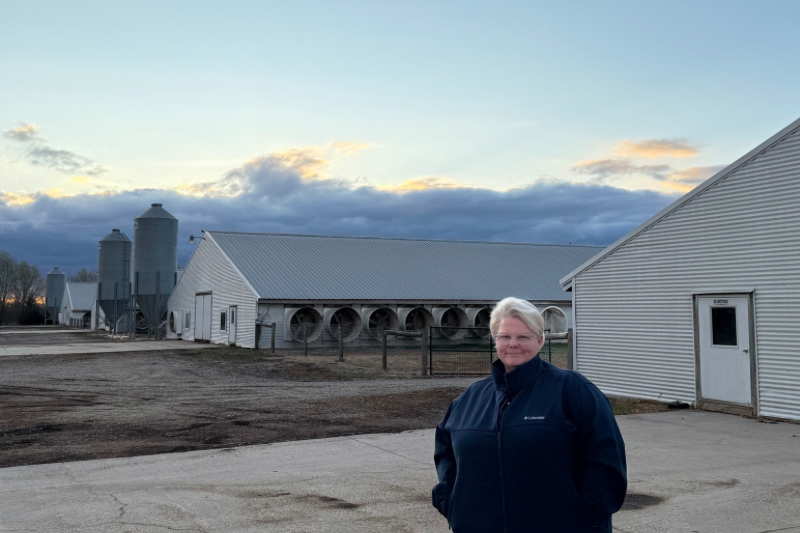
The Delmarva Peninsula’s more than 1,200 chicken growers raise about 600 million chickens each year. Raising chickens for meat or eggs is a year-round operation, but cold and snowy weather adds a lot of stress and challenges for the $5 billion industry.
In Sussex County, the birthplace of the broiler chicken industry, local commercial growers raise some 176 million broiler chickens each year. That means proper winter care is top of mind for chicken producers and backyard flock owners.
“When you get into colder weather or when you have a lot of temperature swings day to night, the farmer really has to pay attention,” said Georgie Cartanza, a statewide poultry agent for University of Delaware Cooperative Extension, based at the UD Carvel Research and Education Center near Georgetown.
Cartanza herself owns and operates an organic chicken operation, raising around 148,000 broiler chickens at a time. She said both commercial and backyard flock owners should be managing the humidity of their chicken houses or small coops and ensuring their enclosures are properly ventilated in order to retain heat in the environment and prevent drafts from coming in. If chickens are cold and stressed, they’re more likely to pick up a respiratory virus. Egg-laying hens will lay fewer eggs, while broilers could lose weight.
“A draft is harder on the birds because it makes it more difficult for the birds to thermoregulate themselves,” Cartanza said. “When a bird is too hot, they have a tendency to pant, and that's the way they get rid of the excess body heat. But when they're cold, they're going to tend to tighten up, and they will actually get closer to one another.”
Huddling helps chickens maintain their body temperature, but it may also be an indicator that they have a fever or are stressed.
Cartanza said the key thing for flock owners to keep in mind is that chickens need consistency and routine in order to stay healthy and grow. Large temperature swings can affect how much chickens eat and drink, and how they behave.
“If we do a good job of mixing the air and we keep things consistent, then those birds don’t feel that sense of change,” she said.
Winter also brings about an increased risk of highly pathogenic avian influenza, commonly known as bird flu. Chicken farmers and backyard flock owners are aware of the risk and prepared year-round, but winter heightens their concerns.
The virus can survive through colder temperatures. And snow geese, a common carrier of the virus, tend to hang out in large groups along the Delmarva Peninsula.
For the past couple of winters, Cartanza has been on higher alert, anxious about the presence of bird flu in the area. Her own farm was a victim of the virus last January, so she knows the harsh reality of bird flu, the emotional and financial impact, as well as the long road to recovery.
She is especially concerned now, given the Delaware Department of Agriculture announced a positive case of HPAI in a Kent County backyard flock in November. The positive case sets the tone for the winter season that the virus is local.
“It scares me tremendously,” said Cartanza, whose farm is near the flock that tested positive. “It heightens the level of awareness, the risk and anxiety.”
Cartanza is a proponent of biosecurity – making sure chicken farmers and backyard flock owners take proper precautions to prevent viruses and diseases from getting into or out of their chicken houses.
Her No. 1 tip is to have dedicated footwear for each barn or coop. Keeping one pair of boots per barn or coop and even having a cleaning solution to step into before entering a chicken house lowers the risk of bringing in pathogens and other germs from the outside.
“A lot of growers and backyard flock owners take risks they don’t even think about,” Cartanza said. “I can assure you that avian influenza is real, and I wouldn’t want to see anybody go through it.”
Cartanza says being aware of biosecurity practices to keep viruses and germs at bay, as well as ensuring proper ventilation on the farm or small chicken house all play a role in keeping birds safe and healthy through the colder weather.