










The coal tender arrives in Stango Park before dawn April 10. It joins the red caboose in the the Lewes Junction Railroad and Bridge Association’s historic display. BILL SHULL PHOTOS
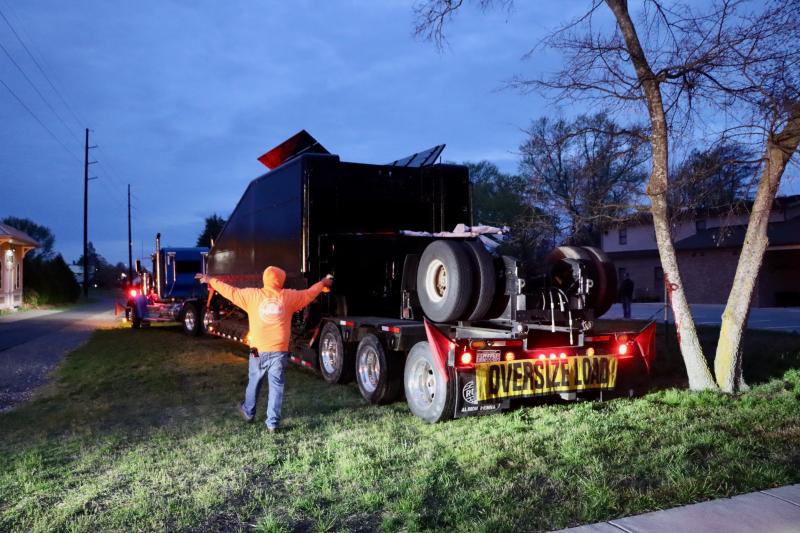
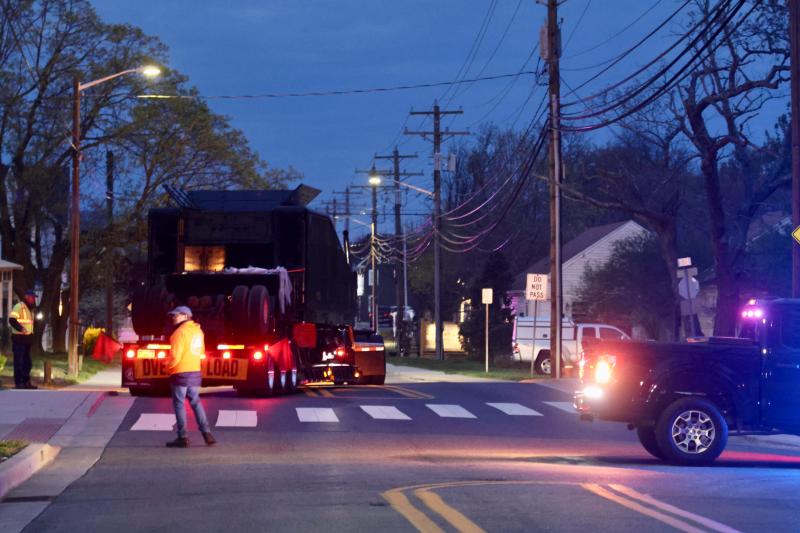
The flatbed truck turns off Kings Highway and backs into Stango Park in the dark. The truck went parallel to the bike trail for its journey to the end of the railroad track.
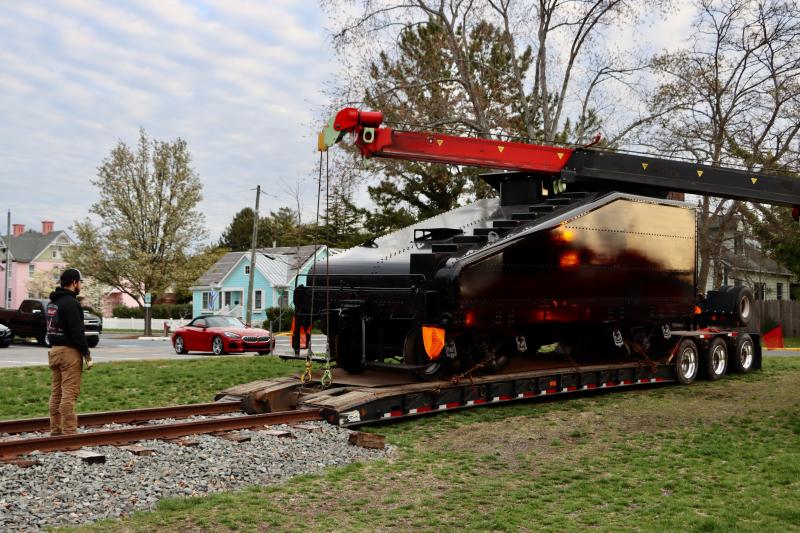
Once the tender arrived, the big job of getting it from truck to tracks began. A Pennsylvania towing and recovery company used a rotator to lift the trailer and align it with the tracks so the tender could roll off.
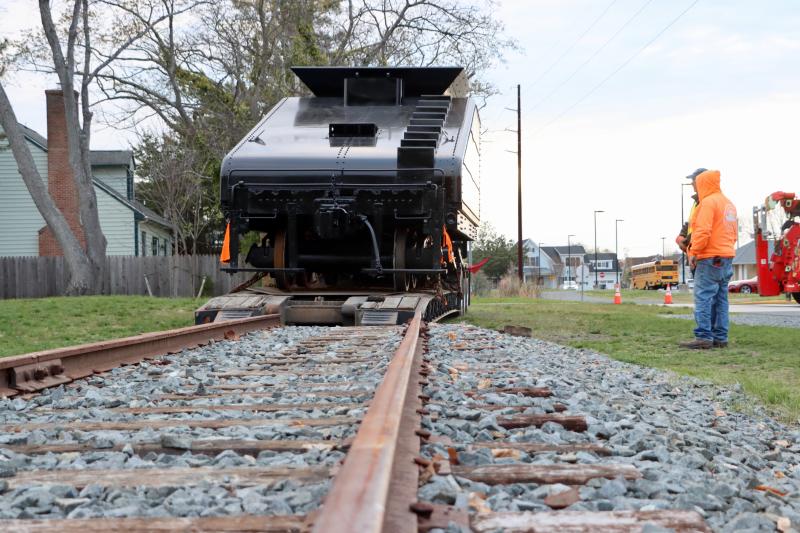
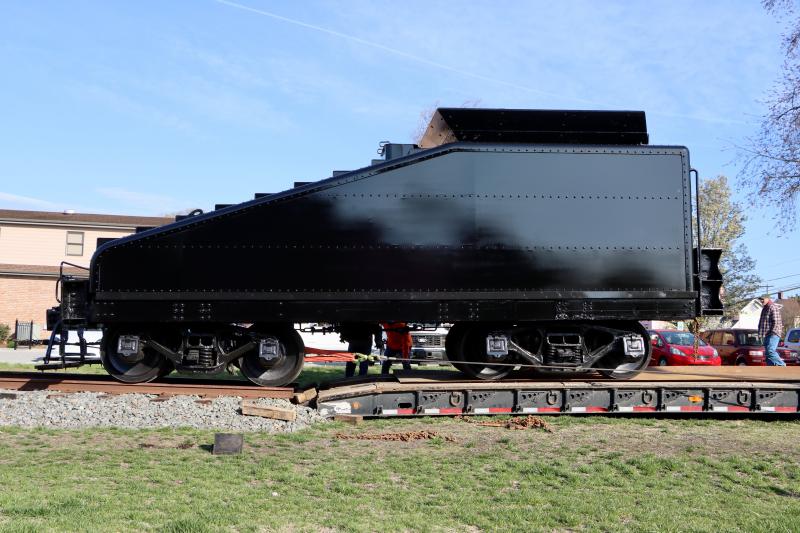
The tender is carefully positioned at the end of the track.
Getting the tender in the right alignment was tricky, but LJRBA members and the moving crew were successful at getting it into position.
The tender is rolled off the truck and onto the track. A Delaware sign company will apply titles to the sides in the next couple of weeks.
LJRBA member David Ludlow watches closely as the tender is prepared to roll off the flatbed.
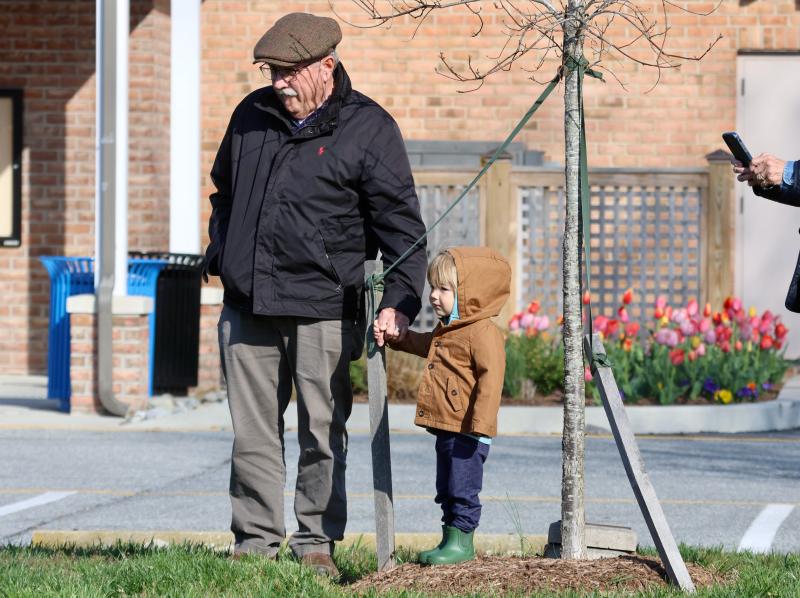
Jay Lyter and his 2-year old grandson, Cirdan, watch as the latest piece of railroad history is put into place in Stango Park.
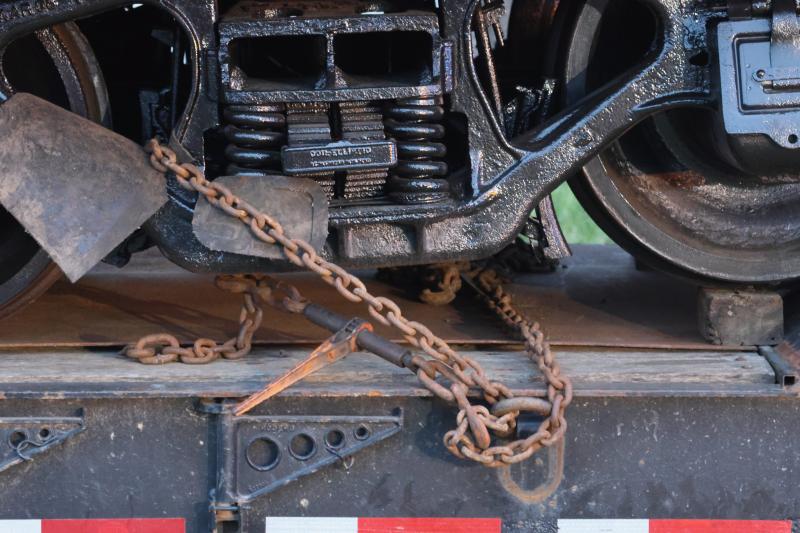
The tender is tied down with heavy chains for the trip from Pennsylvania.
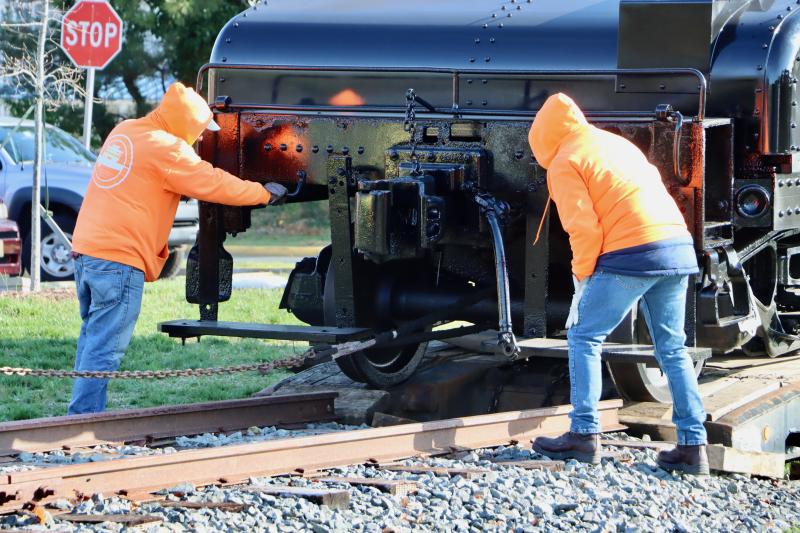
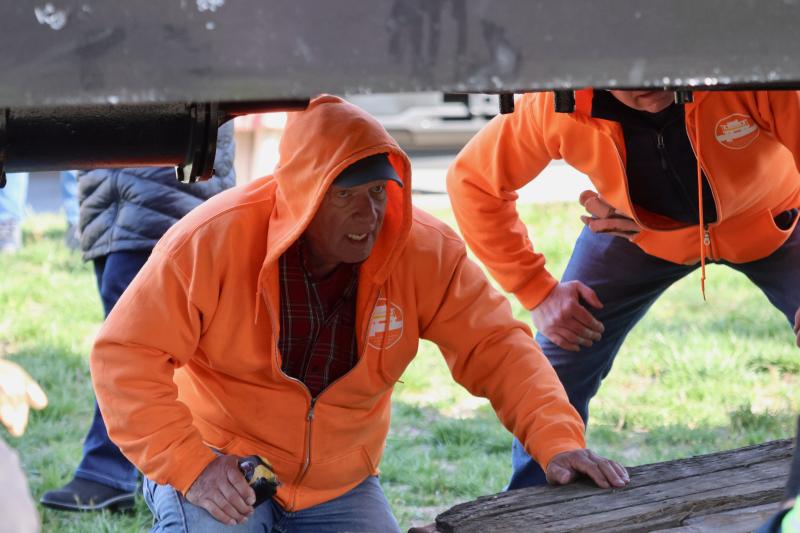
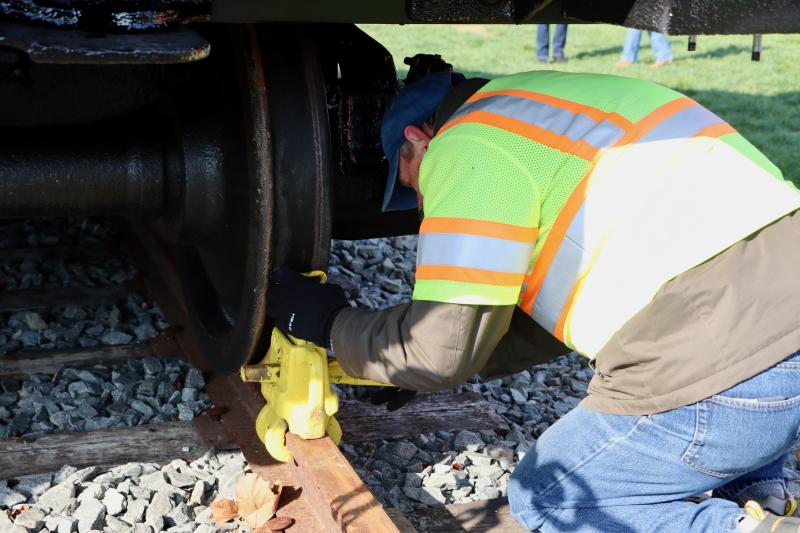
LJRBA member Randy Voith puts a chock in place to make sure the tender doesn’t go anywhere on its own.
The truck drove down the rails in order to pull the tender into place. The red caboose can be seen at the end of the track. A 1913 steam engine is scheduled to join the display in the future.
The coal tender arrives in Stango Park before dawn April 10. It joins the red caboose in the the Lewes Junction Railroad and Bridge Association’s historic display. BILL SHULL PHOTOS
The flatbed truck turns off Kings Highway and backs into Stango Park in the dark. The truck went parallel to the bike trail for its journey to the end of the railroad track.
Once the tender arrived, the big job of getting it from truck to tracks began. A Pennsylvania towing and recovery company used a rotator to lift the trailer and align it with the tracks so the tender could roll off.
The tender is carefully positioned at the end of the track.
Getting the tender in the right alignment was tricky, but LJRBA members and the moving crew were successful at getting it into position.
The tender is rolled off the truck and onto the track. A Delaware sign company will apply titles to the sides in the next couple of weeks.
LJRBA member David Ludlow watches closely as the tender is prepared to roll off the flatbed.
Jay Lyter and his 2-year old grandson, Cirdan, watch as the latest piece of railroad history is put into place in Stango Park.
The tender is tied down with heavy chains for the trip from Pennsylvania.
LJRBA member Randy Voith puts a chock in place to make sure the tender doesn’t go anywhere on its own.
The truck drove down the rails in order to pull the tender into place. The red caboose can be seen at the end of the track. A 1913 steam engine is scheduled to join the display in the future.
Two-year old Cirdan Lyter loves trains.
His grandpa, Jay Lyter, brought him along April 10 to see a piece of railroad history arrive in Lewes.
“Let’s bring the tracks back and the bridge,” Jay Lyter said, as they watched a vintage coal tender being put into place at the Lewes Junction Railroad and Bridge Association’s display in Stango Park.
The 40-ton tender arrived before dawn on a flatbed truck from Pennsylvania.
The truck backed down the grass, parallel to the Lewes-to-Georgetown bike trail, to the end of the track that is home to the red caboose.
Then, the tricky part began.
The moving company crew and LJRBA members had to align the flatbed with the rails so the tender could roll right off.
They used a piece of equipment called a rotator to lift the trailer into position.
The tender was unchained from the flatbed, and a truck pulled it onto the track.
LJRBA member Randy Voith said seeing the job done is a relief.
“Bringing it home is the hardest part,” Voith said. “Getting everybody lined up, timing, permits, working with the city. It was not as smooth as we wanted, but it was as smooth as it could have been.”
The coal tender was built by the Mellinger Manufacturing Co. in Willow Street, Pa.
The top half was built from scratch, based on original plans.
The lower half, including the wheels, is original and came from another tender that was taken out of service in 1952.
A tender is a large piece of rolling stock that holds the coal and water to feed the steam engine.
“[The tender] is up so high because that’s how high the locomotive is. A person would be standing up there, shoveling into the boiler as it’s barreling down the tracks,” said David Ludlow of the LJRBA.
In the next two weeks, a Delaware sign company will stencil Pennsylvania Railroad titles on the sides.
The LJRBA will dedicate the tender Saturday, May 10.
A 1913 steam locomotive is expected to join the display in a year and a half or two years, according to Voith.
The coal tender arrives in Stango Park before dawn April 10. It joins the red caboose in the the Lewes Junction Railroad and Bridge Association’s historic display. BILL SHULL PHOTOS

The flatbed truck turns off Kings Highway and backs into Stango Park in the dark. The truck went parallel to the bike trail for its journey to the end of the railroad track.
Once the tender arrived, the big job of getting it from truck to tracks began. A Pennsylvania towing and recovery company used a rotator to lift the trailer and align it with the tracks so the tender could roll off.
The tender is carefully positioned at the end of the track.
Getting the tender in the right alignment was tricky, but LJRBA members and the moving crew were successful at getting it into position.
The tender is rolled off the truck and onto the track. A Delaware sign company will apply titles to the sides in the next couple of weeks.
LJRBA member David Ludlow watches closely as the tender is prepared to roll off the flatbed.
Jay Lyter and his 2-year old grandson, Cirdan, watch as the latest piece of railroad history is put into place in Stango Park.
The tender is tied down with heavy chains for the trip from Pennsylvania.
LJRBA member Randy Voith puts a chock in place to make sure the tender doesn’t go anywhere on its own.
The truck drove down the rails in order to pull the tender into place. The red caboose can be seen at the end of the track. A 1913 steam engine is scheduled to join the display in the future.