













Constables have more tools to clean up properties
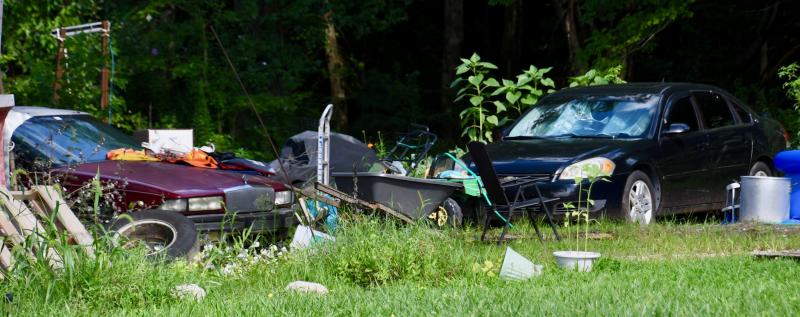
Sussex County officials now have the tools to more quickly resolve issues on unkempt properties.
At its Sept. 22 meeting, Sussex County Council voted 5-0 to amend a series of ordinances that will shift the county's inspection and enforcement of violations involving tall grass, inoperable vehicles and appliances, scrap tires and trash from the courts to an administrative process.
The change was made possible by enabling legislation passed by the Delaware General Assembly earlier this year. It is intended to streamline the process and lead to quicker resolutions on problem properties.
“It’s one of the biggest complaints we hear from constituents: problems with tall grass, junk cars, and litter on properties,” said Sussex County Administrator Todd Lawson. “Most violations are fairly simple fixes, but there are a few that are time-consuming for our code officers. The public wants results as quickly as possible, and we believe these steps will help us deliver those results so Sussex Countians can enjoy and be proud of the way their community looks.”
Previously, violations on private property in the unincorporated portions of the county would find their way into court if the owners failed to correct the violation. Following provisions in the previous code, it could take constables as long as 90 days to get a resolution through the court, and many times the county did not recover its costs.
Even then, said county government affairs manager Mike Costello, the court would issue a fine with no movement toward resolution of the problem.
Costello said it's hoped the new process of taking care of the issues in-house will cut turnaround times on problem parcels to as little as 30 days. “This is not additional power, but adding more tools to the toolbox,” Costello said.
A four-step process:
Step 1: A constable responds to a property and if there is a violation, a notice is issued allowing the property owner 10 days to rectify the situation.
Step 2: After 10 days, a constable returns to the property to check on the status. If the issue has been resolved, the matter is concluded. However, at this point, a property owner can request an extension.
Step 3: If the problem is not rectified after 10 days, plus any extension time, a $100 ticket is issued. The property owner has 10 days to appeal the action to the Sussex County Board of Adjustment and Appeals. An appeal will cost $100.
Step 4: After the deadline passes for an appeal, another $100 ticket can be issued or the county can clean up the property and bill the owner. “They take care of it, or we take care of it,” Costello said.
If a property owner fails to reimburse the county, the amount is added to the property's tax bill.
Under the new regulations:
Violators of the high-grass ordinance – 12 inches or taller – will have 10 days to cut grass instead of the current five days.
People with inoperable, abandoned vehicles, inoperable appliances and accumulated trash will have 10 days to clean up instead of the current 30 days. An accumulation of 20 or more tires has been added to the ordinances.
Under the proposal, the way county officials notify property owners and how properties are posted is changed. Constables can deliver notices by hand and then post a property, instead of using certified mail, which is the current practice. If certified mail is undeliverable, the post office waits up to 21 days to return it to the county.
The new rules will take effect immediately. For more information, or to view the ordinances, go to sussexcountyde.gov/ordinances.