













Details emerge in Cape Title IX rollback
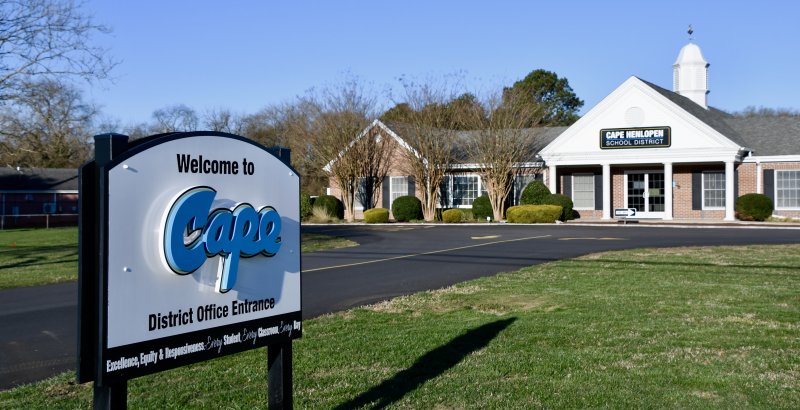
The Cape Henlopen School District recently became one of six educational institutions nationwide affected by a federal rollback of Title IX resolution agreements concerning gender identity-based discrimination.
The U.S. Department of Education’s Office for Civil Rights sent a letter to Cape Superintendent Jenny Nauman April 6, notifying her that it is rescinding a Title IX resolution agreement with the district.
Newly obtained documents reveal more details about the agreement and the complaint that led to it.
The names of the complainant and student were redacted for privacy reasons.
The complaint and district response
In a letter dated Nov. 21, 2021, the OCR notified Bob Fulton, Cape’s superintendent at the time, of a complaint filed against the district alleging discrimination based on sex.
The complainant alleged that the district discriminated against a student on the basis of the student’s gender identity and/or transgender status in the spring and fall of 2019 and thereby subjected the student to a hostile environment. Additionally, the complainant alleged the district discriminated against the student on the basis of a disability by failing to implement part of the student’s Section 504 plan. A 504 plan provides supports so a student with a disability can learn alongside their peers in general education.
The student made numerous complaints in 2019 of bullying, which were handled by the student’s school in accordance with the district’s bullying policy. Most of these complaints involved verbal comments concerning the student’s gender identity and transgender status.
The district reportedly looked into each complaint and found one was substantiated.
In the week after receiving these complaints, the district was notified the student would be staying home from school for the time being due to concerns.
According to the documents, the district attempted to work with the family and gave several options for the student to attend school in person. However, the family was adamant about online education and said the student would not return to school.
The parents and district team members agreed upon placement in a homebound learning setting. They also developed a 504 support plan for the student.
A year or so later, Sept. 29, 2020, the district held a meeting in which a family support and education specialist, not associated with the district, provided training concerning gender dysphoria topics.
The district was represented by attorney Allyson Britton during the resolution of the complaint.
In the district’s response to the complaint, it provided a long list of information, including its Section 504 policy; the names and contact information for its Section 504, Title II and Title IX coordinators; its Title IX grievance procedures and where they’re published; its policies and procedures for investigating reports of sexual harassment; any correspondence between the complainant and district staff, and any internal correspondence among district staff, within a specified time frame pertinent to the allegations in this complaint, including any discussions of the student’s gender identity, the student’s 504 plan, the student’s enrollment in online learning, any complaints filed by the student or student’s family concerning any harassment and any plans to address any harassment; specific details about any formal or informal complaints or reports of sexual harassment made by the student and/or the student’s family and all records pertaining to the school and district’s investigation into those complaints or reports; and a detailed written response to the allegations in this complaint.
The resolution agreement
Cape ultimately settled the complaint by entering a Title IX resolution agreement with the OCR in March 2024. The OCR uses resolution agreements as a way to require institutional compliance with federal Title IX legislation.
The agreement with Cape listed six action items the district was federally required to implement, along with reporting requirements for each to ensure the district was acting in a timely manner. These six items included an investigation and individual remedy, a task force, student learning sessions, staff training, a climate survey to be administered during the 2023-24 and 2024-25 school years, and an improved record-keeping system for reports and complaints of harassment and actions taken in response to them.
The task force refers to the Cape LGBTQ Outreach Committee, which already existed prior to the resolution. This committee was established to prevent harassment on the basis of gender identity and to make the district a more welcoming environment for students of different gender identities.
As part of the task force action item, the district was required to add the complainant to the LGBTQ Outreach Committee, invite the complainant to the next meeting and allow the complainant to identify any other individuals they believed should be included on the committee. The district was also required to ensure the committee meets at least once every six weeks for at least a full school year.
Why is it being rescinded?
In the April 6 letter to Nauman, OCR Acting Regional Director Sarah Dunne said the district must rescind any materials, guidance or other actions created pursuant to the agreement that violate Title IX, including staff training, climate surveys, student learning sessions and the task force created to comply with this agreement. Failure to do so will result in an investigation by OCR of the district’s failure to comply with Title IX.
Dunne said the resolution agreement was being rescinded because the district’s alleged actions that led to the agreement did not state a violation of Title IX.
This relates to the Trump administration’s interpretation of sex in Title IX’s prohibition of sex-based discrimination.
In 2024, the Biden administration interpreted that Title IX’s prohibition of sex-based discrimination includes discrimination on the basis of gender identity. However, a January 2025 federal court ruling, State of Tennessee v. Cardona, found that Title IX’s sex discrimination prohibition does not encompass gender identity.
In an April 6 press release, OCR Assistant Secretary Kimberly Richey denounced previous administrations’ Title IX investigations based on “misgendering” – like the one in Cape. Richey claimed these administrations “distorted the law contrary to its plain meaning to police discrimination on the basis of gender identity, not sex, and imposed resolution agreements with no legal foundation, but rather based on an ideologically driven interpretation of Title IX.”
Thus, the federal office is no longer monitoring or enforcing any of the agreement’s provisions.
Implications of the rescission
School districts can adopt local Title IX policies that exceed federal Title IX minimum requirements, but they cannot have policies that fall below or contradict these federal requirements. This means that Cape may still choose to keep expanded interpretations of Title IX to prohibit discrimination on the basis of gender identity, even though it is no longer federally required to do so.
The district’s current Title IX policy does not explicitly mention gender identity-based discrimination. However, the district has a separate nondiscrimination policy that prohibits discrimination on the basis of gender identity and sexual orientation, among other things.
“In regard to the implications of the rescission, the full impact is still unclear,” said Vienna Cavazos, a commissioner and vice chair of the Delaware LGBTQ+ Commission and chair of the Youth and Education Subcommittee. “I do not speak for the district, but I would hope that the rescission of the Title IX agreement does not affect the district’s existing nondiscrimination policy. What I want to see is that the current enforcement mechanisms protecting transgender and gender-diverse students remain intact and, if necessary, be strengthened.”
The statement comes from Cavazos in an independent capacity and does not reflect the views of the full commission. Cavazos is planning to bring the matter to the commission for future discussion. Students still have the ability to file Title IX complaints in state or federal court, Cavazos said.
Their rights do not disappear because of changing federal politics.
The Cape Henlopen School District issued the following statement April 7: "The Cape Henlopen School District has received correspondence from the U.S. Department of Education’s Office for Civil Rights regarding the resolution agreement entered in March 2024. As always, we are committed to providing a safe and supportive learning environment where all students can succeed. We will continue to work collaboratively to ensure our practices and programs support the well-being, growth and achievement of every student in our district.”
“In Delaware, we are staying focused on students and outcomes,” said Delaware Secretary of Education Cindy Marten. “Every child deserves to feel safe, supported and ready to learn. That’s the foundation for everything we are working to improve in our schools.”
Other institutions impacted by Title IX resolution agreement rescissions include the Delaware Valley School District in Pennsylvania, Fife School District in Washington, and La Mesa-Spring Valley School District, Sacramento City Unified School District and Taft College in California.

Ellen McIntyre is a reporter covering education and all things Dewey Beach. She graduated with a bachelor’s degree in journalism from Penn State - Schreyer Honors College in May 2024, then completed an internship writing for the Pittsburgh Post-Gazette. In 2023, she covered the Women’s World Cup in New Zealand as a freelancer for the Associated Press and saw her work published by outlets including The Washington Post and Fox Sports. Her variety of reporting experience covers crime and courts, investigations, politics and the arts. As a Hockessin, Delaware native, Ellen is happy to be back in her home state, though she enjoys traveling and learning about new cultures. She also loves live music, reading, hiking and spending time in nature.